
A cast iron grill pan for meal prep can help prepare chicken, vegetables, burgers, and other foods ahead of busy weekdays. The best results come from selecting an appropriately sized pan, controlling cooking temperatures, organizing batches, and storing finished meals safely. This guide explains how to build an efficient meal preparation routine.
Is a cast iron grill pan good for meal prep?
A cast iron grill pan can be useful for preparing multiple portions of foods that benefit from concentrated browning, especially chicken breasts, sliced vegetables, burgers, and sturdy cuts of meat. However, its raised ridges reduce continuous surface contact, so some meal-prep ingredients are better cooked in a flat skillet, oven, or roasting pan.
The main advantage of cast iron is its ability to retain heat when food is added. This can help maintain a useful cooking temperature during repeated batches, provided the pan is not overcrowded or overheated.
Meal preparation also requires attention to efficiency. A heavy grill pan that takes time to clean may not be ideal when cooking large quantities.
For that reason, the best meal-prep cookware is not necessarily the largest or heaviest grill pan available.
A practical strategy combines a grill pan for foods that benefit from grill marks with other cookware for grains, sauces, eggs, and ingredients requiring uniform cooking.
Choosing the right grill pan for weekly meal preparation
Meal-prep buyers should prioritize cooking capacity, compatibility, lifting comfort, and cleaning time. A pan intended for one burger will be inefficient when preparing several days of protein, while an oversized model may not heat evenly on a small burner. The ideal design provides enough usable space for repeatable batches without creating unnecessary handling problems.
Cooking surface area and batch capacity
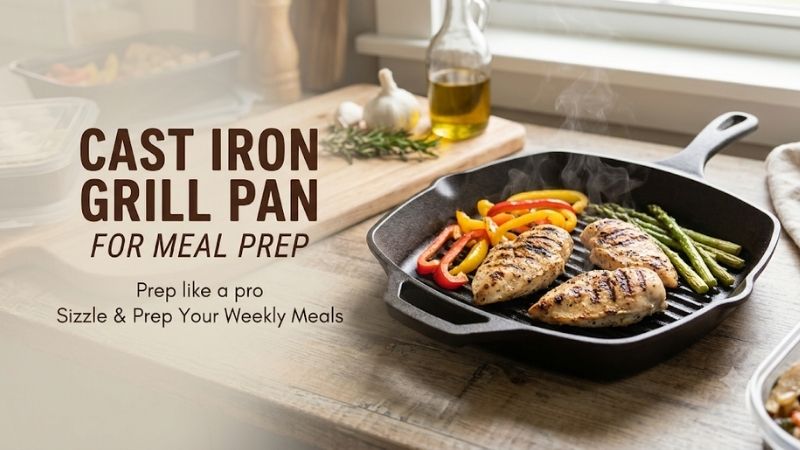
Cooking capacity depends on usable interior dimensions rather than the number printed on the product label. A square grill pan can offer convenient placement for chicken cutlets and vegetable strips, but raised ridges reduce direct contact area and require sufficient separation between ingredients for proper moisture evaporation.
For two or three portions, a medium grill pan may be adequate.
Preparing ten or more servings may require several cooking batches.
Avoid stacking ingredients in the pan. Food should contact the heated cooking surface directly.
If too much food is added at once, moisture accumulates and prevents effective browning.
For larger households, using an oven for bulk cooking may be more efficient than relying on a single grill pan.
Pan weight and handle design
Meal preparation often involves moving a pan repeatedly, adjusting its position, and transferring cooked ingredients to containers. A heavy cast iron grill pan may be stable during cooking but inconvenient when lifting it for cleaning or storage. Long handles and dual-handle configurations offer different advantages depending on the kitchen layout.
The Lodge 10.5 Inch Square Cast Iron Grill Pan is a traditional long-handle option.
The Lodge Chef Collection Square Grill Pan uses two side handles instead.
Both are relatively heavy, so users should consider how frequently they will lift the pan.
The safest approach is generally to transfer food with appropriate utensils rather than repeatedly moving a full, hot pan.
Seasoned versus enameled cast iron
Traditional seasoned cast iron and enameled cast iron can both support meal preparation, but they involve different maintenance routines. Bare cast iron requires appropriate drying and seasoning care, while enameled surfaces generally eliminate traditional seasoning maintenance but remain vulnerable to chipping or damage from unsuitable handling.
For cooks who prepare meals several times per week, maintenance convenience may be a meaningful purchasing factor.
A seasoned Lodge pan can provide durable everyday service with proper care.
An enameled Le Creuset or Staub grill pan may appeal to people who prefer a manufactured protective finish.
Neither type should be treated as automatically nonstick under all cooking conditions.
Best foods to prepare with a cast iron grill pan
A grill pan performs best with foods that can maintain contact with the raised ridges without breaking apart. Proteins and firm vegetables generally suit this approach, while ingredients requiring constant stirring or broad surface contact are less appropriate. Successful meal preparation depends on matching each food to a suitable cooking method.
Chicken breast and boneless chicken thighs
Boneless chicken is a common meal-prep protein because it can be portioned, seasoned, and paired with rice, vegetables, salads, or wraps throughout the week. A cast iron grill pan can create browned contact areas, but thick pieces require careful temperature control to avoid overcooking the exterior before the center is safe.
For relatively even cooking, use pieces of similar thickness.
Pat the surface dry before adding an appropriate amount of oil or seasoning.
Preheat the pan gradually.
Place the chicken on the ridges without crowding.
Allow sufficient cooking time before turning, then check the thickest section with a food thermometer.
Poultry should reach an internal temperature of 165°F.
If the exterior is browning too quickly, reduce the heat rather than attempting to finish thick chicken over excessive heat.
For large batches, consider finishing the chicken in an appropriately preheated oven if the pan is oven-safe.
Beef, burgers, and other meats
Beef and burger patties can benefit from a grill pan’s elevated contact ridges, particularly when the goal is a visibly seared surface. However, the channels between the ridges may collect rendered fat, and high temperatures can create substantial smoke when cooking fatty meats indoors.
For meal preparation, choose portions that fit comfortably within the cooking surface.
Avoid pressing burger patties unnecessarily, since doing so can force juices and fat from the meat.
Use a thermometer to determine appropriate doneness and food safety.
Ground beef should reach 160°F.
For other meats and cuts, follow their specific safe-temperature guidance.
Because reheated meat may lose moisture, avoid cooking it longer than necessary during the initial preparation.
Zucchini, bell peppers, and asparagus
Firm vegetables are particularly suitable for grill pan meal preparation because they can be cut into shapes that rest across the ridges. Zucchini, bell peppers, asparagus, and eggplant can develop browned surfaces while remaining useful in grain bowls, salads, sandwiches, and other prepared meals.
Slice vegetables into reasonably uniform pieces.
Remove excessive surface moisture before cooking.
A small amount of oil can help prevent sticking and support browning.
Use moderate heat to avoid burning the contact points while leaving the rest of the vegetable undercooked.
Vegetables intended for refrigerated meals may benefit from being cooked until tender but not excessively soft.
Allow them to cool appropriately before packaging to reduce unwanted condensation.
Tofu and plant-based proteins
Firm tofu and some plant-based protein products can be cooked on a grill pan when their structure is strong enough to withstand turning. Excess surface moisture and insufficient cooking-surface preparation can contribute to sticking, particularly on traditional seasoned cast iron.
Press firm tofu when appropriate to remove excess water.
Cut it into stable pieces rather than very thin slices.
Use an appropriate amount of oil and allow the surface to brown before attempting to turn.
For marinated tofu, avoid excessive sugary sauce during high-heat cooking because the sugars can burn on the ridges.
Add suitable sauces later if necessary.
Building an efficient weekly meal-prep workflow
A repeatable meal-prep process reduces unnecessary movement, limits cross-contamination, and helps maintain consistent cooking results. Prepare ingredients, containers, and utensils before heating the grill pan. Organizing work into predictable stages also helps prevent a hot pan from being left unattended while other tasks are completed.
Prepare ingredients before preheating the pan
Ingredient preparation should be completed before the cooking surface reaches its operating temperature. This includes washing suitable produce, cutting portions evenly, organizing seasonings, and setting out clean utensils and storage containers. Preparing everything in advance reduces the risk of burning food while searching for equipment.
Separate raw meat from ready-to-eat ingredients.
Use appropriate cutting boards and utensils to prevent cross-contamination.
Dry ingredients where surface browning is desired.
Arrange portions according to the amount of cooking space available.
Keep raw food refrigerated until it is needed.
Cook foods in organized batches
Batch cooking works best when ingredients are grouped by similar cooking requirements rather than placed together indiscriminately. Foods with different thicknesses, moisture levels, and safe-temperature requirements may need separate cooking times, and overcrowding can interfere with browning and temperature control.
Cook manageable batches.
Allow the pan to regain an appropriate cooking temperature before adding the next batch.
Remove accumulated food residue when necessary and safe.
Do not let rendered grease build up to the point that it smokes excessively.
Use separate clean utensils for cooked foods when needed to avoid transferring raw juices.
Check food temperatures and consistency
Meal preparation involves cooking food that may be stored and reheated over several days, making proper initial cooking especially important. Grill marks and surface color alone cannot establish safe internal temperatures, particularly with thick chicken pieces or burgers.
Use a food thermometer for meat and poultry.
Check the center of the thickest piece rather than relying on cooking time alone.
For vegetables, assess texture and tenderness.
Record useful cooking settings or approximate batch sizes for future meal preparation, but remember that cooking time changes with ingredient thickness and equipment.
Cool and refrigerate prepared food safely
Safe storage is essential because prepared meals may remain in the refrigerator for several days before consumption. Cooked food should not be left at room temperature for extended periods, and large quantities should be divided into suitable shallow containers so they cool efficiently.
Refrigerate perishable cooked foods within two hours, or within one hour when the surrounding temperature exceeds 90°F.
Keep the refrigerator at 40°F or below.
Most cooked leftovers should be consumed within three to four days when properly refrigerated.
Freeze portions intended for longer storage.
When reheating leftovers, bring them to an internal temperature of 165°F.
How to clean a cast iron grill pan after meal prep
Cleaning is a significant factor when a grill pan is used for several consecutive cooking batches. Marinades, rendered fat, and browned food particles can accumulate between the ridges, making the surface more difficult to maintain than a conventional flat skillet. Consistent cleaning habits protect the cooking surface and make the next meal-prep session easier.
Removing food residue from the ridges
The recessed channels of a grill pan can trap food particles that remain after cooking, especially when ingredients contain sugar or other components that brown quickly. Cleaning should begin once the pan has cooled enough to handle safely and should use tools suitable for its specific cooking surface.
For traditional seasoned cast iron, remove residue using warm water and suitable scrubbing tools.
Modern cast iron care does not universally prohibit mild dish soap; follow the pan manufacturer’s recommendations.
Avoid soaking bare cast iron for extended periods.
For enameled cookware, use cleaning methods that protect the enamel.
Drying and protecting seasoned cast iron
Seasoned cast iron should be dried thoroughly after cleaning because prolonged moisture exposure can encourage rust formation. A thin protective layer of oil may be appropriate before storage, particularly if the pan will not be used again immediately.
Dry the pan with a clean towel.
If using gentle heat to finish drying, monitor it carefully and do not leave it unattended.
Apply only a very light coating of suitable oil if recommended.
Store the pan in a dry location.
Avoid leaving moisture trapped beneath cookware stored in stacked cabinets.
Frequently Asked Questions
Meal-prep cooks often want to know whether a grill pan is efficient enough for multiple portions, how to maintain food quality during storage, and whether cast iron is suitable for repeated weekday use. These practical questions help determine whether a dedicated ridged pan is preferable to cookware already available in the kitchen.
Can I meal prep five days of chicken with a grill pan?
A grill pan can cook several portions of chicken through repeated batches, but refrigeration requirements matter more than the number of servings prepared. Cooked chicken generally should not be kept refrigerated beyond the recommended three-to-four-day leftover window.
For a five-day plan, refrigerate the earlier portions and freeze portions intended for later consumption.
Thaw frozen prepared meals safely before reheating.
How do I keep grilled chicken from drying out?
Chicken can become dry when cooked excessively during initial preparation or reheated too aggressively. Uniform thickness, appropriate temperature control, and accurate thermometer use help limit unnecessary overcooking.
Store cooked portions promptly in suitable containers.
Reheat only what you intend to eat.
For dishes where texture matters, consider reheating with an appropriate sauce or a small amount of moisture.
Is cast iron better than a nonstick grill pan for meal prep?
Cast iron offers durable construction and substantial heat retention, while many nonstick aluminum grill pans are lighter and easier to clean. Neither material is automatically superior for every meal-prep routine.
Choose cast iron when browning and long-term durability are priorities.
Choose an appropriate nonstick model when cleaning convenience and lighter handling matter more.
Should I use a grill pan or a flat skillet?
A grill pan is useful for foods that benefit from raised-ridge browning, while a flat skillet is generally more versatile for sauces, eggs, minced ingredients, and foods requiring broad contact with the cooking surface.
Many meal-prep routines benefit more from combining cookware than relying exclusively on a grill pan.
Conclusion
A cast iron grill pan for meal prep works best as a specialized tool for cooking proteins and firm vegetables in organized batches. Choose a pan that fits your burner and typical portion sizes, control heat carefully, and avoid overcrowding. Safe internal cooking temperatures, prompt refrigeration, appropriate storage durations, and thorough reheating matter more than attractive grill marks. For larger weekly meal-prep sessions, combine the grill pan with an oven or flat skillet to improve efficiency without sacrificing food quality.




Write Your Review
No reviews yet. Be the first to share your experience!