
Finding the right egg frying pan for home cooking means matching cookware to your breakfast habits, stovetop, and cleaning preferences. A small nonstick pan may be ideal for two fried eggs, while a larger skillet better accommodates omelets and family meals. This guide explains how materials, dimensions, handle design, and cooking technique affect the purchase.
Why a dedicated egg frying pan can be useful
An egg frying pan is not fundamentally different from an ordinary skillet, but certain design features make delicate egg preparation more convenient. A smooth cooking surface, manageable size, suitable sidewalls, and controlled heating help with frying, scrambling, folding, and serving eggs without unnecessary sticking or tearing.
For households that prepare eggs almost every morning, a small dedicated pan can reduce the need to wash larger cookware.
It can also prevent delicate breakfasts from being cooked on a surface already covered in residue from previous meals.
However, purchasing an additional pan is not always necessary.
A well-maintained general-purpose frying pan can prepare eggs, vegetables, pancakes, and many other foods.
The decision should depend on cooking frequency and whether existing cookware already provides satisfactory results.
Choosing the best egg pan material
Material is one of the most important purchasing considerations because it determines surface behavior, heat response, weight, and maintenance. Different pan constructions can prepare eggs successfully, but their learning curves are not identical. Buyers should prioritize the cooking experience they want rather than assuming one material is universally superior.
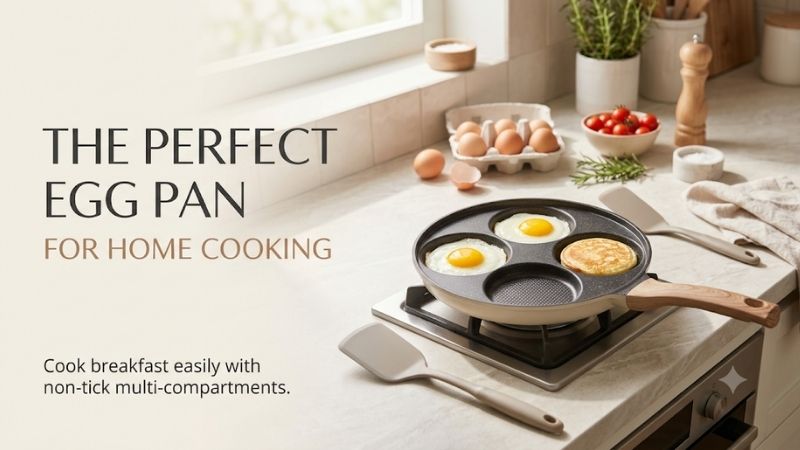
Traditional nonstick aluminum cookware
Nonstick aluminum frying pans are popular for egg preparation because coated surfaces reduce the likelihood of delicate foods adhering during cooking. Aluminum also transfers heat efficiently, allowing the pan to respond to burner changes relatively quickly compared with heavier cast iron.
Products such as the All-Clad HA1 Expert and Tramontina Pots & Pans Nonstick Fry Pan illustrate this category.
Both provide coated cooking surfaces suited to everyday frying tasks.
However, their exact base construction and stovetop compatibility differ.
The All-Clad HA1 Expert is induction compatible, while the referenced Tramontina model is listed for gas, electric, and ceramic glass cooking.
Traditional nonstick surfaces should not be overheated.
Follow the manufacturer’s recommended utensils and cleaning procedures.
Best for: Beginners and households that want straightforward egg release.
Ceramic nonstick frying pans
Ceramic-coated frying pans generally combine a metal body with a manufactured nonstick surface that differs from conventional PTFE coatings. Their primary advantage is convenient food release when the surface remains in suitable condition, while maintenance requirements include avoiding inappropriate heat and aggressive cleaning.
The GreenPan Lima 8-Inch Frypan is an example.
Its hard-anodized aluminum body and ceramic coating suit individual breakfasts.
The manufacturer states that its ceramic nonstick coating is made without intentionally added PFAS.
However, the model is not induction-compatible.
Buyers should distinguish the composition of a particular coating from broad marketing descriptions such as completely safe or chemical-free.
All cookware must still be used according to relevant temperature and care restrictions.
Best for: Buyers who prefer a ceramic-coated cooking surface.
Carbon steel frying pans
Carbon steel cookware offers an uncoated metal cooking surface that can develop seasoning through proper use. It is useful for cooks who want durable cookware and are willing to maintain the surface, although eggs may stick when heat, fat, and seasoning are not managed correctly.
The de Buyer MINERAL B Omelette Pan is an example of a purpose-built egg pan.
Its rounded sides help with folding and sliding omelets.
The material provides a different cooking experience from coated aluminum.
Carbon steel must generally be dried promptly after washing and maintained according to manufacturer instructions.
Its advantages become more meaningful for people who cook regularly and enjoy traditional cookware techniques.
Best for: Experienced home cooks who prefer seasoned metal.
Cast iron frying pans
Cast iron skillets can prepare fried eggs, scrambled eggs, and omelets while also handling numerous other cooking tasks. Their relatively thick construction provides substantial thermal mass, but that characteristic also makes them slower to respond when the cook reduces the burner setting.
Lodge seasoned cast iron skillets are familiar examples.
A properly maintained surface can support successful egg cooking.
However, seasoning quality, preheating, and oil application matter.
Beginners may find delicate eggs more difficult to prepare in cast iron than in a coated aluminum pan.
The weight also becomes relevant during washing and storage.
Best for: Households that already use cast iron regularly.
Stainless steel frying pans
Stainless steel frying pans offer durable cooking surfaces without conventional nonstick coatings, but they require deliberate technique when preparing eggs. Food adhesion depends on surface condition, heating, and cooking fat, making them less forgiving for beginners who expect eggs to release immediately.
A quality stainless steel pan can be useful for a household that prefers versatile cookware.
However, the buyer should be comfortable preheating correctly and adjusting heat.
Cooking eggs over excessively high heat can result in sticking or an undesirable texture.
For someone who mainly prepares delicate breakfast eggs, a dedicated nonstick pan may be a more practical addition.
Best for: Experienced cooks who prefer stainless steel and do not want additional cookware.
Choosing the right egg frying pan size
Size affects more than the number of eggs that fit inside a pan. It also influences how quickly the food cooks, how easily ingredients move, and whether the pan fits the available burner or cabinet. The best dimensions depend on normal portions rather than the maximum quantity that might occasionally be prepared.
Small 5- to 6-inch pans for single eggs
Mini frying pans can be useful for cooking one egg at a time, preparing breakfast sandwiches, or controlling a very small portion of food. Their compact shape allows the egg to remain concentrated in a small area, although the limited surface makes them unsuitable for larger omelets or family breakfasts.
A mini pan is helpful when a particular serving shape is important.
For example, a round egg intended for an English muffin may fit conveniently in a small cooking surface.
However, mini pans are specialized.
Their limited versatility should be considered before purchasing.
A conventional 8-inch pan may provide better everyday value.
Eight-inch pans for one or two people
Eight-inch frying pans are among the most practical choices for individual breakfasts because they provide enough space for a few eggs without requiring a large burner. Their relatively compact dimensions also make them manageable to wash and store.
The GreenPan Lima 8-Inch Frypan illustrates this category.
An 8-inch nonstick pan can prepare fried eggs, scrambled eggs, and small omelets.
It may also handle small servings of vegetables or breakfast meats.
The disadvantage is limited cooking room when multiple people need breakfast simultaneously.
For larger households, a second pan or a wider skillet may be more efficient.
Ten-inch pans for versatile home cooking
A 10-inch frying pan offers a useful compromise between everyday egg preparation and broader cooking versatility. It can accommodate several fried eggs and larger omelets while remaining manageable for many home cooks.
The All-Clad HA1 Expert 10-Inch Fry Pan and Tramontina Pots & Pans 10-Inch Fry Pan are examples.
Their construction differs, but both provide a general-purpose cooking format.
Ten-inch cookware is useful for scrambled eggs containing vegetables, cheese, or cooked meats.
It is also practical when eggs are only one part of the household’s regular cooking routine.
Twelve-inch pans for family breakfasts
A 12-inch frying pan can be worthwhile for households preparing multiple servings or larger mixed breakfast dishes. Its broad surface provides space for several eggs, but the additional diameter makes storage and burner coverage more important.
A large pan may also be useful for cooking breakfast potatoes or vegetables alongside eggs.
However, not every recipe benefits from the additional surface.
A two-egg omelet spread across a large pan can become excessively thin.
Choose a larger pan when the household regularly prepares quantities that justify it.
Features that improve everyday egg cooking
The most useful features of an egg pan contribute directly to food release, safe handling, cleaning convenience, and compatibility with the available stove. Buyers should examine these functional details instead of focusing primarily on brand recognition or decorative finishes.
Smooth cooking surface and appropriate sides
A smooth cooking surface helps distribute the egg mixture and simplifies removing cooked food. Flared or gently curved sides are useful when folding omelets or sliding fried eggs onto a plate, while higher straight sides may interfere with utensil access.
For ordinary fried eggs, a conventional skillet shape works well.
For French omelets, rounded sides can be especially helpful.
For scrambled eggs, both surface design and the ability to move food gently matter.
Induction compatibility
Induction cooking requires cookware with an appropriate magnetic base, and not all aluminum frying pans include one. A pan may be described as hard-anodized or nonstick without necessarily working on induction.
The All-Clad HA1 Expert combines an aluminum body with a stainless steel base designed for induction.
The GreenPan Lima 8-Inch Frypan does not support induction.
Check the manufacturer’s product specifications before purchasing.
Oven-safe temperature limits
Some frying pans can move from the stovetop into the oven, making them useful for frittatas or other egg dishes that require additional heating. However, oven-safe limits depend on the exact product, handle, coating, and attached components.
The All-Clad HA1 Expert is manufacturer-listed as oven safe up to 500°F.
The Tramontina Pots & Pans Nonstick Fry Pan is listed up to 350°F.
These differences matter when following oven-based recipes.
Never assume a plastic or silicone-covered handle can tolerate any oven temperature.
Easy cleaning and storage
An egg pan used daily should be convenient to wash and store. Smooth nonstick surfaces may help remove food residue, while compact dimensions reduce the space required inside cabinets and sinks.
Hand washing with suitable tools can help protect coatings.
Carbon steel and cast iron require attention to drying.
Use protective separators when stacking coated pans.
Avoid placing heavy cookware directly on delicate cooking surfaces.
How to cook different egg recipes
Different egg recipes benefit from different temperatures, pan movements, and utensil techniques. Fried eggs, scrambled eggs, and omelets are related dishes, but treating them identically can produce poor texture or unnecessary sticking. Understanding their differences helps buyers use almost any suitable egg pan more effectively.
Fried eggs
Fried eggs benefit from controlled heat and a cooking surface that allows the whites to set without sticking. A small amount of suitable cooking fat may help, depending on the pan material and coating.
Preheat the pan moderately.
Add cooking fat as appropriate.
Crack the eggs carefully.
Allow the whites to set while controlling the desired yolk texture.
Use a suitable spatula to transfer the eggs.
For people at elevated risk from foodborne illness, fully cooked eggs are the safer option.
Scrambled eggs
Scrambled eggs require frequent but controlled movement to develop a soft, cohesive texture. Excessive heat can cause rapid protein contraction, leading to dry or rubbery curds.
Use low to moderate heat according to the desired style.
Move the eggs gently with a suitable utensil.
Reduce the heat when curds develop too quickly.
Remove the eggs when they reach the intended consistency.
Avoid leaving finished scrambled eggs in a very hot pan.
Omelets
Omelets require enough cooking surface to spread the egg mixture, allow fillings to be distributed, and support folding. The correct pan depends on whether the cook prefers a soft French omelet or a more firmly cooked American-style breakfast.
Prepare fillings before cooking.
Use controlled heat.
Allow the eggs to develop enough structure for folding.
Avoid excessively heavy fillings.
Transfer the omelet gently to prevent tearing.
Frittatas and baked egg dishes
Frittatas differ from folded omelets because they are commonly cooked as thicker egg dishes and may finish in the oven. The pan therefore needs enough depth for the mixture and must be compatible with the required cooking temperatures.
Check oven-safe specifications before using stovetop cookware in the oven.
Use ingredients prepared according to their cooking requirements.
Cook the egg mixture until appropriately set.
Allow the pan to cool safely before cleaning.
Common mistakes when buying an egg pan
Egg pan purchases can be disappointing when the buyer chooses inappropriate dimensions, assumes universal cooktop compatibility, or overlooks coating and maintenance requirements. Most of these issues can be prevented by considering actual breakfast habits and checking manufacturer specifications before purchasing.
Buying a pan that is unnecessarily large
A large frying pan can be useful for family meals, but it may be inconvenient when cooking one egg. It requires more storage space and can make small portions spread excessively.
Choose according to ordinary portions rather than rare occasions.
Assuming every nonstick pan works on induction
Some nonstick pans use nonmagnetic aluminum bases and do not support induction. A compatible coating does not establish cooktop compatibility.
Verify the exact model.
Ignoring maintenance requirements
A coated frying pan needs appropriate heat and utensil care. Carbon steel and cast iron require correct washing, drying, and seasoning maintenance.
Choose a routine you are prepared to follow.
Frequently Asked Questions
Home cooks often want to understand whether they need specialized cookware for eggs, how to select a suitable size, and whether expensive pans provide meaningful advantages. These questions help distinguish practical ownership benefits from features that may not improve everyday breakfasts.
What is the best pan size for frying eggs?
An 8-inch pan is convenient for small portions, while a 10-inch model is more versatile for several eggs and mixed breakfast dishes. Larger pans are useful when regularly preparing family quantities.
Do eggs cook better in ceramic or PTFE nonstick?
Both types can provide useful food release. Their care requirements and coating characteristics differ, so the best option depends on manufacturer specifications, cooking habits, and material preferences.
Is an expensive frying pan necessary for eggs?
No. Proper temperature control and a suitable cooking surface are more important than price alone. A reasonably constructed pan that meets your needs may perform adequately without premium features.
Can one egg pan handle other recipes?
Yes. Most ordinary frying pans can prepare vegetables, pancakes, sandwiches, and other foods. A general-purpose skillet is often more versatile than a miniature egg pan.
How long should a nonstick egg pan last?
The useful life of a nonstick pan depends on construction, coating quality, use frequency, heating practices, utensils, cleaning, and storage. There is no universal replacement interval that applies to every model.
Inspect the surface regularly and follow manufacturer guidance.
Conclusion
A practical egg frying pan for home cooking should match your usual portions, stovetop, and preferred maintenance routine. An 8-inch coated pan is convenient for individual breakfasts, while a 10-inch frying pan provides more versatility for omelets, scrambled eggs, and family cooking. Carbon steel and cast iron offer traditional alternatives for experienced users who accept additional maintenance. Choose cookware with suitable sidewalls, a manageable handle, verified stove compatibility, and realistic cleaning requirements, then use controlled cooking temperatures to improve egg texture and release.

Write Your Review
No reviews yet. Be the first to share your experience!