
Choosing a ceramic cookware set for travel requires balancing portability, cooking versatility, and compatibility with the equipment available at your destination. Ceramic-coated cookware may be useful in vacation rentals, RV kitchens, and temporary accommodations, but full-size household sets can be bulky. This guide explains how to select a practical travel cooking arrangement without sacrificing safety.
- Is ceramic cookware suitable for travel?
- Choosing cookware for different travel situations
- Essential features for travel-friendly ceramic cookware
- Ceramic cookware versus other travel cooking materials
- How to build a compact travel cookware kit
- Cooking safely in unfamiliar kitchens
- Common mistakes when choosing travel cookware
- Frequently Asked Questions
- Conclusion
Is ceramic cookware suitable for travel?
Ceramic nonstick cookware can be useful during travel when there is access to a suitable stove, adequate storage, and safe cleaning facilities. However, ceramic-coated cookware is not inherently lightweight or portable, and its coating can be damaged during transportation if pans are packed carelessly.
Most cookware marketed as ceramic nonstick uses a metal body with a manufactured coating.
This construction differs from solid ceramic cookware, which may be heavier and more vulnerable to impact.
For travel, the metal-bodied format is usually more practical.
The best arrangement depends on the destination.
A vacation rental with a full kitchen presents different requirements from an RV, camper, or temporary apartment.
Travelers should first confirm whether cooking facilities are available and permitted before purchasing any cookware.
Choosing cookware for different travel situations
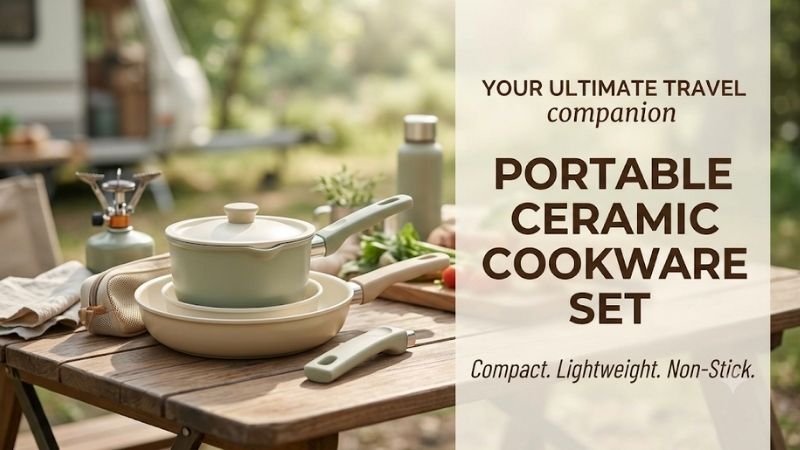
Travel cookware should match the available heating equipment and the types of meals prepared away from home. A compact vacation-rental kit may include a frying pan and saucepan, while an RV kitchen may need cookware that stores securely and remains manageable on smaller burners.
Vacation rentals and temporary apartments
Vacation rentals often provide a stove, sink, and basic cooking area, although the quality and quantity of included cookware can vary. Bringing a compact ceramic-coated frying pan and small saucepan may be useful for travelers who prefer familiar cookware or expect to prepare meals regularly.
However, transporting a full ten-piece cookware collection is rarely necessary for a short stay.
A small frying pan can handle eggs, vegetables, and sandwiches.
A saucepan can prepare oatmeal, pasta, or soup.
A suitable lid expands the number of recipes possible.
Before packing, confirm whether the accommodation already provides adequate cookware.
RV kitchens and campervans
RV kitchens often have limited cabinet space and smaller cooking surfaces, making compact cookware more practical than conventional household sets. The cooking equipment may use propane, electricity, or induction, so compatibility must be verified for the specific installation.
A lightweight ceramic-coated aluminum pan may be convenient to handle.
However, not every aluminum pan works on induction.
RV owners should also consider storage stability while the vehicle is moving.
Secure cookware so it cannot shift, fall, or damage the coating.
Follow the vehicle manufacturer’s instructions regarding cooking appliances, ventilation, and safe storage.
Never operate combustion-based cooking equipment in an enclosed space without appropriate ventilation.
Cabins and extended stays
For longer stays in cabins or furnished apartments, a small coordinated cookware collection may provide greater convenience than carrying unrelated individual pieces.
The most useful configuration often includes a medium frying pan, small saucepan, and larger pot.
This supports basic breakfast, lunch, and dinner preparation.
However, the available stove should determine material selection.
A ceramic-coated collection without an induction base may be unsuitable for a cabin equipped exclusively with induction.
Confirm heating equipment before travel.
Hotels and accommodations without kitchens
A cookware set provides little value when the accommodation does not permit stovetop cooking. Hotel rooms may have strict restrictions on electrical appliances, open heating elements, or food preparation.
Do not assume that a bathroom outlet, desk, or minibar area is suitable for cooking.
Follow accommodation rules.
If cooking is not permitted, choose accommodations with approved kitchen facilities rather than attempting to improvise.
Essential features for travel-friendly ceramic cookware
Travel cooking demands different priorities from a permanent home kitchen. Total packed dimensions, weight, handle design, cleaning requirements, and resistance to transport damage can matter more than premium appearance or a large number of included pieces.
Compact cookware sizes
A travel set should provide enough capacity for normal portions without occupying excessive luggage or storage space. Small cookware is easier to pack, but overly small pans may be inefficient when cooking for several people.
An 8-inch frying pan is practical for individual breakfasts.
A 10-inch pan provides greater flexibility for two or more servings.
A 2-quart saucepan supports oatmeal, sauces, and smaller boiling tasks.
A larger pot becomes useful when preparing pasta or soup for several travelers.
Choose based on actual meals rather than advertised piece count.
Lightweight aluminum construction
Many ceramic nonstick cookware sets use aluminum bodies, making them easier to transport than heavy cast iron alternatives.
However, total weight depends on pan thickness, handle construction, and included lids.
A full cookware set can still be heavy.
For airline travel, verify baggage weight limits and packing restrictions.
For vehicle travel, secure cookware inside cabinets or storage containers.
Never assume a ceramic-coated pan is resistant to impact simply because it uses a metal body.
Stackable cookware
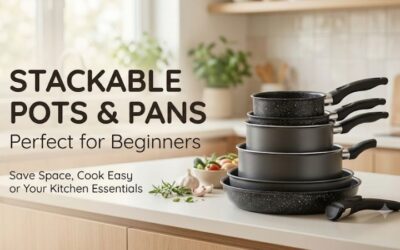
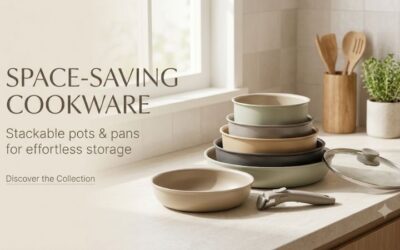
Stacking can reduce storage volume, but pans must be protected from scratching.
Use soft separators or manufacturer-provided storage accessories.
Avoid placing heavy lids directly against delicate coatings.
Check whether handles interfere with nesting.
An efficient packed arrangement should also be easy to unpack without dropping cookware.
Handle design
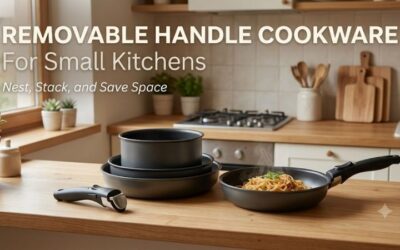
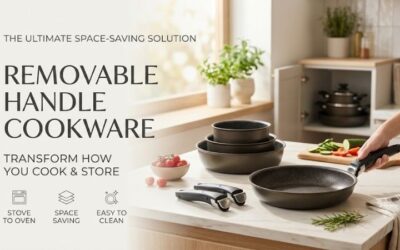
Long handles can make cookware awkward to pack.
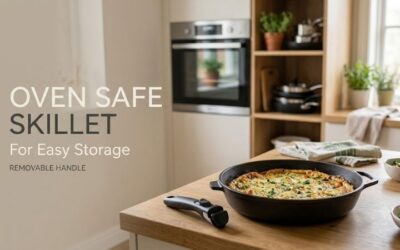
Shorter handles or approved removable-handle systems may reduce storage requirements.
However, any detachable mechanism must be designed for the exact cookware.
Verify weight limits and locking instructions.
Do not substitute handles from unrelated product lines.
Cooking-surface compatibility
Travel destinations may have gas, electric, radiant glass, or induction cooktops.
An aluminum pan requires a suitable magnetic base for induction.
The All-Clad HA1 Ceramic collection is induction compatible.
The standard GreenPan Lima collection is not.
This difference matters when choosing cookware for unfamiliar kitchens.
Ceramic cookware versus other travel cooking materials
Ceramic-coated cookware is not the only option for travel. Stainless steel, conventional nonstick aluminum, and other materials may offer advantages depending on transport conditions, cooking methods, and maintenance preferences.
| Material | Main advantage | Travel limitation |
|---|---|---|
| Ceramic-coated aluminum | Convenient food release | Coating protection |
| Conventional nonstick aluminum | Often lightweight | Temperature and coating restrictions |
| Stainless steel | Durable uncoated surface | Delicate food may stick |
| Cast iron | Excellent longevity with care | Heavy and maintenance-intensive |
| Solid ceramic | Useful for certain oven dishes | Weight and impact vulnerability |
For most travelers, a compact metal-bodied frying pan and saucepan are more practical than a large set of solid ceramic cookware.
The choice should be driven by cooking needs and available transport space.
How to build a compact travel cookware kit
A useful travel kit should handle ordinary meals without requiring numerous specialized items. The objective is to cover common cooking tasks with a small number of versatile vessels and essential utensils.
Choose a frying pan for everyday meals
A medium frying pan is one of the most useful travel cookware pieces.
It can prepare eggs, vegetables, pancakes, and suitable proteins.
Choose a surface that matches your cleaning preferences.
A ceramic nonstick coating may simplify food release, but it still needs appropriate utensils and temperature control.
Add a saucepan for liquids and grains
A saucepan provides capacity for boiling water, oatmeal, sauces, rice, and soup.
Choose a lid that fits securely.
Check whether the handle design is convenient for packing.
If the cookware is intended for induction, verify base compatibility.
Pack suitable utensils
Coated cookware benefits from silicone, nylon, or wooden utensils when recommended by the manufacturer.
Pack a spatula and suitable stirring tool.
Avoid sharp objects that could scratch the interior.
Consider how utensils will be cleaned and stored hygienically.
Include cleaning supplies
A soft sponge and suitable detergent can make travel cleanup easier.
Avoid abrasive pads.
Dry cookware thoroughly before packing.
Do not seal wet cookware inside luggage for prolonged periods.
Cooking safely in unfamiliar kitchens
Travel cooking introduces uncertainty because stove controls, ventilation, available workspace, and electrical systems may differ from those at home. Familiar cookware does not eliminate these risks, so travelers should inspect the cooking area before beginning meal preparation.
Inspect the cooking equipment
Identify the stove type.
Check the condition of cooking zones.
Confirm that the cookware sits securely.
Read posted instructions where available.
Do not use damaged or unfamiliar equipment when its safety is uncertain.
Manage heat carefully
Start at a moderate temperature.
Avoid overheating empty ceramic nonstick pans.
Keep handles away from adjacent burners.
Use appropriate ventilation.
Never leave a hot pan unattended.
Store food safely
Travel meals may involve limited refrigeration space.
Keep perishable foods at appropriate temperatures.
Refrigerate cooked leftovers promptly.
Do not assume a cooler or minibar provides the same temperature control as a refrigerator.
Use a food thermometer when necessary.
Common mistakes when choosing travel cookware
Travelers sometimes purchase complete cookware collections without considering whether the destination has compatible cooking equipment or sufficient storage space. Others focus on compactness while overlooking handle stability, coating protection, and cleaning facilities.
Packing too many pieces
A large collection increases weight and occupies luggage space.
Choose cookware that performs several tasks.
Avoid duplicating pans with nearly identical capacities.
Ignoring induction compatibility
Not every ceramic-coated pan has a magnetic base.
Check the destination’s stove.
Choose induction-compatible cookware when necessary.
Stacking without protection
Unprotected cookware can rub against itself during transport.
Use appropriate separators.
Secure lids.
Avoid placing sharp utensils directly against coatings.
Cooking where appliances are prohibited
Accommodation rules take precedence over convenience.
Do not use portable burners or cooking devices where they are prohibited.
Choose facilities that support safe meal preparation.
Frequently Asked Questions
Travel cookware buyers often ask whether ceramic-coated pans are portable, how many pieces they need, and whether cookware can be transported safely. The answers depend on the destination, available stove, mode of transport, and intended cooking routine.
Is ceramic cookware good for RV travel?
It can be, provided the cookware fits the RV’s stove, storage space, and handling requirements. Choose manageable sizes and secure the pieces during travel.
Can ceramic cookware be packed in checked luggage?
Cookware is generally treated differently from prohibited items, but airline and security rules vary. Verify current baggage restrictions and protect the cookware from impact.
Is a full ceramic cookware set necessary for vacation rentals?
Usually not. A frying pan, saucepan, and suitable utensils often cover ordinary travel meals.
What size frying pan is best for travel?
An 8-inch pan suits smaller portions, while a 10-inch pan offers more versatility for couples and families.
Can I use ceramic cookware on a portable induction burner?
Only if the cookware has an induction-compatible base and meets the burner’s size requirements.
Conclusion
The best ceramic cookware set for travel is usually a compact arrangement of versatile pans rather than a full household collection. A lightweight frying pan, saucepan, and appropriate lid can handle many meals in vacation rentals, RV kitchens, and extended-stay accommodations. Prioritize stove compatibility, packed dimensions, protective storage, and easy cleaning. Ceramic-coated aluminum may offer convenient food release, but its coating requires care during transport and cooking. Confirm that the destination permits cooking and provides suitable ventilation before relying on any travel cookware system.



Write Your Review
No reviews yet. Be the first to share your experience!