
A compost bin for kitchen use makes collecting vegetable peels, coffee grounds, and everyday food scraps more convenient without leaving waste scattered across the counter. The right container should be easy to fill, carry, empty, and wash. This guide compares six practical food-scrap caddies to help you choose a setup that suits your kitchen and composting routine.
Quick Verdict: The Best Kitchen Compost Collection Bins
A kitchen compost bin is primarily a temporary collection container, not a machine that turns scraps into finished compost. Its job is to keep suitable food waste separate until you transfer it to a backyard compost system, municipal organics service, or another approved collection point. Because food scraps contain moisture and begin breaking down quickly, lid design, cleaning access, and emptying frequency matter more than appearances alone. The six products below represent different approaches to this everyday job.
Our recommended options:
- Best for everyday cooking: OXO Good Grips Easy-Clean Compost Bin, 1.75 Gallon.
- Best for integrated trash sorting: simplehuman Compost Caddy, 4 Liter.
- Best compact ventilated caddy: Joseph Joseph Stack 4L Food Waste Caddy.
- Best airflow-focused design: Full Circle Fresh Air Compost Collector.
- Best decorative countertop option: Bamboozle Astrik Compost Bin.
- Best traditional stainless steel bucket: EPICA Stainless Steel Compost Bin, 1.3 Gallon.
For most kitchens, the OXO 1.75-gallon container is a practical starting point because its larger working capacity suits regular meal preparation and its shape makes it straightforward to carry and empty. Households already using a compatible simplehuman trash can may prefer a docked caddy that keeps scraps close to the main waste station.
The Full Circle collector takes a different approach by emphasizing ventilation rather than relying on a tightly closed container. Joseph Joseph’s Stack 4L is compact enough for small kitchens, while EPICA’s steel bucket is more familiar to shoppers who prefer a traditional lidded vessel.
Bamboozle is particularly relevant to households where a waste collector will remain visible on the countertop.
No design eliminates the need to empty scraps regularly or follow local compost collection rules.
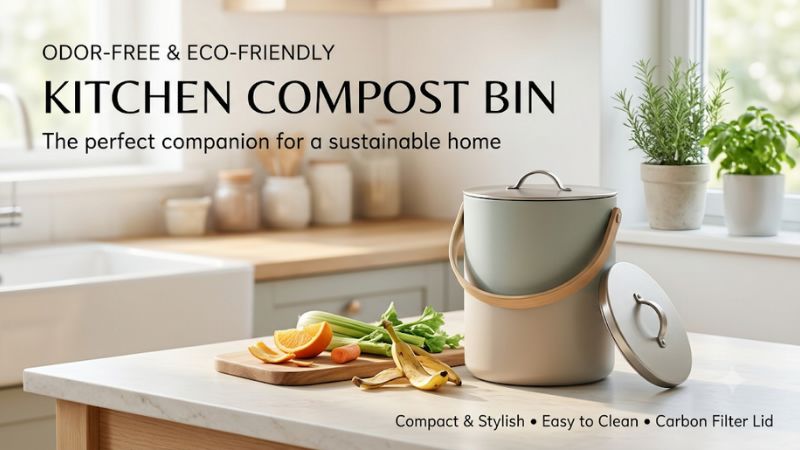
Quick Comparison Table
Capacity, ventilation, and cleaning features have different consequences in everyday use. A larger caddy reduces how often it fills but occupies more counter space, while a compact filtered bucket may require more frequent trips to the outdoor bin. The table compares six recognizable models by their documented design and practical buying considerations without claiming that any model has undergone independent testing for this article.
| Product | Capacity | Best For | Main Advantage | Main Trade-Off |
|---|---|---|---|---|
| OXO Easy-Clean Compost Bin | 1.75 gal | Frequent home cooking | Wide opening and practical emptying | Larger footprint |
| simplehuman Compost Caddy | 4 L | Compatible trash-can stations | Magnetic docking and removable bucket | Docking benefit depends on trash-can compatibility |
| Joseph Joseph Stack Food Waste Caddy | 4 L | Compact counter space | Ventilated design and replaceable filter | Smaller capacity |
| Full Circle Fresh Air Collector | 1.5 gal | Households wanting ventilation | Airflow-oriented construction | Ventilation is not a complete odor barrier |
| Bamboozle Astrik Compost Bin | Check selected configuration | Visible countertop storage | Plant-based material and filter | Filter replacement and material-care considerations |
| EPICA Stainless Steel Compost Bin | 1.3 gal | Traditional lidded storage | Stainless steel body and charcoal filter | Filter and lid require cleaning |
The right choice depends partly on how you dispose of the collected material. A family with convenient curbside organics pickup may value a larger container, while a person walking scraps to a community collection point might prefer a lighter, smaller caddy.
Also check whether your destination program accepts compostable liners. A bag labeled compostable is not automatically accepted by every collection system.
How We Selected These Compost Bins
Our selection focuses on identifiable products, manufacturer-described features, and practical household requirements. We considered volume, lid operation, handle construction, airflow, cleaning access, filter maintenance, and the ease of transferring scraps to a final collection point. Recommendations reflect product design and likely household suitability rather than fabricated laboratory measurements or first-hand testing.
Key evaluation criteria
- Capacity: Enough space for ordinary food preparation without encouraging excessively long storage.
- Lid design: Convenient opening and closing with hands occupied during cooking.
- Portability: Handles and container shapes that make emptying manageable.
- Cleaning: Accessible interiors and removable components.
- Odor management: Ventilation, filters, or covered construction, interpreted realistically.
- Counter space: Fit beside a cutting board or beneath a cabinet.
- Consumables: Whether filters or liners create recurring purchases.
- Waste program compatibility: Suitability for the scraps permitted by the local compost destination.
We did not rank products by invented odor-removal percentages or claim that a charcoal filter sterilizes food scraps. Likewise, the presence of a filter does not establish that a caddy can safely store wet food waste indefinitely.
The most useful kitchen compost bin is one you will empty and clean consistently.
Detailed Reviews of Six Kitchen Compost Bins
The six products below address different kitchen layouts and household habits. Each recommendation explains the design’s practical benefits, the kinds of food scraps it suits, and the circumstances where another format may work better. Because kitchen waste collection involves moisture and gradual decomposition, durability and odor expectations should be considered alongside the convenience of opening, carrying, and cleaning.
OXO Good Grips Easy-Clean Compost Bin, 1.75 Gallon
The OXO Good Grips Easy-Clean Compost Bin is a relatively spacious food-scrap collector intended for everyday kitchen preparation. Its rectangular construction, carrying handle, stay-open lid, and removable interior make it convenient for collecting produce trimmings as you cook. The 1.75-gallon size is particularly relevant to households that prepare several meals daily and would find a tiny scrap bowl inconvenient.
Best For
- Family kitchens.
- Frequent vegetable preparation.
- Households with curbside organics collection.
- Cooks who want a wide container opening.
- Users prioritizing easy emptying.
Key Specifications
- Brand: OXO Good Grips.
- Product: Easy-Clean Compost Bin.
- Selected capacity: 1.75 gallons, approximately 6.6 liters.
- Body material: Plastic.
- Lid: Stay-open design.
- Interior: Removable bucket.
- Carrying: Integrated handle.
- Liner arrangement: Designed to help conceal the bag edge.
Why We Picked It
The OXO design addresses the repetitive movements involved in cooking. A collector should be easy to open while clearing a cutting board, easy to carry when full, and easy to wash after the contents are emptied.
Its broad opening gives users a larger target when scraping vegetable peels or eggshells from a preparation board. This is especially useful when cooking several dishes at once.
Features and Practical Performance
A sensible setup places the bin near the preparation station during cooking, then moves it away from the active workspace afterward.
The lid can remain open while scraps are added, reducing the need to handle it repeatedly with dirty hands. The removable interior simplifies the process of transferring the contents and cleaning areas where moisture may collect.
This larger version is also more suitable than a tiny countertop bucket for households producing several cups of scraps during one meal-prep session.
However, capacity should not determine how long scraps remain indoors. Wet food waste can develop unpleasant odors even when the container is not full.
Pros
- Convenient for frequent cooking.
- Generous working capacity.
- Removable interior.
- Stay-open lid.
- Practical handle.
Cons
- Takes more counter space than compact caddies.
- Larger capacity may encourage delaying emptying.
- Does not replace proper compost processing.
Buy If
You prepare meals frequently and want a convenient, washable container that can handle a substantial amount of produce scraps.
Skip If
You have very little counter space or usually collect only a small amount of food waste each day.
simplehuman Compost Caddy, 4 Liter
The simplehuman Compost Caddy is a compact food-scrap container designed to integrate with compatible simplehuman trash cans through a magnetic docking system. It can also be detached and placed on the countertop during food preparation. Its four-liter capacity and removable inner bucket are particularly useful for households that want organic waste collection to become part of an existing kitchen waste-sorting routine.
Best For
- Kitchens with compatible simplehuman trash cans.
- Households separating organics from general trash.
- Users who want a detachable preparation caddy.
- Compact kitchens.
- Daily food-scrap collection.
Key Specifications
- Brand: simplehuman.
- Product: Compost Caddy.
- Capacity: 4 liters.
- Referenced model: CW1645.
- Docking: Magnetic attachment to compatible trash cans.
- Interior: Removable handled bucket.
- Lid: Detachable construction.
- Placement: Docked or countertop.
Why We Picked It
A compost habit is easier to maintain when the collection container has a predictable location. The simplehuman docking arrangement keeps the caddy associated with the main trash station, reducing the chance that scraps are mixed into general waste through convenience.
The ability to detach the caddy also matters during food preparation.
Features and Practical Performance
Move the caddy to the counter when trimming vegetables, preparing fruit, or clearing coffee grounds.
Afterward, return it to the compatible trash-can docking position.
The removable inner bucket allows food scraps to be transferred without carrying the complete outer structure. Its smooth surfaces are also designed for convenient rinsing.
The main limitation is compatibility. A magnetic docking system is most valuable when the household owns an appropriate simplehuman trash can.
Although the caddy can function separately, its strongest feature may not justify the same purchase for someone using an unrelated waste bin.
A four-liter bucket is also likely to need frequent emptying in a household preparing large meals.
Pros
- Integrated waste-sorting arrangement.
- Removable inner bucket.
- Detachable for food preparation.
- Compact capacity.
- Defined storage location.
Cons
- Docking benefits depend on compatibility.
- Smaller than larger household collectors.
- Accessory liners may create recurring cost.
Buy If
You already use a compatible simplehuman trash can and want a convenient way to keep food scraps separate.
Skip If
You need a large independent compost collector or have no interest in an integrated trash station.
Joseph Joseph Stack 4L Food Waste Caddy
The Joseph Joseph Stack 4L Food Waste Caddy is a compact food-scrap collection container designed around controlled ventilation and a replaceable odor filter. Its four-liter capacity fits smaller kitchen counters or cabinets while providing a dedicated location for peelings, coffee grounds, and other approved organic scraps. The lid and handle arrangement emphasize practical everyday use rather than maximum volume.
Best For
- Smaller kitchens.
- One- or two-person households.
- Users wanting a replaceable filter.
- Everyday fruit and vegetable preparation.
- Households with frequent scrap disposal.
Key Specifications
- Brand: Joseph Joseph.
- Product: Stack Food Waste Caddy.
- Capacity: 4 liters.
- Design: Ventilated collection system.
- Filter: Replaceable odor filter.
- Lid: Hinged construction.
- Carrying: Integrated handle.
- Relevant accessories: Compatible liners and replacement filters.
Why We Picked It
A compact caddy is easier to place near the cutting board and may encourage more frequent emptying.
The Stack system also approaches odor management through ventilation and filtration rather than assuming a completely sealed container is always preferable.
Features and Practical Performance
Place the caddy on a stable surface away from direct sunlight and cooking heat.
During food preparation, use it for fruit peels, vegetable trimmings, and other materials accepted by the household’s compost system.
The filtered lid can help manage odors, but its effectiveness depends on the type of scraps, how long they remain inside, and when the filter was last replaced.
A small bucket filled with wet waste should be emptied promptly even when the filter still appears functional.
Because the capacity is modest, the product suits regular disposal better than holding several days of heavy meal-preparation waste.
Before purchasing accessories, confirm the correct filter and liner version for the exact caddy.
Pros
- Compact footprint.
- Ventilation-focused design.
- Replaceable odor filter.
- Convenient handling.
- Suitable for everyday small scrap loads.
Cons
- Limited capacity for large households.
- Filters require replacement.
- Ventilation does not prevent all odors or insects.
Buy If
You want a compact kitchen collector with a structured odor-management design and do not mind replacing filters.
Skip If
You would prefer a filter-free container or need enough space for large daily cooking sessions.
Full Circle Fresh Air Odor-Free Kitchen Compost Collector
The Full Circle Fresh Air Compost Collector is a 1.5-gallon food-scrap caddy built around an airflow-oriented design. Rather than relying exclusively on a sealed lid and replaceable charcoal filter, the collector allows air movement intended to manage wet scraps and reduce odor buildup. Its relatively generous capacity is useful for households preparing meals regularly and transferring scraps to an outdoor or municipal compost destination.
Best For
- Households preferring ventilation.
- Frequent vegetable preparation.
- Users wanting a filter-free approach.
- Medium-size kitchen scrap loads.
- People with convenient disposal access.
Key Specifications
- Brand: Full Circle.
- Product: Fresh Air Odor-Free Kitchen Compost Collector.
- Capacity: 1.5 gallons, approximately 5.7 liters.
- Published size: Approximately 11.38 × 8.5 × 9 inches.
- Design: Ventilated construction.
- Intended use: Temporary food-scrap collection.
- Cleaning: Follow the selected product’s care instructions.
Why We Picked It
Kitchen compost collectors are often marketed as tightly sealed buckets. Full Circle takes a different approach by considering the role of airflow.
This can appeal to households that prefer a more ventilated container and want to avoid reliance on replaceable filters.
Features and Practical Performance
The collector works best when scraps are emptied regularly and excess moisture is managed appropriately.
Using a compatible liner or a small amount of approved dry material may simplify cleanup, depending on the collection system.
However, airflow should not be interpreted as a guarantee against insects. An open or ventilated waste container can still attract pests if food scraps remain inside too long.
The relatively wide body also requires sufficient counter space. Measure the intended location rather than assuming it will fit comfortably beside a small sink.
For families already maintaining a compost pickup routine, the Fresh Air offers a distinctive collection method without the ongoing expense of a charcoal filter.
Pros
- Ventilation-oriented design.
- Useful medium-large capacity.
- No reliance on a replaceable charcoal filter.
- Wide opening for food scraps.
- Recognizable dedicated compost collector.
Cons
- Requires counter space.
- Airflow is not a complete insect barrier.
- Wet scraps still require prompt removal.
Buy If
You prefer a ventilation-based collector and already have a reliable routine for emptying organic waste.
Skip If
You need a compact sealed transport container or want the smallest possible countertop footprint.
Bamboozle Astrik Compost Bin
The Bamboozle Astrik Compost Bin is a countertop food-scrap collector designed for households that want a more decorative appearance than a conventional utility bucket. The manufacturer describes its Astrik material as plant-based and pairs the container with a filter for odor management. Its visual design makes it particularly relevant to kitchens where the compost collector remains visible throughout the day.
Best For
- Open kitchens.
- Design-conscious households.
- Moderate food-scrap collection.
- Users who want a filtered lid.
- Buyers interested in plant-based materials.
Key Specifications
- Brand: Bamboozle.
- Product: Astrik Compost Bin.
- Body: Astrik plant-based material.
- Lid: Filtered configuration.
- Placement: Countertop.
- Cleaning: Manufacturer describes dishwasher-safe construction.
- Capacity and accessories: Confirm the exact selected version.
Why We Picked It
Compost collection only works when the container is accessible. If a visually intrusive bucket is hidden far from the preparation area, household members may be less likely to use it consistently.
A decorative countertop design can therefore have a practical benefit: it encourages the bin to remain where scraps are generated.
Features and Practical Performance
The filtered lid provides a defined method of managing odors. The container is also intended to be easy to clean after emptying.
However, plant-based material claims should be interpreted carefully.
A product made from plant-derived material is not automatically suitable for disposal through every municipal compost program, and it should not be placed into an organics cart simply because its marketing mentions compostability.
Follow the manufacturer’s end-of-life guidance and the local facility’s acceptance rules.
The same caution applies to liners. A compostable liner may require industrial composting conditions or may be excluded from local collection entirely.
Pros
- Attractive countertop appearance.
- Plant-based material.
- Filtered lid.
- Manufacturer-described dishwasher-safe care.
- Convenient visibility during food preparation.
Cons
- Filter replacement may be necessary.
- Material disposal claims require careful interpretation.
- Exact size and configuration should be verified.
Buy If
You want a kitchen scrap container that can remain visible on the countertop and appreciate its material and appearance.
Skip If
You prefer a straightforward utility bucket with minimal accessory requirements.
EPICA Stainless Steel Compost Bin, 1.3 Gallon
The EPICA Stainless Steel Compost Bin uses a familiar bucket-style design with a stainless steel body, removable lid, carrying handle, and replaceable activated-charcoal filter. Its 1.3-gallon capacity provides a middle ground between compact four-liter caddies and larger food-scrap collectors. This makes it particularly relevant to households that prefer a traditional lidded bucket rather than a plastic container with specialized moving parts.
Best For
- Traditional kitchen decor.
- Small and medium households.
- Users who prefer stainless steel.
- Collecting ordinary food-preparation scraps.
- Buyers wanting a charcoal-filtered lid.
Key Specifications
- Brand: EPICA.
- Product: Stainless Steel Countertop Compost Bin.
- Capacity: 1.3 gallons.
- Body: Stainless steel.
- Lid: Removable.
- Filter: Replaceable activated-charcoal filter.
- Handle: Integrated carrying handle.
- Placement: Countertop.
Why We Picked It
The EPICA bucket is straightforward to understand and use.
Its steel construction offers a different material choice from plastic or plant-based containers, while the filtered lid addresses a concern many first-time composters have about odors.
Features and Practical Performance
A bucket-style collector can be placed near the preparation area while cooking and carried to the compost destination afterward.
The removable lid allows convenient access to the interior, but the rim and underside of the lid should be cleaned regularly.
Activated charcoal may help manage odors, yet it does not prevent decomposition or make spoiled food waste safe to store indefinitely.
Filters need replacement according to the manufacturer’s instructions.
A stainless steel body may also show fingerprints or water spots, especially when used near a busy sink.
Before buying, check the exact product configuration because similar-looking metal compost buckets may differ in filter quantity and accessories.
Pros
- Traditional stainless steel construction.
- Practical carrying handle.
- Charcoal-filtered lid.
- Moderate capacity.
- Simple bucket-style layout.
Cons
- Filter replacement adds maintenance.
- Metal surfaces may show water spots.
- No special integration with a trash station.
Buy If
You prefer a traditional metal caddy with a removable lid and replaceable odor filter.
Skip If
You want a completely filter-free design or an integrated docking system.
Buying Guide: What Makes a Good Kitchen Compost Bin?
The best compost collector supports the way scraps move through your household, from preparation to temporary storage and eventually to a suitable processing facility. Capacity, filtration, material, and appearance all matter, but their importance changes with the available disposal method. Before buying, determine whether you have backyard composting, curbside organics service, or a community drop-off point, then select a container that fits that routine.
Choose Capacity Around How Often You Empty Scraps
A large container can be convenient when preparing several meals, but it can also encourage food waste to remain indoors longer than desirable. A smaller bucket fills more quickly and may support a habit of frequent disposal. The right capacity therefore depends on both the amount of waste generated and the distance to the final collection point.
Capacity considerations
- Around 3 liters: Suitable for small scrap loads and frequent emptying.
- Around 4 liters: Practical for many compact households.
- Around 5–6 liters: Useful for regular family cooking.
- Larger containers: Appropriate only when space and disposal routines justify them.
These are planning categories, not universal household requirements.
A family preparing fresh vegetables every evening may need more capacity than a person who primarily reheats prepared meals.
Consider the weight of the container when full. Food scraps can be wet and heavy, so a handle and manageable shape are important.
Understand Filters, Ventilation, and Odor Control
Filtered, ventilated, and covered caddies manage food-scrap storage in different ways. A charcoal filter is intended to absorb some odors, while ventilation-focused designs allow air movement around the collection chamber. A covered unfiltered bin may reduce direct exposure but can still develop odors if wet scraps remain inside. None of these approaches eliminates the need for routine emptying.
Compare the designs
- Charcoal-filtered lid: May reduce odors; requires replacement filters.
- Ventilated design: Encourages airflow; may need careful moisture management.
- Simple covered bucket: Easy to understand; may trap moisture.
- Removable inner liner: Simplifies transferring scraps and cleaning.
- Freezer-compatible collector: Can be useful when the product and available space permit frozen collection.
Do not assume a completely sealed lid is always the best approach.
For a household that empties scraps daily, easy cleaning may matter more than complex odor-control hardware.
Check What Your Compost Program Actually Accepts
Kitchen compost bins often collect fruit peels, vegetable scraps, coffee grounds, and other organic materials, but acceptance rules depend on the final composting system. Backyard composting recommendations may differ from commercial organics processing, and municipal collection programs can accept materials that are unsuitable for an ordinary home compost pile.
Typically useful categories to investigate
- Fruit and vegetable trimmings.
- Coffee grounds.
- Suitable paper coffee filters.
- Crushed eggshells.
- Small amounts of plant-based food scraps.
- Approved paper products.
- Certified compostable liners, only where accepted.
Items requiring special caution
- Meat, fish, and bones.
- Dairy products.
- Cooking oils and grease.
- Plastic produce stickers.
- Coated or plastic-lined packaging.
- Compostable plastics that the facility does not accept.
For ordinary backyard composting, avoid adding meat, dairy, and greasy foods unless using a system specifically designed to handle them.
Follow the rules of the facility that will process the collected scraps.
Choose a Container You Can Clean Easily
Food-scrap containers need periodic washing because residue accumulates around the base, lid, handle, and filter housing. A smooth removable bucket is often easier to clean than an elaborate lid with inaccessible compartments. Dishwasher-safe construction can be useful, but only when the exact product’s instructions permit machine cleaning.
Cleaning checklist
- Empty scraps promptly.
- Remove liners when used.
- Rinse or wash according to manufacturer instructions.
- Clean beneath the lid.
- Inspect filter housings.
- Dry thoroughly.
- Replace filters as instructed.
- Keep the surrounding counter clean.
Avoid leaving standing liquid inside the caddy.
If the bin develops persistent odors after cleaning, inspect hidden components and reconsider how long scraps are stored before disposal.
Common Kitchen Composting Mistakes
A compost collection routine can become inconvenient when the container is too large, stored far from the preparation area, or treated as a system that processes waste by itself. Problems also occur when households assume that every food scrap and biodegradable bag belongs in the same disposal stream. Understanding these common mistakes helps create a cleaner and more sustainable kitchen routine.
Mistakes to avoid
- Treating a collection caddy as a finished-compost producer.
- Leaving wet scraps indoors for too long.
- Ignoring local organics acceptance rules.
- Purchasing oversized containers unnecessarily.
- Assuming charcoal filters eliminate all odors.
- Allowing liquids to accumulate at the bottom.
- Using liners rejected by the compost facility.
- Adding plastic produce stickers.
- Neglecting lid and filter cleaning.
- Keeping the caddy beside excessive heat.
- Failing to separate trash from approved organics.
The most reliable routine is straightforward: collect appropriate scraps, transfer them regularly, wash the container, and maintain the lid or filter according to the product’s instructions.
Frequently Asked Questions
Kitchen compost collection raises questions about odors, acceptable scraps, capacity, liners, and whether a small countertop bucket can create finished compost. The answers below distinguish temporary waste collection from the actual composting process and help buyers understand which design features are worth prioritizing for their household and local disposal arrangements.
Does a Kitchen Compost Bin Turn Scraps Into Compost?
Most countertop kitchen compost bins are collectors rather than processing systems. They temporarily hold suitable food scraps until those materials can be transferred to a backyard compost pile, worm system, or approved municipal collection program. A conventional lidded bucket does not automatically provide the airflow, carbon balance, moisture control, and processing time needed to produce mature compost.
Electric countertop food-waste processors are a different product category, and their dried output may still require further treatment.
Choose a collection caddy when your primary need is convenient waste separation.
How Often Should I Empty My Kitchen Compost Bin?
Emptying frequency depends on indoor temperature, the type of scraps, the amount of moisture, and how quickly the container fills. Wet fruit scraps or food waste kept in a warm kitchen can develop odors more quickly than drier vegetable trimmings. Frequent emptying is generally more effective than depending entirely on an odor filter.
Inspect the contents regularly and avoid allowing leaking or visibly deteriorating waste to remain indoors.
A small bucket that encourages frequent emptying may be more practical than an oversized container.
Are Charcoal Filters Necessary for Compost Bins?
No. Charcoal filters are an optional feature that may help manage odors, but a well-maintained collection routine can work with filtered or unfiltered containers. Their usefulness depends on the lid design, the type of waste collected, storage temperature, and how frequently the bucket is emptied.
Filters must be replaced according to manufacturer guidance.
Do not treat a filter as a substitute for cleaning the bin or removing scraps before odors become excessive.
Can I Put Coffee Grounds in a Kitchen Compost Bin?
Used coffee grounds are a common compostable material and can be collected in a kitchen food-scrap caddy. Many composting systems also accept ordinary paper coffee filters, although the exact acceptance rules should be checked. Espresso grounds should be allowed to cool and excess water should be managed before placing them in the container.
Avoid assuming that plastic coffee capsules belong in the organics stream.
Any capsule or liner must meet the receiving program’s specific requirements.
What Is the Best Size Compost Bin for a Small Kitchen?
A three- or four-liter caddy is often a useful starting point when countertop space is limited and the household empties food scraps frequently. However, the best size depends on how much fresh food is prepared and how easy it is to reach the final compost destination. A larger family may prefer a five- or six-liter collector if there is enough space.
Measure the available counter or under-sink area before purchasing.
Choose a container that is comfortable to carry and wash when full.
Conclusion
The best compost bin for kitchen use should make it easy to separate food scraps, empty the contents promptly, and clean the container without unnecessary effort. OXO’s 1.75-gallon Easy-Clean model suits frequent cooking, while the simplehuman Compost Caddy is appealing for compatible integrated trash stations. Joseph Joseph offers compact filtered storage, Full Circle emphasizes ventilation, Bamboozle provides a decorative countertop option, and EPICA offers a traditional stainless steel bucket. Match capacity and lid design to your routine, then follow the acceptance rules of your compost destination.




Write Your Review
No reviews yet. Be the first to share your experience!