
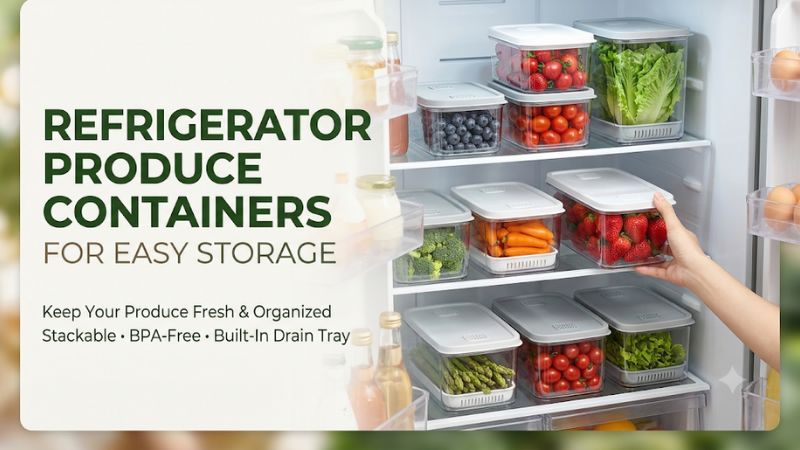
Refrigerator produce containers for easy storage should make fruits and vegetables visible, accessible, and easier to manage throughout the week. Clear bins, removable baskets, and adjustable ventilation can help organize different ingredients, but the right setup depends on produce type and refrigerator space. This guide explains how to choose containers, arrange groceries, reduce waste, and maintain safe storage.
- Quick Answer: Choose Containers That Make Produce Easy to Find
- What Makes Produce Storage Easy in Everyday Kitchens?
- Compare the Main Types of Produce Containers
- How to Choose the Right Container Size
- Understand Ventilation and Moisture Control
- Organize the Refrigerator for Easy Daily Access
- Food Safety: Store Produce Correctly
- Cleaning and Maintaining Produce Containers
- Common Mistakes That Make Produce Storage Harder
- Frequently Asked Questions
- Conclusion
Quick Answer: Choose Containers That Make Produce Easy to Find
For most households, easy produce storage begins with two or three appropriately sized clear containers rather than a full refrigerator organization set. A medium-size ventilated keeper can hold vegetables, a compact berry container can separate delicate fruit, and a dedicated herb holder may be useful for frequently purchased herbs. The goal is fast access and manageable cleaning, not maximum container count.
Recommended storage configurations:
- Best overall: Clear removable produce bins with suitable ventilation.
- Best for berries: Compact containers with raised drainage baskets.
- Best for leafy greens: Larger keepers with moisture management.
- Best for fresh herbs: Specialized upright herb holders when appropriate.
- Best for mixed weekly groceries: Modular containers in different sizes.
- Best for small refrigerators: One or two narrow containers rather than a large set.
- Best for easier cleanup: Removable inserts and simple washable surfaces.
A container should not require moving several other bins just to retrieve one tomato or handful of spinach.
If the refrigerator already has a suitable crisper drawer, improving its organization may be more useful than adding expensive specialized accessories.
What Makes Produce Storage Easy in Everyday Kitchens?
Easy produce storage means ingredients remain visible, can be removed without unnecessary handling, and are stored under appropriate conditions. A visually attractive refrigerator can still waste food if berries are hidden behind bottles or leafy vegetables become forgotten beneath heavier groceries. A practical system supports meal planning, grocery rotation, and cleaning while preserving safe refrigeration.
Keep Fruits and Vegetables Visible
Visibility is one of the most useful features of clear refrigerator containers. When food remains easy to see, household members can check what is available before shopping or preparing meals. This reduces the need to search through several opaque bags and makes it less likely that small produce items will be forgotten.
Helpful features:
- Transparent container walls.
- Clear or easily removable lids.
- Simple category labels.
- Comfortable handles.
- Shallow access for frequently used foods.
- Separate areas for different produce groups.
However, visibility alone does not preserve freshness.
A clear box can still accumulate condensation, become overcrowded, or hold food under unsuitable conditions.
Choose containers according to the needs of the produce rather than appearance alone.
Reduce Unnecessary Handling
Every time a refrigerator container is moved, opened, or rearranged, the contents are handled. Delicate berries can become crushed, while loose grapes or cherry tomatoes may spill when a crowded container is pulled from a high shelf.
A good organizer should let users retrieve the amount needed without disrupting the rest.
Practical design choices:
- Wide enough opening for comfortable access.
- Stable base.
- Removable internal basket.
- Appropriate container depth.
- Handles that do not obstruct neighboring items.
- Lids that open without requiring excessive clearance.
A large deep container may appear efficient but make small items difficult to reach at the bottom.
For frequently used berries or snacks, a shallow keeper may be more convenient.
Make Grocery Rotation Straightforward
Food waste often occurs when new groceries are placed in front of older items. Clear containers can improve inventory visibility, but a consistent rotation system is still necessary.
Useful rotation habits:
- Check existing produce before shopping.
- Use older suitable produce first.
- Avoid placing new food directly over older items.
- Keep similar produce together when storage requirements match.
- Remove spoiled items promptly.
- Maintain enough space to inspect container contents.
A simple two-zone system can work: everyday produce in the easiest-access area and less frequently used ingredients in an appropriate secondary location.
The arrangement should remain understandable to everyone in the household.
Compare the Main Types of Produce Containers
Different produce-storage designs solve different problems. Open bins improve access, ventilated keepers are intended to manage airflow, removable baskets separate food from some accumulated moisture, and specialized herb holders can provide controlled hydration. Choose according to the actual produce stored rather than assuming one universal container will work for every ingredient.
Clear Open Refrigerator Bins
Clear open bins are basic organizers that group produce or packaged foods without a specialized ventilation mechanism. They can work well for appropriately packaged ingredients and for produce that does not require a complex humidity arrangement. Their main benefit is visibility and ease of removal.
Best For: General refrigerator organization and suitable packaged produce.
Key Features:
- Transparent walls.
- Open-top construction.
- Rectangular shape.
- Optional handles.
- Removable storage.
Pros:
- Easy access.
- Simple cleaning.
- Flexible use.
- Often affordable.
- No complicated components.
Cons:
- Limited control over humidity.
- May not protect delicate produce.
- Deep bins can hide small items.
- Not every organizer is designed for unpackaged food.
Buy If: You need better visibility and category separation.
Skip If: Your main concern is managing moisture around delicate refrigerated produce.
For unpackaged fruits and vegetables, verify that the bin is intended for food contact.
A general-purpose refrigerator organizer should not automatically be treated as a specialized produce-preservation container.
Ventilated Produce Keepers
Ventilated produce keepers are designed to provide airflow through openings, filters, or adjustable lids. Some also include raised bases that prevent food from resting directly in collected moisture. These features can be useful for suitable fruits and vegetables, but correct settings depend on the produce type.
Best For: Regularly purchased refrigerated fruits and vegetables.
Key Features:
- Ventilation openings.
- Adjustable airflow on selected models.
- Elevated support base.
- Clear outer container.
- Removable lid.
- Produce-specific guidance.
Pros:
- Designed for fresh produce.
- May improve moisture management.
- Clear contents.
- Useful for organizing weekly groceries.
Cons:
- More components to clean.
- Vent settings may require attention.
- Filters may need maintenance.
- Incorrect use can reduce convenience.
Buy If: You frequently store produce that benefits from controlled airflow.
Skip If: You want only simple packaged-food organization.
A vented container should be used according to the manufacturer’s instructions.
Do not assume that every vegetable requires the same amount of ventilation.
Containers With Removable Colander Baskets
Some produce keepers include removable baskets that lift food away from the bottom of the container. The basket may also function as a colander during preparation, making it useful for berries, grapes, and certain vegetables.
Best For: Produce that benefits from separation from collected moisture.
Key Features:
- Removable perforated basket.
- Outer collection container.
- Lid on selected models.
- Easy-lift handles.
- Defined storage area.
Pros:
- Helps separate food from standing water.
- Removable basket can simplify preparation.
- Improves visibility.
- Allows easier cleaning of the outer container.
Cons:
- Basket reduces usable internal volume.
- More components require washing.
- Not suitable for every produce type.
- Incorrect storage conditions can still cause spoilage.
Buy If: You regularly purchase berries or suitable vegetables and value removable inserts.
Skip If: Your refrigerator is extremely cramped or you do not need a specialized keeper.
Remember that rinsing produce and storing it are separate tasks.
Follow the container’s instructions regarding washing before storage, and wash produce thoroughly under running water before eating or preparing it.
Specialized Herb Storage Containers
Fresh herbs can require different storage from ordinary vegetables. Some herb keepers are designed to hold stems upright with a measured amount of water, while others use ventilated compartments. These systems can be useful for herbs purchased frequently, but they require more maintenance than a simple dry storage bin.
Best For: Households that regularly use parsley, cilantro, dill, or other suitable fresh herbs.
Key Features:
- Upright storage.
- Water reservoir on selected models.
- Fill-level marking.
- Ventilated basket.
- Hinged or removable lid.
- Tall narrow footprint.
Pros:
- Dedicated herb organization.
- Convenient visibility.
- Can support suitable stem hydration.
- May reduce crushing from other produce.
Cons:
- Requires monitoring water.
- Tall design needs shelf clearance.
- Not appropriate for all herbs.
- Specialized use limits flexibility.
Buy If: Fresh herbs are a regular part of your cooking.
Skip If: You only buy herbs occasionally or already have a suitable storage method.
Herb keepers should be cleaned and maintained according to product instructions.
Do not leave stagnant water or visibly deteriorating herbs in the container.
How to Choose the Right Container Size
Container capacity matters because produce varies considerably in shape, weight, and volume. A deep lettuce keeper may be unnecessary for a handful of strawberries, while a narrow berry bin may not accommodate a head of broccoli. Choose storage sizes according to real grocery quantities and the available refrigerator space.
Measure Refrigerator Shelves and Drawers
Begin by measuring the usable width, depth, and height of the shelf or crisper where the containers will sit. Account for refrigerator-door bins, shelf supports, and any cooling vents that must remain unobstructed.
Measurement checklist:
- Shelf width.
- Shelf depth.
- Vertical clearance.
- Door opening clearance.
- Crisper drawer dimensions.
- Container handle space.
- Lid opening requirements.
- Refrigerator airflow restrictions.
A container should be easy to remove when filled.
Avoid choosing a product that fits only when tilted or requires moving several neighboring items.
Select Capacity for Typical Grocery Quantities
Many households purchase certain fruits and vegetables in predictable amounts. A small berry container can accommodate everyday snacks, while a larger produce keeper may be useful for a weekly purchase of lettuce or broccoli.
Typical capacity needs:
- Small: Berries, cherry tomatoes, grapes, or snack portions.
- Medium: Peppers, carrots, and mixed vegetables.
- Large: Lettuce, broccoli, and other bulky refrigerated produce.
- Tall: Suitable fresh herbs.
- Multi-size sets: Households shopping for varied produce categories.
The exact size should follow the quantities your household normally buys.
Avoid purchasing a large container simply because it appears to offer better value per quart.
Unused container space still occupies refrigerator capacity.
Avoid Overcrowding Produce
A container filled beyond its practical capacity may compress delicate fruits, restrict ventilation, and make inspection difficult. Large leafy vegetables can also press against lids or vents when packed tightly.
Good loading habits:
- Leave space for suitable airflow.
- Avoid crushing berries beneath heavier items.
- Keep the lid properly positioned.
- Do not block ventilation openings.
- Separate produce with incompatible storage requirements.
- Use more than one container when necessary.
A smaller quantity stored appropriately is more useful than a tightly packed container that becomes difficult to maintain.
Understand Ventilation and Moisture Control
Produce containers use different mechanisms to influence the storage environment. Some rely on fixed vents, others use adjustable sliders, and certain models incorporate filters or raised baskets. These features can influence moisture and gas exchange, but they should be evaluated according to the specific produce rather than treated as universal preservation technology.
Fixed Ventilation Versus Adjustable Vents
Fixed ventilation provides a consistent airflow path through the container. Adjustable vents allow the user to change the opening according to the type of produce being stored.
Fixed ventilation advantages:
- Simple operation.
- Fewer settings to manage.
- Suitable for products designed around specific foods.
- Less opportunity for incorrect adjustment.
Adjustable ventilation advantages:
- More flexibility.
- Can accommodate different produce categories.
- Often accompanied by storage guidance.
- Useful when container contents change.
Adjustable ventilation limitations:
- Requires correct settings.
- Adds moving components.
- Can be forgotten during refilling.
- Does not guarantee extended freshness.
Choose the format that matches your willingness to manage storage settings.
Elevated Bases and Moisture Separation
Raised baskets and drainage inserts help keep produce from resting directly in water that collects at the bottom of a container. This can be useful for foods sensitive to prolonged surface moisture.
Features worth evaluating:
- Height of the raised insert.
- Drainage openings.
- Ease of removing the basket.
- Accessible collection area.
- Container stability.
- Cleaning requirements.
A raised base does not eliminate the need to inspect produce for deterioration.
If water accumulates, remove it and assess whether the storage conditions are suitable.
Carbon Filters and Other Airflow Systems
Some produce keepers include activated carbon filters intended to absorb ethylene, a gas involved in ripening. Other products use built-in airflow-regulation systems without consumable filters.
Buying considerations:
- Is the filter removable?
- Does the manufacturer specify replacement?
- Are replacement parts available?
- Can the container be cleaned without damaging the system?
- Which produce types are recommended?
- Does the product require specific ventilation settings?
Do not assume every filtration system performs identically.
The presence of a filter does not establish a guaranteed number of additional freshness days.
Organize the Refrigerator for Easy Daily Access
Even a well-designed produce container can become inconvenient when placed in the wrong part of the refrigerator. The arrangement should support everyday cooking, food safety, and grocery rotation. Keep frequently used items visible and avoid placing containers where they obstruct refrigerator airflow or make lower shelves difficult to access.
Create Separate Produce Zones
A simple refrigerator layout can group produce according to compatible storage requirements and use frequency. The exact placement depends on the refrigerator’s design and the needs of the ingredients.
Example arrangement:
- Small berries in a compact keeper.
- Leafy vegetables in an appropriate larger container.
- Fresh herbs in a suitable specialized holder.
- Packaged prepared produce in covered food-storage containers.
- Other vegetables in a suitable crisper or vented bin.
Do not combine unrelated produce merely because containers have matching dimensions.
Some fruits release ethylene that can accelerate ripening of sensitive vegetables.
Follow the storage guidance for each ingredient.
Place Frequently Used Produce Within Reach
If the household eats berries every morning or uses lettuce for daily sandwiches, those ingredients should be easy to retrieve. Frequently used produce that is difficult to see may be forgotten or left unused until it deteriorates.
Useful layout rules:
- Place everyday produce at a convenient height.
- Keep labels facing outward.
- Avoid hiding small containers behind large bottles.
- Leave enough room for removing lids.
- Use compatible stackable containers only when appropriate.
- Keep older suitable produce visible.
A well-organized refrigerator reduces unnecessary searching.
However, convenience should not override food-safety placement.
Keep raw animal products securely separated from ready-to-eat produce.
Use Simple Labels and Purchase-Date Tracking
Labels can help households identify contents and keep track of shopping dates. They are particularly useful when several people buy groceries or when similar-looking containers hold different ingredients.
Useful label information:
- Produce name.
- Purchase date.
- Preparation date when relevant.
- Intended meal.
- Household owner in shared refrigerators.
- Special handling notes when needed.
Labels should remain easy to remove or replace.
Do not use them to cover important manufacturer instructions or food packaging information.
An easy system should take seconds to maintain, not require a complicated spreadsheet.
Food Safety: Store Produce Correctly
An organized refrigerator is helpful only when food remains safe. The FDA recommends keeping perishable produce in a clean refrigerator at 40°F or below. Prepared or cut fruits and vegetables require appropriate refrigerated storage, and fresh produce should be protected from contamination by raw meat, poultry, seafood, and eggs.
Keep the Refrigerator at a Safe Temperature
Use a refrigerator thermometer to check that the appliance maintains an appropriate temperature.
Important practices:
- Refrigerate perishable produce promptly.
- Keep the temperature at 40°F or below.
- Do not block refrigerator airflow.
- Avoid overloading shelves.
- Close the door properly.
- Follow package storage instructions.
- Keep raw animal products separately contained.
A produce keeper cannot compensate for a refrigerator that operates at unsafe temperatures.
If the refrigerator does not maintain appropriate conditions, address that problem before purchasing more organizers.
Wash Produce Properly Before Eating
Fresh fruits and vegetables should be washed thoroughly under running water before preparing or eating them. This includes produce with peels or rinds that will not be eaten, because contamination can transfer during cutting.
Safe preparation practices:
- Wash hands before handling food.
- Rinse produce under running water.
- Do not use household soap or detergent on produce.
- Use clean utensils and cutting boards.
- Refrigerate prepared produce promptly.
- Discard produce showing unsafe deterioration or contamination.
For many whole fruits and vegetables, washing just before use can help avoid introducing excess storage moisture.
Follow product-specific storage instructions.
Prevent Cross-Contamination
Produce should not come into contact with raw animal products or their juices. Store raw meat and poultry in appropriate containers that prevent leakage, preferably in a lower storage area where dripping cannot contaminate ready-to-eat food.
Cross-contamination prevention:
- Keep raw animal foods separately contained.
- Avoid placing produce beneath leaking packages.
- Clean contaminated refrigerator surfaces.
- Use separate or appropriately cleaned preparation equipment.
- Keep ready-to-eat produce protected.
- Wash hands after handling raw animal products.
A clear plastic bin does not provide protection if contaminated liquids can enter the container.
Food safety should guide refrigerator placement before visual appearance.
Cleaning and Maintaining Produce Containers
Produce keepers often contain several removable parts, including baskets, vent sliders, lids, filters, and drainage trays. These components require routine attention to remain useful. A simple container that can be cleaned thoroughly may offer better long-term convenience than a complex design that is difficult to maintain.
Establish a Weekly Refrigerator Check
A short inspection before grocery shopping can reveal forgotten produce, accumulated water, or containers that need cleaning.
Weekly checklist:
- Check remaining produce.
- Remove spoiled items.
- Inspect containers for moisture.
- Empty collected water when necessary.
- Clean affected surfaces.
- Confirm ventilation settings.
- Plan the next grocery purchase.
This routine helps reduce duplicate buying and makes it easier to use ingredients while they remain suitable.
Clean Removable Baskets and Lids
Follow the manufacturer’s instructions for washing produce containers. Some are dishwasher-safe, while others require hand washing or special treatment of filters.
Cleaning considerations:
- Separate removable components.
- Wash food-contact surfaces appropriately.
- Clean drainage channels.
- Inspect lid seals and vents.
- Dry components when required.
- Reassemble correctly.
- Avoid exposing filter elements to unsuitable cleaning methods.
Do not assume all container components have the same cleaning requirements.
A product may permit dishwasher cleaning for the main bin but require different care for an accessory.
Replace or Maintain Specialized Components
Some produce keepers include filters or adjustable parts that may require maintenance.
Check the product’s instructions for replacement schedules and compatible accessories.
Inspect regularly:
- Filter condition.
- Vent slider movement.
- Removable basket integrity.
- Lid fit.
- Cracks in polymer surfaces.
- Handles and attachment points.
A damaged container may no longer provide the intended storage arrangement.
Replace unsuitable components rather than continuing to rely on a broken organizer.
Common Mistakes That Make Produce Storage Harder
A produce organization system can become less useful when too many containers are purchased, storage needs are ignored, or the refrigerator is packed for appearance rather than accessibility. The most effective approach is to solve one problem at a time and avoid adding unnecessary components that create more cleaning and rearrangement.
Buying Too Many Matching Containers
A complete matching set can look appealing, but not every refrigerator shelf needs a dedicated produce keeper.
Start with the produce types that currently become difficult to store.
A berry keeper and one larger vegetable container may be sufficient.
Add specialized storage only when its benefits are clear.
Unused containers occupy cabinet space even when they are not in the refrigerator.
Treating All Produce the Same
Different fruits and vegetables have different temperature, humidity, and ventilation needs.
Avoid placing everything in one airtight box.
Use appropriate storage guidance for each category.
For example, fresh herbs that benefit from hydration may require a different arrangement from berries that should not remain in standing water.
A flexible system should respect these differences rather than force every ingredient into identical conditions.
Ignoring Container Maintenance
A container that collects water or spoiled produce can become more difficult to maintain than an ordinary refrigerator drawer.
Clean it regularly.
Remove old ingredients promptly.
Inspect vents and filters according to manufacturer guidance.
If an organizer’s complexity discourages cleaning, a simpler design may be a better long-term purchase.
Frequently Asked Questions
Buyers looking for easy produce storage often want to know whether clear bins are sufficient, which foods need specialized containers, and how to maintain freshness without creating more work. The answers depend on the types of groceries purchased and the available refrigerator space. A practical system should simplify daily cooking while preserving appropriate food-handling and storage conditions.
Are Specialized Produce Containers Better Than Regular Refrigerator Bins?
Specialized containers may provide useful ventilation, moisture separation, or hydration features for certain fruits and vegetables. Regular clear bins are often sufficient for organizing appropriately packaged foods or produce already stored under suitable conditions. Neither is universally better. Choose specialized features only when they address a real problem involving specific produce types.
Should Berries Be Stored in Airtight Containers?
Not all berry-storage situations benefit from the same arrangement. Excess moisture can encourage deterioration, while unsuitable airflow can also affect quality. Specialized berry keepers often use raised ventilated baskets to manage these conditions. Follow the manufacturer’s instructions and inspect the fruit regularly. Wash berries thoroughly before eating or preparing them.
Can I Store Different Vegetables in One Container?
Sometimes, provided they have compatible storage requirements and the container is not overcrowded. Different vegetables may require different humidity or ventilation settings, so combining them indiscriminately can be counterproductive. Consult produce-specific guidance and avoid placing spoiled items with sound produce. Separate containers can be useful for foods with substantially different needs.
Do Produce Containers Need Air Vents?
Some produce keepers use vents to help manage humidity and airflow, while others use different storage systems. The appropriate design depends on the ingredient. A vented container may be beneficial for certain vegetables, but it should not be treated as universally superior. Follow the manufacturer’s produce guide and maintain appropriate refrigerator temperatures.
How Often Should I Replace Produce Storage Containers?
There is no fixed replacement schedule for every container. Replace products when damage, cracks, failed closures, or other defects make them unsuitable for safe use. Filters and specialized components may have separate maintenance requirements. Clean containers according to instructions and inspect them regularly. A well-maintained suitable container may remain useful for many years.
Can Produce Containers Reduce Food Waste?
They can help by making groceries visible, improving access, and providing suitable storage conditions for certain ingredients. However, no container prevents all spoilage. Buying realistic quantities, maintaining safe refrigeration, checking inventory, and using older suitable produce first are also important. The most useful organizer is one that supports those habits consistently.
Conclusion
The best refrigerator produce containers for easy storage make fruits and vegetables visible, accessible, and straightforward to maintain. Start with a small number of appropriately sized containers, then add specialized berry, leafy-green, or herb storage only when it solves a genuine problem. Compare ventilation, moisture separation, cleaning requirements, and refrigerator fit before purchasing. A simple layout supported by safe refrigeration, regular inventory checks, and proper produce handling will usually deliver better everyday results than an overcrowded collection of organizers.








Write Your Review
No reviews yet. Be the first to share your experience!