
Choosing a nugget ice maker for beginners can be confusing when models differ in ice production, cleaning requirements, noise, and countertop size. This guide explains how nugget ice makers work, which features matter most, and how to choose a practical machine for everyday drinks without overspending.
- Quick Verdict: What Should Beginners Look For?
- What Is a Nugget Ice Maker?
- How to Choose a Nugget Ice Maker for Beginners
- Nugget Ice Maker Features: Essential vs. Optional
- How Much Should Beginners Spend on a Nugget Ice Maker?
- Choosing a Nugget Ice Maker for Different Households
- How to Set Up Your First Nugget Ice Maker
- How to Clean and Maintain a Nugget Ice Maker
- Common Nugget Ice Maker Mistakes Beginners Should Avoid
- Troubleshooting Common Nugget Ice Maker Problems
- Frequently Asked Questions
- Conclusion
Quick Verdict: What Should Beginners Look For?
For most first-time buyers, a countertop nugget ice maker with straightforward controls, accessible cleaning components, and a manageable footprint is the most practical starting point.
The ideal machine should fit comfortably in your kitchen, produce enough ice for your household, and require a maintenance routine you can realistically follow.
Prioritize these features:
-
Genuine nugget ice production: Look for chewable, compressed ice rather than ordinary bullet-shaped or solid cubes.
-
Suitable daily capacity: Match advertised production to your actual drinking habits.
-
Easy cleaning: Favor accessible water-contact components and clear descaling instructions.
-
Convenient water filling: A removable reservoir or accessible fill opening can simplify daily use.
-
Reasonable noise: Consider where the machine will operate, particularly in an apartment or open kitchen.
-
Reliable support: Check warranty terms, replacement parts, and customer service availability.
Beginners should generally prioritize cleaning convenience and reliable operation over extra features such as app connectivity or decorative lighting.
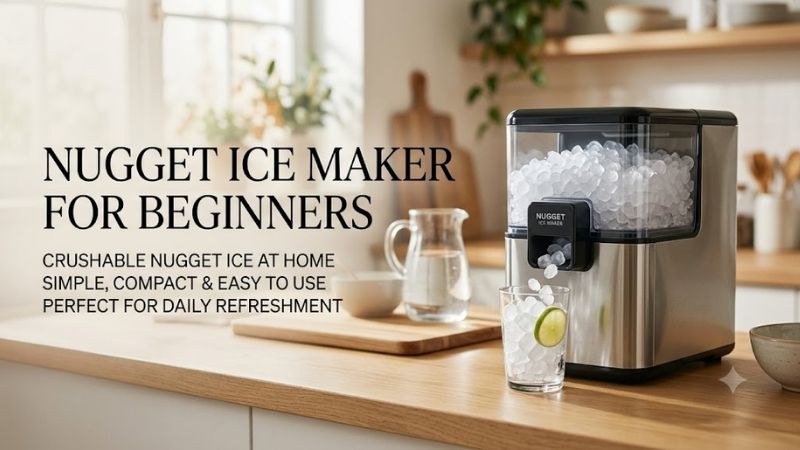
What Is a Nugget Ice Maker?
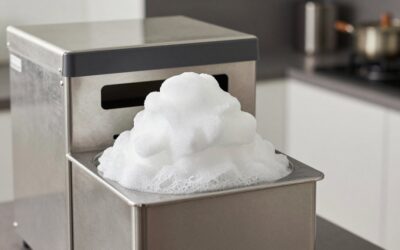
A nugget ice maker produces small, irregular pieces of compressed ice that are softer and more porous than many traditional solid ice cubes.
Nugget ice is often called chewable ice, pellet ice, or Sonic-style ice because of its texture and popularity in fountain drinks.
Unlike conventional ice cubes, which typically freeze into solid shapes, nugget ice is commonly formed by freezing water into a thin layer, scraping it into ice flakes, and compressing those flakes into small pieces.
How Nugget Ice Differs From Regular Ice
| Feature | Nugget Ice | Traditional Solid Ice Cubes |
|---|---|---|
| Texture | Softer, porous, chewable | Harder, denser |
| Shape | Small, irregular nuggets | Cubes or molded shapes |
| Beverage cooling | High surface area can cool drinks quickly | Larger cubes often melt more slowly |
| Chewing experience | Easier to chew, but not risk-free for teeth | Generally harder to chew |
| Typical machine design | Specialized nugget-making mechanism | Conventional ice-making mechanism |
| Maintenance | Requires regular cleaning and descaling | Also requires cleaning, with requirements varying by design |
Nugget ice works particularly well in iced coffee, soda, lemonade, iced tea, and mixed beverages.
Its porous structure can absorb some of the surrounding liquid, creating the distinctive texture many people enjoy.
However, nugget ice is not necessarily the best choice for every beverage. Larger, denser ice cubes may be preferable when slower dilution is important.
Is a Nugget Ice Maker Worth Buying?
A nugget ice maker can be worthwhile if you regularly purchase bagged ice, prefer chewable ice, or frequently prepare cold beverages at home.
It is less compelling if you only need occasional ice for a few drinks each week.
Before purchasing, consider three questions:
-
How often will you actually use nugget ice?
-
Do you have enough countertop space for a dedicated appliance?
-
Are you willing to clean and descale the machine regularly?
If your household uses ice daily and strongly prefers nugget texture, a dedicated machine may offer meaningful convenience.
How to Choose a Nugget Ice Maker for Beginners
Understanding a few practical specifications can help you avoid purchasing a machine that is unnecessarily expensive, difficult to maintain, or unsuitable for your kitchen.
1. Choose the Right Ice Production Capacity
Ice production capacity describes how much ice a machine can produce over a specified period, commonly expressed in pounds per 24 hours.
This is different from the amount of ice the machine can hold in its storage bin.
For example, a machine advertised as producing 30 pounds per day does not necessarily store 30 pounds at once.
The advertised figure also does not mean the machine will produce ice immediately after being switched on.
| Advertised Daily Production | Potential Use Case | What to Consider |
|---|---|---|
| Under 20 lb | Light household use | May be sufficient for occasional drinks |
| 20–30 lb | Regular household beverages | A useful range to consider for many beginners |
| 30–40 lb | Frequent ice use or larger households | Check actual production speed and storage |
| Over 40 lb | High-demand households or entertaining | May involve greater size, cost, or water needs |
These ranges are shopping guidelines, not guarantees of suitability.
Actual output can vary with room temperature, incoming water temperature, operating conditions, and the manufacturer’s measurement method.
Beginner recommendation: Start by estimating how much ice you use during a typical day rather than automatically choosing the machine with the highest advertised production.
2. Understand Ice Production Speed
A nugget ice maker’s daily capacity does not tell you how quickly it will deliver your first usable batch.
Two machines with similar 24-hour production ratings may have different startup times and dispensing patterns.
When comparing models, investigate:
-
Time until the first usable ice becomes available.
-
Whether the machine produces ice continuously.
-
How quickly the bin refills after ice is removed.
-
Whether production pauses when the bin becomes full.
-
Whether the machine resumes automatically when ice is used.
Manufacturer claims about first-ice timing should be treated as operating-condition-dependent estimates.
If you mainly want ice for your morning iced coffee, first-batch speed may matter more than maximum daily production.
3. Measure Your Countertop Space
Countertop nugget ice makers are convenient because many do not require permanent plumbing.
However, they can occupy substantial workspace.
Measure the intended location before buying.
Check these dimensions:
-
Width of the machine.
-
Depth, including space for accessing the water reservoir.
-
Height beneath overhead cabinets.
-
Clearance required around ventilation openings.
-
Space needed to remove the ice bin or open the lid.
Do not assume that a machine will operate correctly in a tightly enclosed cabinet.
Most countertop ice makers require ventilation, and clearance requirements vary by model.
For a small kitchen, a slightly lower-capacity machine with a practical footprint may be a better choice than a larger machine that obstructs food preparation.
4. Prioritize Easy Cleaning and Descaling
Cleaning is one of the most important considerations when buying a nugget ice maker.
Water passes through internal components, and mineral deposits can accumulate over time.
A machine may also develop unwanted odors or microbial contamination if its water system and storage areas are neglected.
Look for features such as:
-
A manufacturer-supported self-cleaning cycle.
-
Accessible water reservoirs.
-
Removable ice bins.
-
Convenient drain plugs.
-
Clear descaling instructions.
-
Available cleaning supplies and replacement components.
A self-cleaning cycle does not necessarily sanitize every surface or eliminate the need for manual maintenance.
Some machines still require separate descaling, wiping, rinsing, and drying procedures.
Beginner recommendation: Choose a machine with a maintenance process you understand before purchasing. A complicated cleaning routine can quickly turn a convenient appliance into a frustrating one.
5. Consider Noise Levels
Countertop nugget ice makers generally contain a refrigeration system, moving ice-making components, and mechanisms that transfer ice into a collection bin.
Depending on the design, you may hear compressor operation, mechanical movement, water circulation, or ice dropping.
Noise matters particularly in:
-
Studio apartments.
-
Open-concept kitchens.
-
Home offices.
-
Kitchens adjacent to bedrooms.
-
Small shared living spaces.
Published decibel ratings can help, but they are only directly comparable when measured under similar conditions.
If a manufacturer does not provide a meaningful noise specification, look for credible independent measurements rather than assuming the machine is quiet.
A model described as quiet may still produce intermittent sounds that become noticeable in a silent room.
6. Understand Water Reservoir Options
Most countertop nugget ice makers use either a manually filled water reservoir or a more specialized water-supply arrangement.
For beginners, a manually filled system is often easier to install because it does not require a dedicated water connection.
However, the reservoir still needs regular attention.
Consider whether:
-
The fill opening is easy to reach.
-
The reservoir can be inspected and cleaned.
-
The machine provides a low-water notification.
-
Refilling requires moving the appliance.
-
The manufacturer specifies drinking-water quality requirements.
A larger reservoir can reduce refill frequency, but it also increases the amount of water sitting inside the appliance if you use ice infrequently.
Do not leave water standing indefinitely. Follow the manufacturer’s instructions for changing water, draining, and cleaning the system.
7. Check Ice Storage and Melting Behavior
One of the biggest surprises for first-time buyers is that many countertop nugget ice makers do not function as freezers.
Their ice collection bins may be insulated without actively maintaining freezing temperatures.
As a result, stored ice gradually melts.
Some machines direct meltwater back into the water system, while others handle it differently.
Before buying, determine whether the model:
-
Keeps ice frozen or merely holds it temporarily.
-
Automatically resumes production as ice is removed or melts.
-
Recirculates melted ice water.
-
Provides a removable storage bin.
-
Allows convenient transfer of ice to a freezer.
If you want to prepare ice for a weekend gathering, you may need to transfer completed batches into freezer-safe containers.
Keep in mind that nugget ice can freeze together into clumps during long-term freezer storage.
8. Evaluate Controls and Useful Convenience Features
A beginner-friendly nugget ice maker does not need a complicated control panel.
Simple, clearly labeled functions are often sufficient.
Useful features include water-level alerts, ice-bin-full detection, cleaning reminders, and status indicators.
Some models also offer scheduling, mobile-app controls, or Wi-Fi connectivity.
These additions can be convenient, but they should not take priority over ice quality, cleaning access, or dependable operation.
A basic machine with well-designed controls may be easier to live with than a feature-heavy model requiring unnecessary setup.
9. Compare Build Quality and Long-Term Support
Nugget ice makers contain moving components and water-contact parts that require proper maintenance.
Long-term ownership costs may include cleaning products, filters where applicable, and replacement components.
Before buying, examine:
-
Warranty coverage and exclusions.
-
Whether service is available in the United States.
-
Availability of compatible replacement parts.
-
Manufacturer maintenance documentation.
-
Return policies.
-
Whether required cleaning supplies are proprietary.
Do not assume a higher price guarantees greater durability.
Independent long-term reliability data, when available, is more useful than appearance or marketing language alone.
Nugget Ice Maker Features: Essential vs. Optional
Beginners can simplify their shopping decisions by separating everyday essentials from conveniences.
| Feature | Priority | Why It Matters |
|---|---|---|
| Genuine nugget ice production | Essential | Delivers the intended ice texture |
| Accessible cleaning system | Essential | Makes maintenance manageable |
| Suitable countertop dimensions | Essential | Ensures the machine fits |
| Adequate ice production | Essential | Meets normal household demand |
| Clear operating controls | High | Reduces learning time |
| Low-water indicator | High | Helps prevent interruptions |
| Removable ice bin | High | Simplifies serving and cleaning |
| Automatic cleaning cycle | High | Can reduce manual maintenance steps |
| Built-in water filtration | Optional | Depends on water quality and model |
| Scheduling function | Optional | Useful for predictable routines |
| Wi-Fi or app connectivity | Optional | Adds convenience but is not necessary |
| Decorative lighting | Low | Primarily aesthetic |
The most practical beginner machine is not necessarily the one with the longest feature list.
It is the machine that consistently meets your needs with the least unnecessary effort.
How Much Should Beginners Spend on a Nugget Ice Maker?
Nugget ice makers generally cost more than basic countertop machines that produce bullet-shaped ice.
The additional cost reflects differences in their ice-making mechanisms and product designs.
Instead of shopping by price alone, divide your budget into three practical categories.
Entry-Level Nugget Ice Makers
Entry-level models focus on basic nugget ice production and straightforward operation.
They may have smaller reservoirs, simpler controls, fewer maintenance conveniences, or more limited support options.
These machines can make sense for beginners who want to try nugget ice without paying for advanced features.
However, a low purchase price is not good value if cleaning is difficult or replacement parts are unavailable.
Midrange Nugget Ice Makers
Midrange models may offer a more balanced combination of ice production, storage, cleaning features, and daily convenience.
For many first-time buyers, this is the category worth comparing most carefully.
Look for meaningful improvements rather than cosmetic upgrades.
A more accessible reservoir or easier draining system can provide greater long-term value than app connectivity.
Premium Nugget Ice Makers
Premium models may include larger production systems, additional controls, advanced maintenance functions, or distinctive designs.
They may appeal to households that use nugget ice heavily or want particular convenience features.
However, premium pricing does not automatically mean faster ice production, quieter operation, or better reliability.
Those claims require model-specific evidence.
Budget tip: Consider the total ownership cost, including electricity, cleaning supplies, replacement filters if required, and potential repairs.
Choosing a Nugget Ice Maker for Different Households
The right machine depends on how and where you plan to use it.
Best Setup for a Single Person or Small Apartment
A compact machine with easy manual filling and uncomplicated cleaning is a sensible starting point.
Focus on footprint, noise, and whether the machine can be drained and stored when not in use.
Very high daily production is usually unnecessary unless you consume unusually large quantities of ice.
Best Setup for a Couple or Small Family
A machine with moderate production capacity, automatic ice-bin detection, and a convenient reservoir may provide a good balance.
Consider how many drinks your household prepares during busy periods rather than averaging ice use across the entire day.
If several people prepare iced beverages at the same time, storage-bin capacity becomes more important.
Best Setup for Frequent Iced Coffee Drinkers
Iced coffee enthusiasts may benefit from consistent nugget texture, convenient morning operation, and quick access to a usable batch.
Pay attention to startup time and whether the machine can operate on a schedule.
Nugget ice has substantial surface area, so it can melt and dilute warm coffee quickly. Cool freshly brewed coffee appropriately before adding ice if you want to reduce dilution.
Best Setup for Entertaining Guests
For parties and gatherings, production rate and the ability to prepare ice in advance matter more than compact size.
Check both daily output and storage capacity.
You may need to run the machine ahead of time and transfer ice to a freezer.
A countertop ice maker with a small collection bin should not be expected to store an entire day’s production at once.
How to Set Up Your First Nugget Ice Maker
Correct setup helps avoid unnecessary operating problems.
Always follow the instructions for your exact machine, especially those covering placement, initial cleaning, and startup.
Step 1: Unpack and Inspect the Appliance
Remove all packaging and check for visible damage.
Confirm that the ice bin, reservoir components, scoop, and other included accessories are present.
Inspect the power cord and plug before connecting the machine.
Do not operate an appliance with visible electrical damage.
Step 2: Choose a Stable Location
Place the machine on a flat, stable countertop near a suitable electrical outlet.
Keep it away from excessive heat, direct sunlight where practical, and areas exposed to splashing water.
Maintain the ventilation clearance specified in the owner’s manual.
Avoid using an extension cord unless the manufacturer explicitly permits it.
Step 3: Clean Before First Use
Follow the manufacturer’s initial cleaning procedure.
Depending on the design, this may involve washing removable parts, running a cleaning cycle, or rinsing the internal water system.
Use only approved cleaning agents and concentrations.
Never mix bleach with vinegar, acids, or other cleaning chemicals.
Step 4: Fill With Appropriate Water
Use water that meets the manufacturer’s requirements and is safe for drinking.
Some machines recommend filtered water or have particular limits related to water quality.
Do not assume distilled water is suitable for every model, especially if the machine uses sensors affected by water conductivity.
Avoid adding flavored liquids, juice, syrup, or other ingredients unless the appliance is specifically designed for them.
Step 5: Start the Ice-Making Cycle
Connect the machine and follow the startup instructions.
Allow the machine to complete its initial operating cycle.
If the manufacturer recommends discarding the first batch of ice, follow that instruction.
Do not assume all nugget ice makers have the same startup time.
Step 6: Collect and Store the Ice
Use a clean scoop or the provided dispensing method.
Avoid touching stored ice unnecessarily with your hands.
If you want to keep ice for later, transfer it promptly into a clean, freezer-safe container.
Remember that many countertop ice bins are not refrigerated storage compartments.
How to Clean and Maintain a Nugget Ice Maker
Regular maintenance is essential for reliable operation and hygienic ice production.
Cleaning requirements depend on water quality, usage frequency, machine design, and manufacturer recommendations.
Daily Care
For a frequently used machine, establish a simple routine:
-
Use drinking-quality water.
-
Handle ice with a clean scoop.
-
Check the reservoir for debris or unusual odors.
-
Keep the surrounding countertop dry.
-
Follow the manufacturer’s guidance on refreshing or draining unused water.
Do not assume recirculated meltwater can remain in the machine indefinitely.
Routine Cleaning
Perform cleaning at the intervals specified in the owner’s manual.
This may include emptying the bin, cleaning removable parts, running the machine’s cleaning cycle, rinsing the reservoir, and wiping accessible surfaces.
A cleaning indicator is helpful, but it should not be your only reason to inspect the machine.
If you notice slime, discoloration, or persistent odors, stop using the appliance until it has been cleaned according to the manufacturer’s instructions.
Descaling Mineral Deposits
Hard water can leave mineral deposits on internal components.
Descaling removes these deposits and is different from general surface cleaning.
Use the descaling solution and procedure approved for your machine.
Do not automatically substitute vinegar, citric acid, or household cleaning products. Some manufacturers restrict particular chemicals because of component compatibility.
After descaling, complete every required rinse cycle before making ice for consumption.
Maintenance Before Storage
If you will not use the machine for an extended period, follow its shutdown and storage procedure.
This commonly involves draining water, cleaning the machine, allowing components to dry, and storing it in a clean location.
Do not seal a damp appliance in an enclosed space, as retained moisture can encourage unwanted growth.
Common Nugget Ice Maker Mistakes Beginners Should Avoid
Mistake 1: Confusing Bullet Ice With Nugget Ice
Not every countertop ice maker produces chewable nugget ice.
Many inexpensive machines make hollow, bullet-shaped pieces.
Check the product’s actual ice-making method and resulting ice shape before purchasing.
Mistake 2: Buying Based Only on Daily Production
A high pounds-per-day rating may sound impressive, but it does not describe first-batch speed or storage capacity.
Evaluate all three factors separately.
Mistake 3: Ignoring Cleaning Requirements
Even a convenient machine can become difficult to maintain if the reservoir is inaccessible or the cleaning process is complicated.
Review the maintenance instructions before making a purchase.
Mistake 4: Expecting the Ice Bin to Work Like a Freezer
Many countertop machines allow ice to melt gradually.
If long-term ice storage is important, plan to use your household freezer.
Mistake 5: Choosing the Cheapest Available Machine
A low upfront cost can be offset by difficult cleaning, limited warranty support, or expensive replacement components.
Consider practical ownership costs instead of purchase price alone.
Mistake 6: Overlooking Kitchen Ventilation
Placing an ice maker too close to a wall or inside an enclosed cabinet can interfere with airflow.
Follow the manufacturer’s installation clearances and keep ventilation openings unobstructed.
Troubleshooting Common Nugget Ice Maker Problems
Some operating problems have straightforward explanations, but troubleshooting should always remain within the manufacturer’s approved procedures.
| Problem | Possible Cause | Beginner-Friendly Action |
|---|---|---|
| Machine produces no ice | Empty reservoir, full-bin detection, or operating fault | Check water level and status indicators |
| Ice production seems slow | Warm environment, warm water, or maintenance needs | Check placement, ventilation, and cleaning guidance |
| Ice melts in the bin | Bin is not freezer-cooled | Transfer ice to a freezer for longer storage |
| Unusual taste or odor | Water quality or cleaning issue | Stop using ice and clean according to the manual |
| Excessive operating noise | Normal mechanical cycling or a possible fault | Verify stable placement and consult troubleshooting instructions |
| Machine requests cleaning | Scheduled maintenance or sensor alert | Complete the prescribed cleaning procedure |
| Water leaks | Improperly seated component, blocked drain, or damage | Unplug if safe, inspect accessible parts, and contact support if needed |
Never open sealed refrigeration components or attempt internal electrical repairs without appropriate qualifications.
If the machine shows signs of overheating, electrical damage, or persistent leakage, disconnect it safely and seek qualified service.
Frequently Asked Questions
Are Nugget Ice Makers Easy for Beginners to Use?
Most countertop nugget ice makers are designed for relatively straightforward operation. Users generally add water, start the machine, and collect ice.
The main learning curve involves understanding production timing, storage limitations, and cleaning procedures.
A machine with simple controls and accessible maintenance components is usually the easiest option for a first-time owner.
Do Nugget Ice Makers Need a Water Line?
Many countertop nugget ice makers use manually filled reservoirs and do not need a permanent water connection.
However, some specialized models may offer direct water connections.
Always check the installation requirements of the exact model before purchasing.
Can You Leave a Nugget Ice Maker Running All Day?
Some models are designed for extended operation and automatically pause ice production when the collection bin is full.
However, continuous operation depends on the manufacturer’s instructions, water availability, ventilation, and maintenance requirements.
Do not assume every model is intended to run unattended for extended periods.
Do Nugget Ice Makers Keep Ice Frozen?
Many countertop nugget ice makers do not have freezer-temperature storage bins.
Ice may gradually melt, and some designs reuse the resulting water.
If you need ice for later use, transfer it to a suitable freezer container.
Is Filtered Water Better for Nugget Ice Makers?
Filtered water may reduce certain impurities and, depending on the filtration method, some substances that affect taste or mineral buildup.
However, ordinary carbon filters do not necessarily remove hardness minerals.
Use water that meets the manufacturer’s requirements and follow the recommended descaling schedule.
How Long Does a Nugget Ice Maker Last?
Service life varies according to construction, usage frequency, maintenance, operating conditions, and repairability.
There is no reliable universal lifespan that applies to every countertop nugget ice maker.
Regular cleaning, appropriate water use, adequate ventilation, and access to replacement parts can help support long-term ownership, but they do not guarantee a specific lifespan.
Conclusion
The best nugget ice maker for beginners is one that produces genuine chewable ice, fits your countertop, meets your household’s daily demand, and is easy to clean. Focus on production speed, storage limitations, reservoir access, noise, and warranty support before paying for premium extras. For most first-time buyers, a straightforward countertop model with practical maintenance features offers the most sensible balance of convenience, usability, and long-term value.

Write Your Review
No reviews yet. Be the first to share your experience!