
A suitable knife honing rod helps maintain compatible kitchen knife edges between more substantial sharpening sessions. This roundup compares seven steel, ceramic, and diamond options, examining rod length, abrasive characteristics, handle comfort, blade compatibility, and everyday maintenance requirements.
Best Knife Honing Rod Options at a Glance
Honing rods provide a convenient approach to maintaining certain kitchen knife edges. However, traditional steel rods and abrasive ceramic or diamond products do not perform identical functions.
Understanding these differences is essential when selecting equipment that matches existing cutlery and maintenance requirements.
| Product | Rod Material | Best For |
|---|---|---|
| WÜSTHOF Classic 10-Inch | Steel | Everyday Western knives |
| WÜSTHOF Classic Ikon 10-Inch | Steel | Premium handle comfort |
| WÜSTHOF 12-Inch Honing Steel | Steel | Longer kitchen blades |
| Victorinox 10-Inch Fine Cut | Steel | Routine maintenance |
| ZWILLING 10-Inch Sharpening Steel | Steel | General household use |
| Mercer Culinary 12-Inch Ceramic Rod | Ceramic | Compatible harder steel blades |
| WÜSTHOF Diamond Sharpening Steel | Diamond abrasive | Light sharpening |
The following recommendations emphasize practical compatibility rather than suggesting every rod is suitable for every knife.
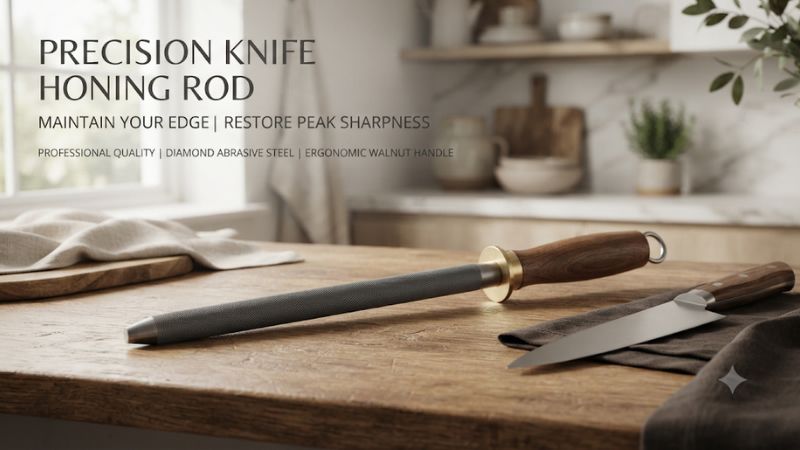
Detailed Knife Honing Rod Product Reviews
WÜSTHOF Classic 10-Inch Honing Steel – Best Overall
The WÜSTHOF Classic honing steel provides a conventional approach to maintaining compatible forged kitchen knives. Its ten-inch working surface offers practical dimensions for numerous household chef’s knives, utility blades, and other appropriate cutlery.
Key Features
- Rod length: Ten inches.
- Rod material: Steel.
- Handle: Triple-riveted construction.
- Primary application: Routine edge maintenance.
Pros
- Practical everyday rod length.
- Comfortable conventional handle design.
- Suitable for compatible Western kitchen knives.
- Straightforward storage.
Cons
- Not intended to restore severely dull edges.
- Compatibility varies with harder or specialized blades.
- Requires appropriate honing technique.
Best For: Households maintaining compatible traditional forged kitchen knives.
WÜSTHOF Classic Ikon 10-Inch – Best Premium Steel Rod
The Classic Ikon honing steel combines a conventional steel maintenance surface with a refined handle profile. It is particularly relevant to buyers who already own compatible premium Western kitchen knives and appreciate coordinated handle construction.
Key Features
- Rod length: Ten inches.
- Rod material: Steel.
- Handle: Classic Ikon design.
- Intended use: Compatible knife edge maintenance.
Pros
- Premium handle construction.
- Practical dimensions.
- Coordinated appearance with matching cutlery.
- Suitable for routine compatible edge maintenance.
Cons
- Higher initial investment than basic rods.
- Does not replace appropriate sharpening equipment.
Best For: Buyers prioritizing refined handle design and compatible premium kitchen cutlery.
WÜSTHOF 12-Inch Honing Steel – Best for Longer Knives
A twelve-inch honing rod provides additional working length for compatible full-sized chef’s knives and other longer culinary blades. Its dimensions can be particularly useful when a shorter rod feels restrictive during ordinary maintenance.
Key Features
- Rod length: Twelve inches.
- Rod material: Steel.
- Handle: Ergonomic construction.
- Application: Compatible longer kitchen knives.
Pros
- Additional working length.
- Suitable for larger compatible blades.
- Established cutlery manufacturer.
- Conventional maintenance design.
Cons
- Requires more storage space.
- May be unnecessarily large for compact kitchen knives.
Best For: Households owning longer compatible chef’s and slicing knives.
Victorinox 10-Inch Fine Cut Honing Steel – Best Everyday Value
The Victorinox fine-cut honing steel offers a practical approach to routine maintenance of compatible kitchen knives. Its functional construction emphasizes everyday usability rather than decorative features.
Key Features
- Rod length: Ten inches.
- Rod material: Steel.
- Surface: Fine-cut configuration.
- Primary use: Routine compatible edge maintenance.
Pros
- Practical general-purpose length.
- Functional handle construction.
- Suitable for frequent household use.
- Straightforward storage requirements.
Cons
- Requires manual technique.
- Unsuitable for certain specialized blade materials.
Best For: Home cooks who prioritize straightforward maintenance and practical construction.
ZWILLING 10-Inch Sharpening Steel – Best General Household Option
The ZWILLING sharpening steel provides another conventional maintenance option for compatible kitchen knife collections. Its ten-inch configuration makes it particularly relevant to households seeking a standard rod length that accommodates numerous everyday blades.
Key Features
- Rod length: Ten inches.
- Construction: Steel maintenance rod.
- Handle: Kitchen-oriented gripping design.
- Application: Compatible conventional kitchen knives.
Pros
- Familiar maintenance format.
- Practical general-purpose dimensions.
- No electrical requirements.
- Convenient addition to a mixed maintenance collection.
Cons
- Limited usefulness for substantially dull knives.
- Specialty blade compatibility must be checked.
Best For: Households seeking a conventional steel rod for compatible everyday cutlery.
Mercer Culinary 12-Inch Ceramic Rod – Best Ceramic Option
The Mercer Culinary ceramic rod uses an abrasive ceramic surface rather than conventional steel construction. This distinction makes it attractive to users seeking an appropriate light sharpening or refining tool for compatible steel blades.
Key Features
- Rod length: Twelve inches.
- Rod material: Ceramic.
- Application: Compatible edge refinement.
- Operation: Manual.
Pros
- Abrasive ceramic maintenance surface.
- Generous working length.
- Useful for suitable harder steel knives.
- No electrical power required.
Cons
- Ceramic construction can be vulnerable to impact.
- Removes some blade material.
- Requires appropriate storage and handling.
Best For: Buyers seeking ceramic edge maintenance for compatible steel kitchen knives.
WÜSTHOF Diamond Sharpening Steel – Best Abrasive Rod
The WÜSTHOF diamond sharpening steel differs from conventional honing rods through its abrasive surface. Its intended function includes removing blade material to restore cutting performance rather than solely maintaining an existing edge.
Key Features
- Abrasive material: Diamond.
- Operation: Manual.
- Application: Appropriate light sharpening.
- Handle: Kitchen-oriented construction.
Pros
- Effective abrasive action on compatible blades.
- Convenient manual maintenance format.
- Useful alternative to traditional steel honing rods.
Cons
- Removes blade material.
- Requires controlled pressure.
- Not suitable for indiscriminate daily use.
Best For: Home cooks who specifically need an abrasive rod rather than conventional honing equipment.
Understanding Steel, Ceramic, and Diamond Honing Rods
Different rod materials influence how the tool interacts with a knife’s cutting edge. Purchasing the appropriate material is more important than selecting the longest or most expensive product.
| Rod Material | Primary Function | Important Consideration |
|---|---|---|
| Traditional steel | Routine edge maintenance | Knife compatibility |
| Ceramic | Abrasive refinement | Fragility and material removal |
| Diamond | Abrasive sharpening | More aggressive maintenance |
Traditional Steel Honing Rods
Traditional steel rods are commonly used to maintain compatible knife edges between sharpening sessions. Their exact interaction with the blade depends on surface texture, blade material, and operating technique.
They are particularly relevant to conventional kitchen knives designed to support this maintenance method.
Ceramic Honing Rods
Ceramic rods have abrasive characteristics and can remove small amounts of blade material during suitable maintenance.
They may be appropriate for certain harder steel kitchen knives, although manufacturer compatibility remains essential.
Ceramic rods require careful handling because accidental impacts can damage their structure.
Diamond Sharpening Rods
Diamond-coated rods provide more pronounced abrasive action than many conventional honing steels.
They should be treated as sharpening equipment rather than automatically used during every cooking session.
Choose this category only when its abrasive functionality matches the maintenance requirements of your knives.
How to Choose the Best Honing Rod
The ideal maintenance rod should correspond to the length, construction, and geometry of existing kitchen knives. Comfortable handling and appropriate storage are also important considerations.
Match Rod Length to Blade Length
Rod length affects working clearance and convenience. A compact rod may be sufficient for smaller utility knives, while longer kitchen blades may benefit from a longer maintenance surface.
Consider the actual working portion of the rod rather than its total length including the handle.
Evaluate Handle Comfort
The handle should provide a predictable gripping position and sufficient separation from the blade movement.
Look for comfortable geometry, appropriate grip texture, and a suitable hand guard where applicable.
Avoid products that are difficult to stabilize or hold securely.
Choose the Appropriate Abrasive Surface
A traditional steel rod and a diamond sharpening rod perform different maintenance functions.
Select the least aggressive appropriate maintenance method recommended for the knife’s condition.
Excessive use of abrasive rods can unnecessarily remove blade material.
Frequently Asked Questions
Does a Honing Rod Sharpen a Knife?
Traditional honing steels primarily maintain compatible existing edges, although their exact effects vary. Ceramic and diamond rods can remove material and perform light sharpening.
What Length Honing Rod Is Best?
A ten-inch rod can be practical for many household knives, while twelve-inch models may be more convenient for longer compatible blades.
Can Honing Rods Maintain Ceramic Knives?
Ordinary honing rods should not be assumed compatible with genuine ceramic blades. Follow the ceramic knife manufacturer’s maintenance recommendations.
Should I Hone My Knives Every Day?
Maintenance frequency depends on knife construction, usage, rod material, and edge condition. Avoid unnecessary abrasive maintenance.
Conclusion
The best knife honing rod should match your blade material, knife length, and maintenance needs. Traditional WÜSTHOF and Victorinox steels suit compatible everyday knives, while ceramic and diamond rods offer abrasive alternatives. Prioritize comfortable handling and the correct maintenance method for lasting performance.









Write Your Review
No reviews yet. Be the first to share your experience!