
Choosing magnetic spice jars for large families involves more than buying the biggest pack. Multiple cooks, bulk refills, and frequent meals demand clear labels and secure mounting. This guide explains how to size jars, divide daily spices from reserves, protect flavor, and avoid overloading a refrigerator or wall.
- Quick Answer: Use Magnetic Jars for Access, Not All Inventory
- Plan Jar Count Around Meals, Not Household Size
- Compare Container Materials, Capacities, and Closures
- Mount Magnetic Spice Jars Safely in a Busy Household
- Organize Seasonings for Fast Family Meal Preparation
- Buying Checklist: What a Large Family Should Verify
- Frequently Asked Questions
- Conclusion
Quick Answer: Use Magnetic Jars for Access, Not All Inventory
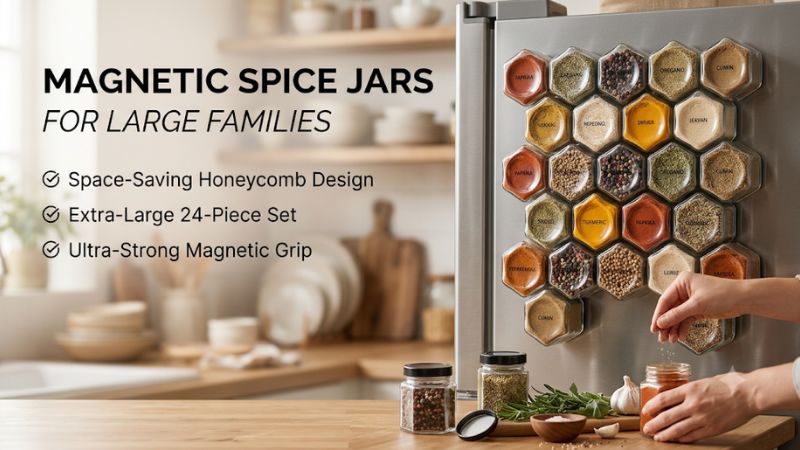
For a large household, magnetic spice storage works best as an accessible front-line collection of regularly used seasonings rather than the sole home for every dried herb, blend, and bulk refill. A practical system holds the ingredients needed during everyday meals in securely closed, clearly labeled jars, while extra stock remains sealed in a cool pantry or cabinet away from direct light and cooking steam.
- Everyday zone: Frequently reached ingredients such as pepper, cumin, paprika, garlic powder, and preferred blends.
- Secondary zone: Less-used baking or specialty spices in a shaded drawer or cupboard.
- Reserve zone: Original bulk packages or refill containers kept sealed and labeled.
- Family-friendly rule: Each spice has one obvious home and one consistent label.
- Safety rule: Use only suitable magnetic surfaces and do not place heavy jars above people or food.
A family of six does not automatically need twice as many individual spice varieties as a family of three. Household size often increases the volume of a few ingredients far more than it increases the number of distinct seasonings. Start by recording actual usage over several weeks, not by purchasing a giant matching set. Magnetic jars are convenient for access; bulk storage is usually better handled separately.
Plan Jar Count Around Meals, Not Household Size
The number of children or adults in a household does not tell you how many jars you need. Families that cook a similar set of meals every week may rely on a focused group of seasonings, whereas a smaller household making diverse cuisines can use many more. The right starting point is a recipe-based inventory that distinguishes frequently used seasonings from occasional additions and duplicate bottles.
Audit the Spices Actually Used During a Typical Week
Take a sheet of paper or simple kitchen list and record the seasonings used at breakfast, lunch, dinner, and meal-prep sessions during a normal week. Count distinct ingredients rather than every time a jar is opened. This reveals the high-use core and helps separate blends that replace several individual spices from products that are purchased for only one special recipe.
A family might reach for black pepper, garlic powder, onion powder, chili powder, cinnamon, and cumin constantly while opening nutmeg or cardamom a few times a month. In that situation, the first six ingredients deserve prime access and the specialty spices do not. This reduces the chance that you will buy twenty-four containers to accommodate a list that looks broad on paper but is rarely used in full.
- Mark an ingredient daily, weekly, or occasional.
- Combine duplicate bottles only after checking freshness and ingredient compatibility.
- Record whether different family members prefer separate blends.
- Check the jar sizes of the six most frequently used spices.
- Keep space for two or three genuinely recurring additions, not speculative purchases.
Separate Frequently Used Jars From Bulk Refills
Large households often buy economical bulk packets or larger containers of high-use spices. Decanting everything into a magnetic display can waste time and create excessive weight, especially when transparent glass jars are involved. A two-level inventory works better: convenient amounts stay in small magnetic containers, and the rest remains protected in well-closed, appropriately labeled original packaging or suitable food-storage containers.
The goal is to reduce the time spent opening cupboards during cooking without turning the refrigerator into a heavy storage wall. For example, a family may refill garlic powder weekly but use cloves or saffron only occasionally. The former can occupy an easy-access magnetic position; the latter is better off protected in a cool shaded cupboard. Keep refill dates on the reserve package so the oldest appropriate stock is used first rather than forgotten behind newer purchases.
Avoid repeatedly topping up a jar that contains a visibly older and less aromatic layer without checking it. Empty, clean, dry, and refill when appropriate, and keep a clear identity label throughout the process. If a seasoning blend contains allergens or has specific manufacturer storage instructions, preserve that information instead of relying on a generic handwritten name. A system should make food preparation safer and more predictable for every household member.
Decide Between One Large Set and Several Small Sets
A single larger matching collection can create consistent labels and a tidy arrangement, but it also commits you to one container style. Several smaller sets can let the system grow gradually, although mixing different sizes, magnets, and lid formats may make the arrangement less uniform. Neither approach is always better; choose based on how clearly the household can understand and maintain the setup.
- One larger set: Easier visual consistency and enough positions from the start, but more initial cost and potentially unused jars.
- Two smaller sets: Lower initial commitment and simple expansion, but possible mismatches between purchases.
- Mixed container sizes: Useful when garlic powder is consumed quickly but ground cloves are not.
- Standardized jars: Easier to arrange and label, but may require unnecessary decanting.
Be careful about mixing brands on one mounting board. Different magnet locations and jar depths can cause one style to protrude more than another, making nearby jars harder to remove. A stable arrangement with fewer jars is preferable to a dense collage that requires moving multiple containers to access one seasoning. Leave enough finger clearance for cooks with different hand sizes and dexterity.
Compare Container Materials, Capacities, and Closures
For large families, container construction affects daily usability more than a marketing promise of premium appearance. A jar that is opened six times a day faces different wear from one used twice a month, and a wide-mouth jar behaves differently from a shaker tin when a cook measures several teaspoons for a large recipe. Focus on refill access, reliable closures, safe contact materials, and realistic resistance to routine handling.
Glass Jars Work Well for Visible Inventory but Add Weight
Glass jars allow family cooks to see when cumin, cinnamon, or chili flakes are running low, which can make grocery planning easier. They are familiar containers for dried food, and a uniform hexagonal profile can use display space efficiently. The main trade-offs are increased weight, breakage risk, and the temptation to place an attractive arrangement where light and heat may diminish spice quality.
Choose glass when: The display is sheltered, mounted safely, and accessed by adults who can handle jars without dropping them.
- Practical benefits: Visible fill level, easy visual identification, reusable format.
- Important limitations: Heavier combined load, fragility, potential light exposure.
- Care priorities: Follow lid cleaning instructions, inspect glass for chips, and dry completely before refilling.
A twenty-four-jar glass display can become substantial when filled. Do not infer that magnets will carry the load because an advertisement shows every container on a door. Magnet and lid construction must be evaluated for the exact kit. A safer strategy is to use a small subset in the most accessible cool location, with the remainder in a drawer or cupboard. This also protects breakable glass from repeated bumps in a busy kitchen.
Metal Tins May Be Convenient for Frequent Shaking and Scooping
Metal magnetic tins are often selected for compact storage and because some versions offer sift-and-pour lids. A busy cook can dispense a small pinch without removing a separate cap, which may be useful during routine family meals. However, thin containers can dent, some designs have lids that loosen with wear, and an opaque body makes it less obvious when the contents are nearly empty.
Choose metal when: You prefer lightweight-looking compact displays and a shaker format for commonly used powders.
- Practical benefits: Compact footprint and dispensing styles for different ingredients.
- Important limitations: Hidden fill level, potential denting, product-specific seals and coatings.
- Care priorities: Inspect lid fit, dry every component, and check the magnet attachment periodically.
Whole spices such as peppercorns, cloves, and mustard seeds may be easier to pour or scoop than shake through small holes. A wide opening is useful when preparing large batches requiring several teaspoons at once. Do not assume that every tin is dishwasher-safe, rustproof, or suitable for direct contact with every food based on its appearance. Check the exact product’s materials and care instructions.
Choose Jar Capacity According to How Fast Each Spice Moves
Capacity should reflect how much of an ingredient you actually use before its quality declines, not just how much product you can fit into a container. High-volume family meals increase consumption of familiar seasonings, but specialty herbs and blends may still be used slowly. Filling all jars to the same level can encourage overbuying and leave a stale collection that looks organized but cooks poorly.
For example, a household making large trays of roasted vegetables twice a week might need a larger paprika or garlic powder container than a jar for ground nutmeg. Mixed-size systems can accommodate this difference, though the layout becomes less symmetrical. Decide whether the benefit of variable capacity outweighs the complexity of different lids and label positions. A simple solution is to store modest amounts in magnetic jars and refill from sealed reserves as needed.
- Estimate the amount used per month for high-turnover spices.
- Prefer smaller containers for slow-moving ingredients.
- Check whether measuring spoons fit through the opening.
- Leave enough room to close lids cleanly without compacting powder against the seal.
- Verify whether an advertised ounce size describes usable liquid volume, not the weight of a particular ground spice.
Mount Magnetic Spice Jars Safely in a Busy Household
A large family’s kitchen has more movement, more hands, and often more competing uses for refrigerator doors, cabinet surfaces, and prep space. A magnetic arrangement must remain stable during normal activity without blocking appliance operation. The best position is not necessarily the most visible one; it is a secure, cool, dry place where jars can be reached without crossing hot burners or crowded work areas.
Confirm the Surface Is Magnetic and Appropriate
Not every stainless steel appliance front accepts magnets. Coatings and metal alloys differ, and a small magnet that appears to stick does not demonstrate that a loaded spice jar will remain secure under repeated use. Test the exact panel, inspect the manufacturer’s restrictions, and observe the fully loaded system carefully before allowing it to become part of a high-traffic cooking routine.
- Test the selected panel rather than assuming all appliance surfaces behave alike.
- Avoid putting jars on door gaskets, hinges, handles, vents, or warm housings.
- Do not mount an array above food-preparation areas where falling jars may contaminate ingredients.
- Keep heavy glass containers low and out of children’s unsupervised reach.
- Leave enough spacing that one jar can be removed without dislodging another.
The safest location may be a dedicated steel board on a stable, manufacturer-approved support away from cooking heat. However, a wall plate adds an installation decision: the board and its fasteners must support the total load. Adhesive strips have surface and weight limitations, and they may not suit tiled or textured walls. Avoid improvised mounting when the installation instructions are unclear or the panel would be within reach of young children.
Keep the Display Away From Stove Heat, Steam, and Sunlight
Heat, humidity, light, and air are major reasons dried spices lose their aromatic strength. A family kitchen can generate substantial steam during boiling, dishwashing, and batch cooking, so the convenience of placing a magnetic array beside the range may be outweighed by poorer storage conditions. Choose a cooler location even if it means taking one additional step to reach the seasonings.
Do not shake a container over a steaming pot; the moisture can enter openings and encourage clumping. Instead, dispense onto a clean dry spoon or into a small bowl before adding the seasoning. Close jars immediately after measuring, especially when several cooks share the workspace. Keep refills away from humid sinks and avoid placing spices directly over appliances that produce persistent warmth.
Clear glass bodies and transparent lids make inventory easy to see, but they also allow light into the container. That does not make glass unusable; it means placement matters. A shaded refrigerator side or cool interior steel plate can be preferable to a sunny kitchen window. If there is no suitable location, an ordinary drawer organizer may protect flavor better while remaining sufficiently convenient.
Plan Access for Children and Multiple Cooks
An organizing system should support family participation without exposing children to heavy or breakable containers. Children helping with meal preparation can measure spices at a clear counter with supervision, but that does not require giving them unrestricted access to a vertical display of glass jars. Consider whether the lowest jars are reachable by younger family members and whether pulling one could cause adjacent jars to fall.
Choose consistent label names, keep the layout predictable, and teach everyone to return a jar to the same position. Family members with reduced grip strength may prefer wider bodies or easy-open lids, but the exact product needs to be checked for that feature. A labeled low drawer can be a better accommodation than a high magnetic wall, particularly when several generations use the kitchen. Access should be safe and comfortable for the actual cooks, not just visually efficient.
Organize Seasonings for Fast Family Meal Preparation
A large collection becomes useful only when the household can find the right seasoning quickly and return it without disturbing the rest. Grouping by cuisine can help some cooks, but everyday frequency is often the most practical organizing principle because it reflects repeated meals. The best system avoids duplicate purchasing, preserves ingredient identity, and makes it obvious when a refill is needed.
Create an Everyday Zone and a Specialty Zone
Keep your five to ten highest-use spices near the normal prep path, then place secondary ingredients farther away or in a cabinet. A family preparing many different meals may benefit from small functional groupings such as baking, roasting, soups, and chili or curry dishes. Avoid forcing the same spice into multiple physical jars unless you have a specific need and a clear rotation plan.
- Everyday cooking: Salt alternatives or blends, pepper, garlic powder, onion powder, paprika.
- Baking: Cinnamon, nutmeg, ginger, cloves, and baking blends when used.
- Regional dishes: Cumin, turmeric, coriander, chili blends, oregano, and other staples matching actual recipes.
- Occasional ingredients: Specialty whole spices in a closed shaded cabinet.
Place labels where they face the cook from the ordinary approach to the work area. For magnetic lids, the label orientation may differ from the side label position on a tin, so test a sample layout before labeling an entire set. If family members routinely return items incorrectly, consider a small printed arrangement guide inside a cabinet door rather than adding more containers or complicated color codes.
Build a Refill Routine That Prevents Stale Duplicates
A shared inventory system can fail when one person buys replacements without knowing that several unopened packages already exist. Keep a small reserve list and note when a spice is approaching empty instead of waiting for a hurried mid-recipe discovery. One clearly designated pantry location for refill stock reduces clutter and makes shopping decisions easier without creating extra full magnetic jars.
After refilling, close the reserve package properly and store it according to the supplier instructions in a cool, dry area. When a jar is empty, examine it for moisture, residue, or damaged seals before adding a new batch. Clean and dry when necessary, and avoid mixing ingredients with different labels or unknown histories. A family benefits more from orderly rotation than from having every jar filled to the brim at all times.
Keep Labels Clear for Allergies and Shared Meals
Some seasoning blends contain ingredients that may matter to family members with allergies or dietary restrictions, including blends with sesame or other ingredients not obvious from the name. An attractive short label is not a substitute for keeping ingredient details available. Preserve packaging information or document it in a household ingredient list, particularly when transferring a blend into an unmarked decorative container.
Use precise names such as “Ground Cumin” and “Cumin Seeds” rather than assuming everyone will recognize the difference. Label salt-free, spicy, and specialty blends clearly if they are commonly confused. If a jar is repurposed, remove the old label completely, clean the container, and verify that the new name matches its contents. An organized kitchen should reduce errors, not make similar-looking powders more difficult to distinguish.
Buying Checklist: What a Large Family Should Verify
Before purchasing a broad magnetic kit, compare the real storage problem against the exact current listing. A set with many jars is not automatically economical if it requires a separate steel board, replacement labels, or a mounting location that the kitchen does not have. The most valuable features are those that reduce daily work for the entire family while keeping spice containers properly closed and safely positioned.
Compare Total Usable Capacity and Access Cost
Advertised jar count is easy to compare, but true usability depends on the size of each container, the opening, and how closely the jars can be placed. A set of small jars may suit many lightly used spices, whereas a kitchen relying on large amounts of garlic and chili powder needs more refill capacity. Think about how often someone must take down, open, refill, clean, and relabel each container.
- Verify the kit: Count jars, lids, magnets, labels, plates, and mounting parts.
- Check the opening: Does a common measuring spoon fit when scooping is needed?
- Evaluate total weight: Consider all filled jars rather than one empty sample.
- Check replacement options: Can damaged lids or individual containers be replaced?
- Review cleaning: Are pieces washable by the method you normally use?
- Confirm return terms: Installation or decanting may affect eligibility for return.
A clear refund policy matters when the kitchen’s magnetic surfaces turn out to be unsuitable or a lid format conflicts with cooking habits. The same applies to families buying a complete display as a gift. Avoid relying on an old discount or unverified price comparison; packages, materials, and retailer terms can change. The correct purchase is the one that fits the household’s current setup and can be maintained over time.
Recognize When a Drawer System Is the Better Choice
Magnetic storage is attractive because it recovers unused vertical space, but a shallow drawer with an angled rack can be more practical when surfaces are nonmagnetic or the only available metal lies near heat and steam. Drawer storage also protects spices from direct light and prevents accidental contact with a crowded refrigerator door. The main limitation is that drawer clearance must be measured carefully, particularly for round jars and raised caps.
Choose a drawer when your household stores numerous glass jars, worries about children knocking containers down, or wants an unobtrusive arrangement. Choose magnetic storage when the surface is genuinely suitable and frequent-use jars need to remain close to the preparation area. A hybrid approach is often strongest: a small magnetic everyday set plus a protected drawer or cupboard for everything else.
Frequently Asked Questions
Larger households naturally ask about number of jars, refill size, magnet reliability, safety, and spice freshness because those factors become more important when containers are opened frequently. The right answers depend on the household’s actual meal rotation and kitchen layout, rather than on a one-size-fits-all chart that prescribes a fixed jar count for a particular number of people.
How Many Magnetic Spice Jars Does a Family of Five Need?
There is no fixed number. Start by counting distinct spices used in normal family meals, then decide which of those need immediate access. A smaller magnetic selection may handle the daily essentials, while less-used ingredients stay in a drawer or pantry. Household size often changes the amount of spice consumed more than the number of varieties required. Avoid filling extra jars solely to use every position in a purchased set.
Should Large Families Buy Three-Ounce or Larger Jars?
Choose size by the actual volume and frequency of use for each seasoning. A commonly used garlic or paprika blend may justify a larger container, while occasional ground nutmeg may need only a small one. Remember that the weight of a particular spice does not directly equal the liquid ounce capacity listed for a jar. Check usable dimensions, opening size, and how much filled weight the mounting system safely supports.
Can Magnetic Jars Fall Off a Refrigerator Door?
Yes, particularly if the surface is weakly magnetic, the jars are overloaded, a magnet is poorly attached, or the display is repeatedly bumped. Test the actual panel and fully loaded containers and follow product instructions for placement. Avoid high locations and areas where falling glass could hit food or people. Magnet performance is model-specific, so an attractive product photo is not proof that every refrigerator door will safely hold the same arrangement.
Is a Magnetic Display Better Than a Spice Drawer for Families?
A magnetic display can improve access to frequently used ingredients if it sits on a safe, cool surface. A drawer can be better for a large or heavy collection, particularly when it reduces sunlight exposure and keeps jars away from children or busy refrigerator doors. Neither choice is universally better. Many families benefit from keeping a few everyday seasonings accessible and storing reserves and specialty ingredients in closed cabinets.
How Often Should We Refill or Replace Spices?
Refill when a regularly used jar is low, but replace ingredients based on packaging guidance, their characteristic aroma and flavor, and any signs of moisture or contamination. Dried spices do not all lose quality at the same rate. Keep a record of refill dates, avoid buying more than the household can use, and store reserve stock securely away from heat, light, and humidity rather than repeatedly topping off neglected jars.
Conclusion
Magnetic spice jars for large families work best when they handle the seasonings used every day instead of becoming a heavy display for an entire bulk pantry. Audit your real recipes, choose jar capacities according to usage, preserve ingredient labels, and store refill stock separately. A compact set of glass or metal containers on a tested magnetic surface can improve meal preparation, but a drawer may be safer for heavier collections or sunlit kitchens. Prioritize stable mounting, secure closures, easy cleaning, and dependable family routines over jar count alone.

Write Your Review
No reviews yet. Be the first to share your experience!