
An under sink trash can for entertaining keeps kitchen waste out of sight while helping hosts manage food preparation, serving, and cleanup. Parties often produce more packaging and disposable materials than everyday meals, so capacity and access matter. This guide explains how to choose a concealed trash system, organize recycling, prevent cabinet messes, and prepare for busy gatherings.
- Quick Answer: What Works Best When Hosting Guests?
- Why Entertaining Changes Kitchen Trash Requirements
- Types of Under-Sink Trash Cans for Entertaining
- Choose Capacity Based on Hosting Habits
- Measure Your Cabinet for Entertaining-Friendly Access
- Lids, Liners, and Odor Management During Parties
- Set Up a Party-Ready Waste System
- Common Buying Mistakes When Planning for Entertaining
- Frequently Asked Questions
- Conclusion
Quick Answer: What Works Best When Hosting Guests?
For households that entertain regularly, a medium-capacity under-sink pull-out or a practical dual-bin system can provide convenient waste collection during food preparation. However, the best solution is not always the largest hidden container. Guests and hosts need clear access, quick liner changes, and a separate plan for bulky packaging or recyclables that may exceed the space available below the sink.
Recommended configurations:
- Best for frequent hosting: Full-extension pull-out waste container with easy bucket removal.
- Best for mixed waste streams: Dual-bin under-sink sorting system.
- Best for smaller gatherings: Compact single-bin cabinet organizer.
- Best for tight plumbing layouts: Door-mounted or specialized sink-base waste container.
- Best for large celebrations: Under-sink kitchen bin supported by a separate accessible recycling or guest-waste station.
- Best for quick cleanup: Removable bucket with a secure, easy-to-replace liner.
An under-sink bin works particularly well for the host preparing meals, but it may be inconvenient as the only disposal point for a party. Guests should not have to search through kitchen cabinets to discard napkins or drink containers.
Consider a small, clearly identified additional waste station near the serving area when entertaining a larger group.
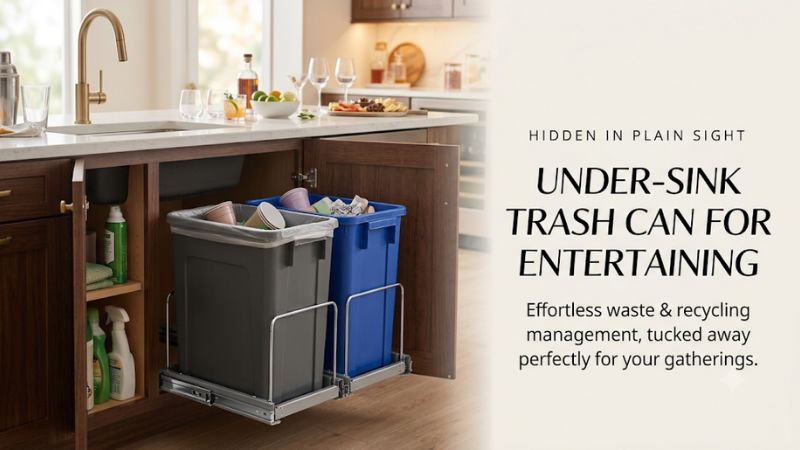
Why Entertaining Changes Kitchen Trash Requirements
Normal household waste can be relatively predictable, but entertaining creates temporary increases in food packaging, beverage containers, disposable serving materials, and preparation scraps. Even a household with a well-organized kitchen may find its everyday bin filling quickly during a party. A good hosting waste plan separates routine kitchen disposal from the larger volume generated by guests.
Understand the Different Types of Party Waste
A dinner party may produce vegetable trimmings, food packaging, used paper towels, drink containers, and discarded serving materials. A casual gathering with takeout or disposable plates can produce even more bulky waste. These categories occupy space differently and may have different disposal requirements under local collection programs.
Common waste categories:
- Food preparation scraps.
- Used paper towels and napkins.
- Food packaging.
- Beverage bottles and cans.
- Disposable plates and serving supplies.
- Leftover food that cannot be safely retained.
- Recyclable materials accepted by the local program.
A twenty-liter container can fill quickly with large lightweight packaging even when the actual weight is modest.
Conversely, a small volume of wet food waste can become heavy and create more cleaning work if the liner leaks.
Plan capacity according to material type and expected disposal frequency, not guest count alone.
Keep the Main Preparation Area Clear
During entertaining, the kitchen often needs to support several activities at once: chopping ingredients, assembling dishes, reheating food, washing utensils, and serving drinks. A freestanding trash can placed in a busy walking path may obstruct movement or become inconvenient.
Concealed under-sink storage can preserve usable floor space while keeping waste collection close to food preparation.
Practical advantages:
- Keeps the main kitchen walkway clearer.
- Hides routine food waste.
- Reduces visible countertop clutter.
- Keeps disposal near washing and preparation.
- Supports organized cleanup after meals.
- Can separate trash from recyclable packaging.
However, a concealed bin also introduces a cabinet-door interaction.
If guests or family members repeatedly open the same cabinet during meal preparation, the door may interfere with someone standing at the sink.
Choose an arrangement that works with the kitchen’s traffic pattern.
Plan for Guest Access Separately
Guests may not know where an under-sink trash can is located. Making everyone open kitchen cabinets to dispose of plates or napkins can interrupt food preparation and create congestion near the sink.
For small dinner gatherings, hosts may simply collect used items after the meal.
For larger parties, a clearly located disposal station can reduce confusion.
Guest waste planning:
- Place a visible trash receptacle near the serving area when appropriate.
- Identify recycling separately if required.
- Avoid blocking doorways or walkways.
- Keep food-contact surfaces separate from waste collection.
- Use clear instructions for disposal categories.
- Empty guest stations before they overflow.
The under-sink bin can remain dedicated to kitchen preparation waste while a larger temporary station handles guest-generated materials.
This division is often more useful than purchasing a very large cabinet trash can that may not fit safely beneath the sink.
Types of Under-Sink Trash Cans for Entertaining
Different waste-container styles offer different advantages during a gathering. A door-mounted bucket provides quick access but modest capacity, while a full-extension pull-out can accommodate larger amounts and simplify bucket removal. Dual-bin systems improve sorting, although they reduce the space available to each individual waste stream. Choose according to the cabinet and the way the kitchen is used during hosting.
Single-Bin Pull-Out Waste Containers
A single-bin pull-out uses one container mounted within a sliding frame. This format is useful when the household wants one concealed trash destination with as much practical capacity as the cabinet allows. Products such as the simplehuman 30L Under Counter Pull-Out Can illustrate the general design, although under-sink plumbing can prevent installation in some cabinets.
Best For: Hosts who prefer one primary kitchen-waste container.
Key Features:
- Sliding access.
- Removable waste bucket.
- One main compartment.
- Frame-mounted installation.
- Capacity selected according to cabinet dimensions.
Pros:
- Simple waste disposal routine.
- Potentially larger single-bag capacity.
- Convenient access during food preparation.
- Fewer categories to manage in the main bin.
Cons:
- Does not separate recycling.
- Requires mounting clearance.
- A full container can become heavy.
- Food-waste odors still need management.
Buy If: You want an accessible main trash container and already manage recycling elsewhere.
Skip If: Your cabinet cannot accommodate a sliding frame or local sorting needs require separate containers at the source.
A single-bin design is often easier for hosts to use while cooking because there is no need to choose between several compartments.
However, the household should still establish a separate location for recyclables and bulky party packaging.
Dual-Bin Waste and Recycling Systems
Dual-bin under-sink organizers provide two separate buckets within one cabinet system. The compartments can support waste sorting during food preparation, although exact categories should match local collection requirements. Products such as the simplehuman 35L Dual Compartment Pull-Out and specialized Rev-A-Shelf sink-base systems illustrate different capacity and installation approaches.
Best For: Hosts who regularly separate waste and recycling in the kitchen.
Key Features:
- Two removable containers.
- Defined sorting compartments.
- Sliding or cabinet-mounted access.
- Optional lids on selected systems.
- Independent liners.
Pros:
- Clear separation of waste streams.
- Organized cabinet interior.
- Convenient removal of individual bins.
- Can reduce mixing of recyclable materials with ordinary trash.
Cons:
- Individual bins have less capacity than one large container of similar total volume.
- More liners and surfaces require cleaning.
- Cabinet fit can be restrictive.
- Guests may use the wrong compartment if categories are unclear.
Buy If: You want separate waste streams within a suitable under-sink cabinet.
Skip If: Large quantities of one waste category dominate your events.
For entertaining, it is important to consider which waste stream fills first.
A small recycling compartment may be overwhelmed by beverage cans while the garbage bin remains nearly empty.
If this happens regularly, a separate temporary recycling container may provide a better solution.
Compact Door-Mounted Waste Containers
Door-mounted bins attach to the cabinet door and follow it as it opens. This configuration can work where plumbing prevents the installation of a full-depth sliding assembly. Small products, including ten-liter cabinet-door bins, can be useful for collecting preparation scraps or limited disposable materials during a gathering.
Best For: Smaller kitchens with plumbing-constrained cabinets.
Key Features:
- Compact bucket.
- Door hanging or approved mounting.
- Removable liner container.
- No full-depth sliding frame.
- Convenient access near the sink.
Pros:
- Uses limited space.
- Usually simpler than a rail system.
- Keeps waste out of sight.
- Can be appropriate for modest volumes.
Cons:
- Limited capacity.
- Requires frequent emptying when hosting.
- Adds weight to cabinet hinges.
- May conflict with interior cabinet contents.
Buy If: Your cabinet has restricted floor space and you plan to empty the bin during larger gatherings.
Skip If: You need the bin to hold all waste from a large party.
The key advantage is convenience during food preparation, not maximum party capacity.
Treat it as a kitchen-workstation container rather than the sole waste receptacle for everyone attending.
Specialized Under-Sink Pull-Out Systems
Some waste systems are designed specifically for sink-base cabinets with plumbing obstacles. Rev-A-Shelf’s under-sink series includes configurations with reduced depth, compact containers, and different slide mechanisms. Such products may suit cabinets where a generic pull-out would interfere with drainpipes, but the exact model must still be matched to the actual cabinet.
Best For: Homeowners who want permanent under-sink waste storage around plumbing.
Key Features:
- Cabinet-specific mounting.
- Defined bucket configuration.
- Sliding hardware.
- Sink-base-oriented dimensions.
- Optional door-mounting components on selected models.
Pros:
- Designed for a challenging cabinet location.
- More organized than loose floor-standing bins.
- Accessible waste storage.
- Potential compatibility with difficult sink bases.
Cons:
- Installation requires accurate measurements.
- Some models provide limited capacity.
- Plumbing layouts differ widely.
- Hardware can complicate cabinet cleaning.
Buy If: You have measured your sink-base cabinet and found a suitable model.
Skip If: You need a temporary or portable waste system.
A specialized product is most valuable when it solves a measurable fit problem.
It should not be selected solely because the cabinet is labeled “under sink” in a product photograph.
Choose Capacity Based on Hosting Habits
The correct bin capacity depends on how frequently a household entertains, the type of meals prepared, and how waste is collected between events. A smaller bin can be sufficient when liners are changed promptly and additional party stations handle bulky materials. A larger bin may reduce interruptions but can also retain food waste for longer than desirable.
Estimate Waste From Your Typical Gathering
Start by considering the kind of event you host rather than selecting a container based only on the number of guests. A sit-down dinner using reusable plates may produce relatively little disposable tableware, while a casual gathering with takeaway packaging or disposable serving products can generate much more bulky waste.
Ask these questions:
- How many people usually attend?
- Are meals cooked from scratch?
- Are reusable plates and glasses used?
- Are drinks served in recyclable containers?
- Is food packaging bulky?
- How frequently can bags be changed?
- Is there a separate outdoor collection point?
Consider the largest realistic waste item that may enter the kitchen bin.
For example, a large food package might fill a small container even though it weighs very little.
Breaking down suitable clean packaging before disposal may reduce volume, but follow local recycling rules and avoid placing unsafe sharp objects into regular bags.
Balance Capacity Against Emptying Frequency
Increasing capacity can reduce bag changes, but it may also encourage holding wet food scraps for too long. During entertaining, the fastest-filling category is not always the most hygienically appropriate to store for extended periods.
Choose a bin that can be emptied comfortably before odors or leakage become a problem.
Capacity considerations:
- Small bins: Convenient for frequent disposal of limited waste.
- Medium bins: Practical for daily kitchen trash and smaller gatherings.
- Large bins: Useful for higher waste volumes where cabinet space permits.
- Dual bins: Better sorting but reduced capacity per compartment.
- Temporary guest bins: Useful for large amounts of lightweight packaging.
A larger container is not automatically a better hosting choice.
A clean, easy-to-empty system with sufficient temporary backup capacity often provides more flexibility.
Plan a Separate Recycling Station
Entertaining can generate substantial numbers of drink containers and cardboard packages. These materials may take up significant room in the kitchen trash can even when local programs accept them for recycling.
Set aside a clearly labeled collection point that meets local disposal guidance.
Useful recycling practices:
- Separate accepted materials by local rules.
- Empty beverage containers when required.
- Keep heavily contaminated items out of inappropriate recycling streams.
- Use a stable container that will not tip.
- Avoid placing sharp glass where guests may be injured.
- Remove collected materials promptly after the event.
Do not assume that every compostable plate, cup, or package is accepted by local composting facilities.
Check the relevant waste-collection requirements before labeling a guest station.
Measure Your Cabinet for Entertaining-Friendly Access
A waste container used during parties may be opened more frequently and emptied under time pressure, so accessibility deserves special attention. The bin must fit inside the cabinet, slide or swing through the opening, and allow a full liner to be removed without striking the sink basin or surrounding hardware. Plumbing and cabinet-door geometry determine the usable space.
Check Width, Depth, and Plumbing Clearance
Measure the narrowest cabinet opening, not merely the cabinet’s nominal exterior width. Record the usable floor area around plumbing, the height beneath the sink basin, and any obstructions created by garbage disposals or water filters.
Measurement checklist:
- Clear door opening width.
- Interior cabinet depth.
- Available height.
- Drain trap position.
- Supply line clearance.
- Cabinet hinge location.
- Door movement.
- Waste-bin removal path.
For sliding systems, confirm the full installed dimensions and travel requirements.
A product that fits inside the cabinet while stationary may still collide with a pipe when extended.
Test Full-Bag Removal Before Installation
The most important hosting-related fit test is whether a full bag can be removed quickly and cleanly. A container with a narrow overhead opening may require pulling or tilting the bag awkwardly, increasing the chance of spills.
Use a cardboard template or empty bin of similar dimensions to simulate removal.
Practical checks:
- Can the lid open completely?
- Is there enough space above the bucket?
- Can the bucket be lifted from its frame?
- Does the bag catch on hinges or pipes?
- Can a new liner be installed comfortably?
- Can the full bin be carried safely?
A system that is easy to load but difficult to empty may become frustrating during party cleanup.
Consider Door Swing and Kitchen Traffic
Under-sink cabinets are often located next to dishwashers, ovens, or preparation areas. Opening a cabinet door and extending a waste container can obstruct movement in a busy kitchen.
Observe how people normally move through the space.
If the bin must remain extended for long periods, a nearby appliance or walkway may become difficult to use.
Traffic considerations:
- Cabinet door opening direction.
- Dishwasher access.
- Counter preparation area.
- Distance to serving stations.
- Nearby drawer movement.
- Space for two people to work safely.
A pull-out bin should be closed after use rather than left extended into a traffic path.
Lids, Liners, and Odor Management During Parties
Food preparation and entertaining generate wet scraps, food residues, and packaging that can create odors or cabinet spills if waste containers are not managed carefully. A good waste system makes liner changes straightforward and provides surfaces that can be cleaned thoroughly. Lids can be helpful, but no ordinary under-sink bin should be treated as completely odorproof.
Choose a Bin That Is Easy to Line and Empty
A liner should fit the waste container without excessive stretching or large amounts of loose material collecting around the rim. Poorly fitting bags can slip into the bucket or become difficult to remove when full.
Features worth checking:
- Clear bucket opening.
- Secure liner support.
- Smooth inner walls.
- Removable container.
- Comfortable carrying handles.
- Appropriate bag dimensions.
- Easy access for wiping spills.
Do not overload a liner beyond what can be carried safely.
Large volumes of wet food waste can become heavy even when the bucket is not filled to the top.
Control Food-Waste Odors
The most effective odor-management strategy is regular removal of waste and cleaning of contaminated surfaces. A lid can help limit exposure, but food scraps retained in a warm cabinet can still produce unpleasant smells.
Practical habits:
- Use clean, suitable liners.
- Empty food waste promptly.
- Wipe spills immediately.
- Clean the bucket after leakage.
- Dry components before reinstalling.
- Inspect the surrounding cabinet for moisture.
Avoid using strong fragrances to disguise a dirty waste container.
The priority is removing the source of odor and maintaining a clean disposal system.
Keep Waste Away From Food Preparation
A kitchen trash system should support hygienic meal preparation. Used paper towels, raw-food packaging, and other waste should not contact clean plates, utensils, or food-preparation surfaces.
Place the waste access point where disposal is convenient but does not require reaching over ready-to-eat food.
Wash hands appropriately after handling garbage or contaminated materials.
Keep waste liners and cleaning products separate from food storage.
For gatherings with children, prevent unsupervised access to hazardous waste or cleaning chemicals stored near the bin.
Set Up a Party-Ready Waste System
A practical entertaining setup should work before guests arrive and remain manageable during cleanup. Preparing liners, selecting disposal zones, and checking cabinet access in advance reduces interruptions when cooking and serving. The goal is not to install a complicated waste station but to create a predictable routine that everyone helping in the kitchen can understand.
Prepare the Kitchen Before Guests Arrive
Empty the main kitchen bin before beginning substantial meal preparation. Replace the liner, inspect the bucket for residue, and confirm that the pull-out mechanism or cabinet-door mount operates smoothly.
Pre-event checklist:
- Empty the existing waste container.
- Install a clean correctly sized liner.
- Wipe the cabinet area if needed.
- Prepare spare liners in appropriate dry storage.
- Identify a separate recycling location.
- Set up a guest disposal point if necessary.
- Confirm the kitchen walkway remains clear.
Store replacement bags where they can be found quickly, but do not allow them to interfere with the sliding frame or plumbing access.
Manage Waste During Food Preparation
During meal preparation, dispose of scraps and packaging promptly rather than allowing them to accumulate on crowded countertops. Use the under-sink bin for its intended waste category and keep recyclable materials separated when appropriate.
Avoid forcing oversized objects into a small bucket.
If the liner becomes heavy or nearly full, replace it before it causes spills.
During-cooking habits:
- Keep cabinet access unobstructed.
- Close the bin after disposal.
- Avoid overfilling.
- Wipe spills promptly.
- Use designated waste categories.
- Wash hands after handling contaminated waste.
This routine helps keep preparation surfaces available and reduces cleanup at the end of the event.
Make Post-Party Cleanup Faster
After guests leave, collect remaining waste by category and assess which bins need emptying. Replace full liners, rinse or clean contaminated containers, and inspect the cabinet floor for hidden leaks.
Post-event checklist:
- Remove full garbage bags.
- Transfer recyclables to the correct collection location.
- Check for food residue.
- Clean removable buckets as needed.
- Wipe cabinet surfaces.
- Confirm the bin is dry before replacing it.
- Restore spare liners for normal daily use.
If a large party generated far more waste than expected, consider improving the temporary guest stations before replacing the entire under-sink system.
The bottleneck may be guest disposal access rather than the kitchen bin’s size.
Common Buying Mistakes When Planning for Entertaining
Hosting can encourage buyers to choose the largest possible trash can or the most complicated dual-bin installation. However, a big container that cannot be removed easily or a sorting system that blocks the sink may create more problems than it solves. The most useful purchase considers normal daily use alongside occasional periods of higher waste volume.
Buying a Large Bin That Cannot Be Removed Easily
A waste bucket can fit beneath the sink while leaving insufficient overhead space for removing a filled liner.
Check the complete removal path.
Consider the sink basin, cabinet frame, and handles.
A medium-capacity pull-out that allows easy emptying may be more practical than a larger container that requires awkward lifting.
Overlooking Guest Disposal Needs
An under-sink bin works well for cooking waste but may not be obvious to guests.
Do not assume that increasing the cabinet bin’s capacity solves every hosting problem.
For larger gatherings, provide a clear disposal location outside the main preparation area.
This can reduce traffic near the sink and help maintain more orderly waste sorting.
Ignoring Cabinet Hygiene
Concealed waste containers can hide small leaks and food residue.
Inspect the cabinet regularly, especially after an event.
Avoid storing unprotected cleaning products where waste may leak.
If the cabinet has persistent moisture or plumbing problems, address those conditions before installing new hardware.
A clean, structurally sound cabinet is essential for a practical long-term system.
Frequently Asked Questions
Under-sink trash storage for entertaining involves two different needs: ordinary kitchen disposal and temporary higher-volume waste collection. Buyers often ask how much capacity is necessary, whether dual bins are worthwhile, and how to control odors during gatherings. The most useful answers account for actual hosting habits and cabinet dimensions instead of relying on a fixed guest-count formula.
What Size Under-Sink Trash Can Is Best for Parties?
There is no universal size. A medium-capacity bin may be sufficient when guests use reusable dinnerware and large packaging is collected separately. More disposable serving materials can fill even a substantial container quickly. Choose a bin that fits the cabinet and can be emptied easily, then add temporary guest waste stations when expected volume exceeds normal capacity.
Is a Dual-Bin System Better for Entertaining?
Dual-bin systems can help separate trash and recyclables during food preparation, but each compartment has less capacity than a similarly sized single container. They are useful when local waste rules and household habits justify sorting at the source. If parties generate many beverage containers, a larger separate recycling station may be more effective than relying solely on a small cabinet compartment.
How Can I Prevent Trash Odors During a Dinner Party?
Use a clean liner, remove food waste regularly, and avoid allowing wet scraps to remain in a warm cabinet longer than necessary. Wipe leaks promptly and clean the bucket after contamination. Lids may help manage exposure but do not eliminate the need for emptying. Avoid using fragrance as a substitute for proper cleaning.
Can I Use an Under-Sink Trash Can for Recycling?
Yes, suitable under-sink systems can hold recyclable materials when the cabinet space and container arrangement permit. Separate materials according to local recycling rules and avoid contaminating them with food waste. Dual-bin systems may be convenient, but larger gatherings can require additional recycling capacity outside the cabinet.
Should Guests Use the Kitchen’s Under-Sink Trash Can?
For small gatherings, it may be reasonable when guests know where it is and the cabinet is easy to access. For larger events, a clearly identified waste station near the serving area is often more convenient. This can keep guests out of busy preparation zones and prevent repeated cabinet opening during cooking.
Conclusion
An under sink trash can for entertaining should support everyday kitchen cleanup while remaining flexible enough for occasional gatherings. Choose a medium-capacity pull-out or a suitable dual-bin system when the cabinet allows, and prioritize easy bag removal over maximum advertised volume. For larger parties, provide separate guest waste and recycling stations instead of overloading the concealed kitchen bin. With accurate measurements, suitable liners, regular emptying, and clear waste categories, the system can make hosting more organized and cleanup less disruptive.






Write Your Review
No reviews yet. Be the first to share your experience!