
A nonstick saucepan makes everyday cooking easier when preparing oatmeal, reheating sauces, simmering grains, or handling ingredients that tend to stick. However, coating type, capacity, heating performance, and cleaning requirements vary considerably. This guide compares seven practical models and explains how to choose one that fits your kitchen.
Best nonstick saucepan choices for everyday cooking
A dependable nonstick saucepan should deliver predictable heating, convenient pouring, and easy cleanup without requiring complicated maintenance. Some models use traditional PTFE-based coatings, while others rely on ceramic nonstick surfaces. These choices offer different advantages depending on cooking habits, stove compatibility, and budget.
All-Clad NS Pro 2-Quart Saucepan – Best overall performance
The All-Clad NS Pro 2-Quart Saucepan combines a hard-anodized aluminum body with a reinforced nonstick coating and stainless steel induction base. Its compact capacity makes it particularly useful for daily sauces, oatmeal, vegetables, and smaller portions where controlled heating and straightforward cleanup matter.
The pan uses All-Clad’s NS Pro nonstick technology, which incorporates a PTFE-based coating reinforced through a specialized ceramic plasma bonding process.
This construction is intended to improve coating durability while maintaining convenient food release.
For everyday cooking, the benefit becomes apparent with ingredients that commonly stick to metal surfaces.
Oatmeal is one example. As starch absorbs water and thickens, the mixture may adhere to the bottom of a conventional saucepan if left unstirred.
A nonstick surface can reduce that tendency, although occasional stirring remains necessary.
The NS Pro also uses a substantial aluminum body to distribute heat effectively.
Its stainless steel induction base extends compatibility to induction cooktops, making it a useful option for modern kitchens.
The two-quart capacity is suitable for one or two servings of oatmeal, modest quantities of sauce, and reheating leftovers.
However, families preparing larger batches may find the volume restrictive.
The saucepan itself is rated for oven use up to 500°F, while its lid has a lower limit. Buyers should always follow the restrictions for the complete cooking arrangement.
For routine stovetop cooking, low and medium temperatures are preferable because excessive heat can shorten the useful life of nonstick coatings.
The manufacturer permits dishwasher cleaning, but gentle handwashing is a sensible approach to preserving the surface.
Advantages: Reinforced nonstick coating, induction compatibility, substantial aluminum construction, convenient two-quart capacity, and controlled pouring.
Limitations: Premium pricing, limited batch capacity, and a coating that still requires careful utensils and temperature management.
Best for: Home cooks seeking a high-quality all-purpose nonstick saucepan for regular small-batch cooking.
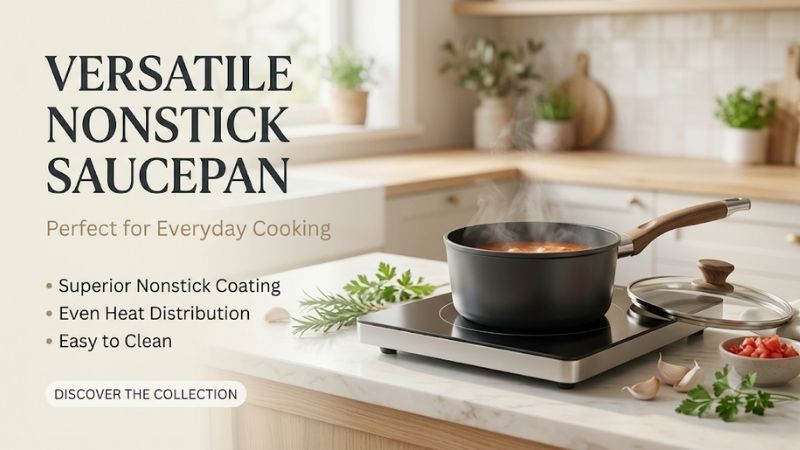
Made In ProCoat Non Stick Saucepan – Best premium clad construction
The Made In ProCoat Non Stick Saucepan combines a five-ply stainless clad body with a professionally applied nonstick cooking surface. Available in two- and four-quart sizes, it is particularly appealing to cooks who want the heating characteristics of fully clad cookware alongside easier release for delicate sauces.
Unlike many nonstick saucepans built primarily from aluminum, the ProCoat uses Made In’s stainless clad construction.
The conductive layers extend through the body, supporting relatively even heating across the base and sidewalls.
This can be useful when preparing sauces that thicken during cooking.
For example, a cheese sauce may collect around the lower sides of a pan as its consistency changes. An accessible interior and controlled heat distribution make stirring easier.
The nonstick surface can reduce stubborn residue from ingredients such as milk, starch, and melted cheese.
However, the coating should not be mistaken for permission to cook carelessly.
Even premium nonstick cookware benefits from moderate temperatures and suitable utensils.
The saucepan features a flared pouring rim, which is valuable when transferring sauces into serving dishes.
Its ergonomic handle is designed for comfortable lifting and controlled pouring.
The two-quart option is useful for smaller households, while the four-quart version offers greater capacity for soups, pasta sauces, and family meals.
The larger model also occupies more storage space and becomes considerably heavier when filled.
Made In recommends handwashing and avoiding abrasive cleaning products.
The saucepan is positioned at the premium end of the market, which may be difficult to justify for occasional use.
Advantages: Fully clad construction, two capacity options, convenient pouring rim, refined handle, and easy-release cooking surface.
Limitations: High cost, handwashing requirements, and the eventual wear associated with coated cookware.
Best for: Frequent cooks who want premium saucepan construction with the convenience of a nonstick interior.
GreenPan Valencia Pro 2-Quart Saucepan – Best ceramic alternative
The GreenPan Valencia Pro 2-Quart Saucepan uses a ceramic nonstick coating designed without intentionally added PFAS. Its hard-anodized aluminum construction, induction-compatible base, and practical lid make it appealing to people who prefer ceramic-coated cookware for sauces, grains, and everyday reheating.
The Valencia Pro series is known for its ceramic coating and durable aluminum body.
The aluminum supports heat distribution, while the magnetic induction base allows use on compatible induction cooktops.
This combination is particularly useful for households transitioning from gas or conventional electric cooking to induction.
The two-quart capacity suits small portions of rice, oatmeal, soup, and other everyday foods.
For example, warming a small quantity of milk for hot chocolate can be easier in a coated saucepan because residue is less likely to bond firmly to the surface.
However, ceramic nonstick coatings have different wear characteristics from traditional PTFE coatings.
Their easy-release performance may decline with repeated heating and use, even when the surface does not show obvious scratches.
Low or medium heat is generally preferable for routine cooking.
The manufacturer advertises high oven-temperature capability for the collection, but individual components may have different restrictions.
Buyers should verify the limits applicable to the pan and lid before transferring them to the oven.
The Valencia Pro’s stainless steel handle provides a secure connection, although metal handles may become hot during prolonged use.
Gentle handwashing can help preserve the coating even when the cookware is described as dishwasher-safe.
Advantages: Ceramic nonstick surface, induction compatibility, hard-anodized aluminum body, useful capacity, and broad cooking versatility.
Limitations: Higher price than entry-level ceramic alternatives and potential decline in food release over time.
Best for: Buyers seeking a premium ceramic-coated saucepan suitable for induction and everyday cooking.
Anolon Achieve 2-Quart Saucepan – Best for affordable convenience
The Anolon Achieve 2-Quart Hard-Anodized Nonstick Saucepan is designed for straightforward everyday food preparation. Its aluminum construction, triple-layer nonstick finish, and tempered glass lid make it useful for home cooks who want convenient food release without paying for premium fully clad cookware.
Anolon applies a nonstick finish to both the interior and exterior surfaces.
This can simplify cleaning when sauces drip over the rim or splatter onto the outside of the pan.
The hard-anodized aluminum body provides a durable foundation and supports relatively efficient heat distribution.
The two-quart capacity is appropriate for reheating soup, preparing oatmeal, and cooking smaller portions of grains.
A tempered glass lid allows users to monitor the contents without lifting it repeatedly.
This is useful when simmering rice or preparing foods where maintaining a relatively stable liquid level matters.
However, the lid is not a substitute for attentive cooking.
Starchy mixtures can foam and rise, especially when the heat is too high.
The saucepan is not induction-compatible, making stove compatibility an important purchasing consideration.
Its oven-temperature rating is relatively high for coated cookware, but buyers should confirm the separate restrictions for the lid and handle.
The manufacturer recommends handwashing rather than dishwasher cleaning.
Another limitation is that the nonstick surface eventually wears with regular use.
Avoid metal scraping and excessive temperatures, even when the product is described as durable.
The Achieve offers practical everyday convenience but is less suitable for cooks who want cookware intended for decades of intensive use.
Advantages: Hard-anodized construction, coated interior and exterior, glass lid, useful two-quart capacity, and accessible pricing.
Limitations: No induction compatibility, handwashing requirements, and normal nonstick coating wear.
Best for: Budget-conscious households using gas or conventional electric cooktops.
Best specialty nonstick saucepans for different kitchen needs
Certain cooking routines benefit from specialized designs rather than a conventional two-quart pan. Space-saving cookware may suit small apartments, while larger ceramic saucepans accommodate family meals. The following options provide additional flexibility for buyers with specific storage preferences or ingredient requirements.
Calphalon Premier Space-Saving 2.5-Quart – Best for organized storage
The Calphalon Premier Space-Saving Hard-Anodized Nonstick Saucepan is designed for households that want substantial cookware without sacrificing cabinet organization. Its 2.5-quart capacity, tempered glass lid, and stack-friendly construction make it appealing to people who own other compatible Calphalon Premier pieces.
The most distinctive feature is its storage-oriented design.
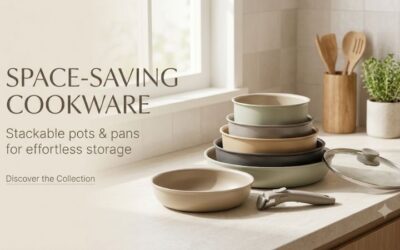
The Premier Space-Saving collection is engineered so compatible pieces can stack in a more organized arrangement.
This can reduce the cabinet space required by a larger cookware collection.
However, the benefit is greatest when several pieces from the same compatible range are used together.
A single saucepan still requires ordinary storage space.
Its 2.5-quart capacity provides slightly more flexibility than a standard two-quart model.
That additional volume is helpful when preparing oatmeal for several people or reheating a family-sized portion of soup.
The hard-anodized aluminum body supports everyday heating, while the three-layer nonstick surface helps reduce food adhesion.
The saucepan also includes a glass lid for covered simmering.
However, this particular model is intended for gas, electric, and glass cooktops rather than induction.
Buyers should not assume that all Calphalon Premier products offer identical stove compatibility.
The pan is dishwasher-safe according to the manufacturer, but gentle cleaning may help preserve the coating.
The stackable design also creates a practical buying consideration.
Compatible storage arrangements should protect the cooking surface from contact damage.
Advantages: Space-saving design, 2.5-quart capacity, durable aluminum body, glass lid, and convenient nonstick performance.
Limitations: No induction compatibility, greatest storage benefit with matching cookware, and potential availability limitations.
Best for: Apartment kitchens and households that prioritize organized cookware storage.
Caraway Ceramic Sauce Pan 3-Quart – Best for stylish family use
The Caraway Ceramic Sauce Pan combines a three-quart capacity with a ceramic-coated aluminum body and coordinated lid. Its induction-compatible construction, distinctive appearance, and relatively spacious interior make it suitable for buyers who want a multipurpose saucepan for family meals and everyday sauces.
The larger three-quart capacity provides useful headroom when preparing pasta sauce, soup, oatmeal, or grains for multiple people.
For example, a two-quart saucepan may feel crowded when warming a sauce containing vegetables and meat.
The extra capacity makes stirring easier and reduces the risk of splashing.
Caraway’s ceramic coating is manufactured without intentionally added PTFE or PFAS.
This is a meaningful distinction for buyers comparing ceramic and conventional nonstick technologies.
However, a ceramic coating does not guarantee permanent food-release performance.
As with other coated cookware, the surface may become less slippery after prolonged use.
The saucepan is compatible with gas, electric, and induction cooking surfaces.
Its coordinated appearance may appeal to buyers building a matching kitchen collection.
However, styling should not overshadow practical considerations.
A three-quart pan occupies more storage space and can be heavy when filled.
The ceramic interior also requires gentle cleaning and suitable utensils.
Avoid using sharp metal implements that could damage the cooking surface.
Caraway cookware is priced above many basic aluminum saucepans, so its value depends partly on whether the buyer appreciates the design and material preferences.
Advantages: Generous three-quart capacity, ceramic nonstick coating, induction compatibility, coordinated appearance, and versatile everyday use.
Limitations: Premium price, larger storage footprint, and finite coating lifespan.
Best for: Households seeking a larger ceramic-coated saucepan for everyday cooking.
GreenPan Chatham Pro 2-Quart – Best budget ceramic choice
The GreenPan Chatham Pro 2-Quart Saucepan offers a ceramic nonstick cooking surface in a practical compact format. Its hard-anodized aluminum construction, glass lid, and induction compatibility make it an attractive alternative for buyers who want ceramic cookware without moving into the highest price category.
The Chatham Pro uses GreenPan’s Thermolon ceramic nonstick technology.
Its coated surface is intended to simplify everyday cooking and cleaning.
The saucepan is particularly useful for warming sauces, preparing grains, and reheating smaller meals.
Its two-quart capacity balances adequate cooking volume with manageable storage requirements.
For example, a single person can prepare a portion of oatmeal without using a much larger pot.
The glass lid helps monitor food during gentle simmering.
This can reduce unnecessary lid removal, although users should still manage heat to avoid boilovers.
The Chatham Pro has an induction-compatible base, expanding its usefulness across different stovetop designs.
The manufacturer also provides separate oven-temperature guidance for the saucepan and lid.
That distinction matters when preparing recipes that begin on the stove and finish in the oven.
Although the cookware is listed as dishwasher-safe, gentle handwashing is recommended for preserving the coating.
Ceramic surfaces should not be overheated simply because their advertised oven temperature is high.
Routine stovetop use generally benefits from low or medium heat.
The Chatham Pro is a practical choice for buyers who want an affordable ceramic-coated saucepan without excessive features.
Advantages: Accessible price positioning, ceramic nonstick surface, induction compatibility, glass lid, and lightweight construction.
Limitations: Coating performance may decline with use, limited capacity, and care requirements for maintaining food release.
Best for: Individuals and couples seeking an induction-ready ceramic saucepan at a reasonable price.
How to choose a nonstick saucepan that fits your cooking habits
The best nonstick saucepan depends on serving size, stove compatibility, and the foods prepared most frequently. Coating technology is important, but buyers should also consider handle comfort, heat distribution, and whether the saucepan can accommodate both quick reheating and longer simmering tasks.
Understand ceramic and PTFE nonstick coatings
Ceramic and PTFE-based nonstick surfaces both aim to reduce food adhesion, but they use different coating technologies. Ceramic cookware is often marketed as an alternative to conventional nonstick products, while PTFE remains common in pans designed for convenient low- and medium-temperature cooking.
PTFE coatings can provide excellent food release when maintained correctly.
However, they should not be overheated beyond the manufacturer’s operating guidance.
Never leave an empty coated saucepan over high heat for an extended period.
Ceramic nonstick coatings are generally based on sol-gel technology rather than traditional PTFE.
They are often advertised as manufactured without intentionally added PFAS.
However, the term ceramic does not mean the entire saucepan is made from solid ceramic.
Most models use aluminum bodies with a thin coated cooking surface.
Both technologies can lose their easy-release properties over time.
Ceramic coatings may become less slippery through repeated use even without obvious visible damage.
PTFE coatings can develop scratches, wear, or other deterioration.
Regardless of coating type, low to medium stovetop heat is usually the most appropriate range for daily sauces and grains.
Use wooden, nylon, or silicone utensils when recommended.
A coating should make cooking easier, but it cannot replace proper temperature control.
Choose the right capacity for your household
Saucepan capacity affects how conveniently food can be stirred, how much headroom remains during boiling, and whether the pan fits in the kitchen. A compact model is useful for single servings, while larger households often benefit from greater volume.
A 1.5- or two-quart saucepan is suitable for warming milk, cooking one or two portions of oatmeal, and preparing small batches of sauce.
A 2.5- or three-quart model provides more flexibility for family meals.
Larger saucepans can accommodate additional pasta sauce, vegetables, and grains without becoming crowded.
However, a large pan is not automatically better for small recipes.
A shallow quantity of liquid can spread across the base, changing the evaporation rate.
It may also become harder to stir ingredients efficiently.
Consider typical portion sizes rather than buying solely for occasional gatherings.
If the household prepares small breakfasts every morning but only rarely cooks for several guests, a compact saucepan may be more useful.
A second larger pot can handle occasional high-volume tasks.
Always respect the manufacturer’s maximum fill guidance.
Starchy foods and milk-based mixtures may foam significantly, so the entire rated capacity should not be treated as safe working volume for every recipe.
Check induction compatibility, lids, and handle design
Not every nonstick saucepan works with an induction cooktop. Aluminum bodies often require a magnetic base to interact with induction heating systems. Buyers should confirm compatibility with the exact model rather than assuming that every hard-anodized or ceramic saucepan supports induction.
An induction-compatible saucepan generally includes a suitable magnetic base.
Models such as All-Clad NS Pro, GreenPan Valencia Pro, and Caraway are designed for induction use.
Other cookware, including certain Anolon Achieve and Calphalon Premier Space-Saving models, may not be compatible.
A lid also influences versatility.
Glass lids provide visibility, while stainless steel lids may offer greater resistance to accidental impact.
However, lid temperature limits can differ from those of the saucepan itself.
Handle comfort matters when pouring hot liquid.
Choose a shape that supports a secure grip and keeps the hand at a practical distance from the cooking body.
A long handle can increase storage requirements, while a short handle may reduce leverage.
Evaluate the complete saucepan dimensions before purchasing.
These practical details often determine whether the cookware remains pleasant to use after the initial purchase.
Protect nonstick performance through proper maintenance
Coated cookware requires gentler treatment than uncoated stainless steel because the food-release surface can deteriorate through abrasion, overheating, and repeated use. A consistent cleaning routine helps prolong usefulness and makes it easier to recognize when a saucepan should be replaced.
Allow the saucepan to cool sufficiently before washing.
Avoid immersing an extremely hot pan in cold water.
Use warm water, mild dish soap, and a nonabrasive sponge.
Even when dishwasher use is permitted, handwashing can be beneficial for maintaining the coating.
Avoid metal scraping and sharp utensils unless the manufacturer specifically approves them.
Do not stack cookware directly against a nonstick interior without appropriate protection.
A soft pan protector or clean cloth can prevent contact damage.
Cooking sprays can sometimes leave difficult-to-remove residue, so follow the manufacturer’s recommendations regarding cooking fats.
Overheating should be avoided, particularly when the pan is empty.
If the coating develops extensive peeling, flaking, or significant damage, stop using the saucepan and consider replacement.
Nonstick coatings do not generally provide the same indefinite service life as uncoated stainless steel.
Their value lies in convenience, which should be balanced against eventual replacement costs.
Conclusion
The best nonstick saucepan depends on coating preference, capacity, and stovetop compatibility. All-Clad NS Pro offers versatile everyday performance, Made In ProCoat provides premium clad construction, and GreenPan Valencia Pro is a strong ceramic alternative. Anolon suits budget-conscious households, while Calphalon, Caraway, and GreenPan Chatham Pro address storage, capacity, and value. Choose a model that fits your usual meals, use moderate heat, and maintain the coating carefully.


Write Your Review
No reviews yet. Be the first to share your experience!