
A stainless steel stock pot can handle everything from pasta and vegetable soup to long-simmered bone broth, but size alone does not determine its usefulness. The best choice combines a stable base, comfortable handles, a well-fitting lid, and construction suited to your burner. These six options cover everyday and large-batch cooking.
Best stainless steel stock pot choices for daily cooking
A reliable stock pot should accommodate large volumes of liquid without becoming difficult to heat, lift, or clean. Stainless steel provides a durable cooking surface, while aluminum cores and bonded bases can improve heat distribution. The following models offer different combinations of construction quality, capacity, and everyday convenience.
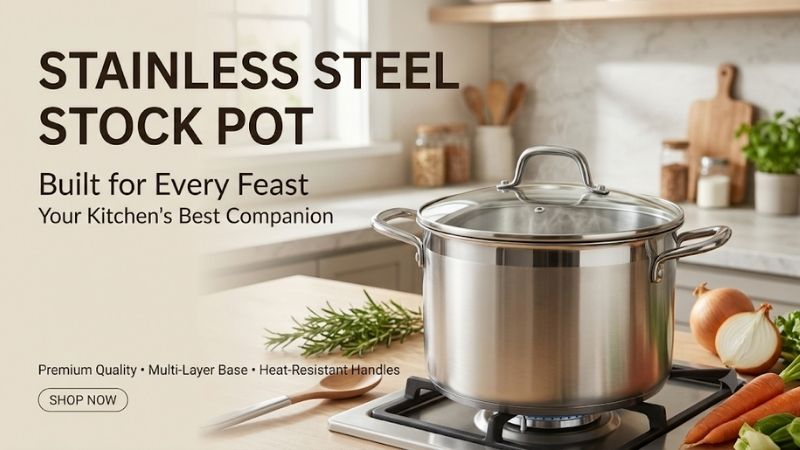
All-Clad D3 Stainless 8-Quart Stockpot – Best overall
The All-Clad D3 Stainless 8-Quart Stockpot is a strong option for cooks who want dependable performance across a variety of recipes. Its fully bonded tri-ply construction combines stainless steel and aluminum, allowing heat to spread through the base and sidewalls rather than remaining concentrated at the bottom.
The D3 uses an aluminum core sandwiched between stainless steel layers. This construction is particularly useful when a recipe begins with browning ingredients before liquid is added.
For example, a chicken soup can begin with sautéed onions, carrots, and celery. Once the vegetables soften, chicken and broth can be added for a gentle simmer. The stainless steel interior tolerates stirring and deglazing without the restrictions associated with coated cookware.
Its 8-quart capacity suits family meals, moderate stock batches, and pasta preparation. Although it holds substantial liquid, it remains more manageable than oversized commercial stockpots.
The high sidewalls reduce splashing, while the fitted stainless steel lid helps control evaporation. Two riveted side handles allow the pot to be moved with both hands.
The pot is compatible with induction and conventional stovetops. Its manufacturer-listed oven and broiler rating reaches 600°F, although that capability is rarely necessary for routine stock preparation.
The biggest disadvantage is its premium price. Because many stockpot recipes involve boiling water or simmering liquid, not every household will benefit sufficiently from fully clad construction to justify the additional cost.
Advantages: Fully clad tri-ply construction, induction compatibility, durable interior, secure handles, and versatile capacity.
Limitations: Premium pricing and substantial weight when filled.
Best for: Households wanting one premium stockpot for soups, chili, pasta, and occasional braising.
Cuisinart MultiClad Pro 8-Quart Stockpot – Best value for fully clad construction
The Cuisinart MultiClad Pro 8-Quart Stockpot offers fully clad construction at a more accessible price point than many premium alternatives. Its aluminum-core triple-ply body distributes heat through the vessel, making it suitable for soups, stews, sauces, and recipes that require ingredients to be sautéed before simmering.
One advantage of this model is its broad cooking base. While the pot is designed for substantial liquid volumes, its bottom also provides a useful surface for developing flavors.
A batch of chili, for example, can begin with browning ground beef and softening onions. Tomatoes, beans, and stock can then be added without transferring the ingredients to another vessel.
This process reduces cleanup while incorporating browned cooking residues into the final dish.
The stainless steel interior is durable and does not contain a conventional nonstick coating. It can withstand the stirring and scraping involved in preparing thicker soups or sauces.
The included stainless steel lid fits securely, helping retain moisture during covered simmering. Riveted side handles provide support when the pot needs to be moved.
Its induction compatibility also makes it flexible for households using modern electric cooking equipment.
However, an 8-quart vessel can become heavy once filled. Moving a full pot from the burner to a sink is less safe than removing liquid gradually or allowing it to cool first.
The MultiClad Pro is especially attractive when fully clad construction matters but the buyer does not want to pay the highest premium.
Advantages: Triple-ply construction, practical capacity, induction compatibility, and competitive value.
Limitations: Large storage footprint and considerable filled weight.
Best for: Home cooks seeking fully clad stainless steel performance at a midrange price.
Tramontina Signature Tri-Ply Clad 8-Quart Stock Pot – Best balanced budget upgrade
The Tramontina Signature Tri-Ply Clad 8-Quart Stock Pot provides an alternative for cooks who want the heating characteristics of fully clad stainless steel without moving directly into luxury cookware. Its layered construction supports soups, stews, pasta, and other everyday recipes requiring a large, durable cooking vessel.
The pot uses a bonded aluminum core with stainless steel surfaces. Unlike an encapsulated-base design, the conductive metal extends through the body.
That difference can be useful when cooking thick mixtures because food may contact the walls as well as the bottom during stirring.
For example, preparing a substantial tomato-based soup often involves repeatedly scraping ingredients from the sides. More consistent heating through the vessel helps manage the cooking process.
Its 8-quart capacity is appropriate for preparing several portions of pasta, vegetables, soup, or chicken stock.
The fitted lid supports covered simmering, while securely attached stainless steel handles allow two-handed lifting.
This cookware is compatible with induction, gas, and conventional electric cooking surfaces. The stainless steel interior also withstands repeated use without the need for coating-specific utensils.
The practical limitation is that fully clad construction does not automatically make the pot faster at boiling water. Burner output, water volume, and lid use are major influences on boiling time.
Buyers should choose this model for its broader cooking versatility rather than expecting dramatic improvements in every boiling task.
Advantages: Fully clad construction, induction-ready base, practical capacity, and accessible positioning.
Limitations: More expensive than basic disc-bottom pots and relatively bulky for small kitchens.
Best for: Everyday home cooks wanting durable, versatile stockpot construction.
Other stainless steel stock pot options for large batches
Not every household needs a premium fully clad stockpot. Some kitchens benefit more from additional capacity, straightforward construction, or improved thermal stability. These options illustrate the trade-offs between large cooking volumes and premium metal layering, helping buyers choose based on actual meal preparation requirements.
Made In Stainless Clad 12-Quart Stock Pot – Best for big-batch cooking
The Made In Stainless Clad 12-Quart Stock Pot is designed for households preparing substantial quantities of food. Its five-ply construction extends through the base and sidewalls, while the generous capacity provides room for large stock batches, pasta, vegetables, and soups intended for several meals.
The 12-quart size is especially useful when preparing homemade chicken or vegetable stock.
Stock ingredients occupy considerable space before they soften. Bones, vegetable scraps, and water require enough room to remain submerged without filling the vessel dangerously close to the rim.
A larger pot reduces the need to divide ingredients between several smaller containers.
The five-ply construction also supports cooking techniques beyond simple boiling. Aromatics can be sautéed before liquids are introduced, helping create a flavorful foundation for soup.
The stainless steel interior is durable and compatible with normal stirring and deglazing techniques.
Made In offers matching stockpot configurations with optional accessories in its range. However, buyers should verify whether inserts are included with the specific package rather than assuming they come standard.
The main disadvantage is handling. Twelve quarts of water alone weigh approximately 25 pounds, before accounting for the pot and ingredients.
A full vessel should not be moved casually, particularly when the contents are near boiling.
This model makes the most sense for dedicated batch cooks rather than households preparing only two or three servings.
Advantages: Large capacity, five-ply construction, induction compatibility, and versatile cooking performance.
Limitations: Requires substantial storage space and careful handling when full.
Best for: Large households, serious meal preppers, and cooks regularly preparing homemade stock.
Tramontina Gourmet 12-Quart Covered Stock Pot – Best for affordable large capacity
The Tramontina Gourmet 12-Quart Covered Stock Pot is designed around practical volume and dependable everyday construction. Its stainless steel body uses a magnetic tri-ply base, making it useful for preparing pasta, boiling vegetables, simmering broth, and cooking large quantities without the cost of fully clad sidewalls.
The important construction distinction is its bonded base.
An encapsulated aluminum layer beneath the cooking surface helps distribute burner heat, while the stainless steel walls provide containment and durability.
For water-heavy recipes, this design can be sufficient. Once liquid circulates through convection, temperature differences within the pot become less significant than they would be during dry sautéing.
That makes the Gourmet model suitable for large batches of pasta, corn, broth, and other liquid-based meals.
Its 12-quart capacity is useful when preparing food for gatherings or freezing stock in smaller portions.
The pot features riveted stainless steel handles and a flared pouring rim. It is compatible with induction as well as conventional stovetops.
However, the high liquid capacity should not be confused with unlimited cooking space. Ingredients that require browning still need sufficient surface contact, and a stockpot is not necessarily the best shape for searing substantial quantities of meat.
The base-heavy design also means heat distribution through the walls differs from fully clad cookware.
Advantages: Generous capacity, induction-compatible base, sturdy construction, and practical value.
Limitations: Less comprehensive wall heating than fully clad cookware and a large storage footprint.
Best for: Budget-conscious households that frequently boil, simmer, or prepare large quantities of stock.
All-Clad D5 Brushed Stainless 8-Quart Stockpot – Best premium five-ply alternative
The All-Clad D5 Brushed Stainless 8-Quart Stockpot is a premium alternative for cooks who prefer substantial construction and controlled heating. Its five-ply bonded body differs from the lighter D3 configuration, offering another approach to heat distribution and temperature response during long cooking sessions.
The D5’s layered construction includes conductive and stainless steel layers arranged to provide consistent heating.
Compared with thinner cookware, a substantial multi-ply body can change how quickly the pot responds when heat is increased or reduced.
This is useful when a recipe moves between sautéing, simmering, and maintaining a gentle temperature.
For example, a cook preparing a hearty seafood chowder may begin by softening vegetables, add stock, and finish with dairy over moderate heat.
The stainless steel interior allows the bottom to be stirred and scraped without worrying about damaging a nonstick coating.
The 8-quart capacity provides a practical balance between family-sized recipes and storage requirements.
Its brushed exterior also offers a different appearance from highly polished alternatives.
Nevertheless, five-ply construction is not automatically superior for every recipe. When the primary task is boiling large amounts of water, the differences between premium tri-ply and five-ply vessels may be less meaningful than differences in burner power and capacity.
The D5 is therefore best justified by a preference for its handling, construction, and broader cooking capabilities.
Advantages: Five-ply bonded construction, durable stainless steel interior, induction compatibility, and premium finish.
Limitations: High cost, considerable weight, and limited added value for simple boiling tasks.
Best for: Enthusiastic cooks who want premium construction and frequently prepare soups, stews, and sauces.
How to choose a stainless steel stock pot that lasts
A useful stockpot should fit the meals you prepare, the burner you use, and the available storage space. Capacity alone can be misleading because a tall, narrow pot behaves differently from a shorter, wider one. Construction, handle strength, lid design, and maintenance requirements all influence long-term satisfaction.
What stockpot size works best for different households?
Stockpot capacity affects the number of servings you can prepare, but it also determines heating time, storage requirements, and handling weight. A larger pot offers flexibility for meal preparation, although it may become inefficient when used for very small quantities or placed on an undersized burner.
A 6-quart stockpot is appropriate for moderate soup batches, vegetables, and pasta preparation in smaller households.
An 8-quart model provides additional room for family cooking and occasional gatherings. It is a versatile starting point for households that want one large cooking vessel.
A 12-quart pot becomes useful when making substantial stock batches, preparing large amounts of pasta, or cooking food for multiple days.
Larger capacities are available for specialty tasks, although they require adequate burners, storage space, and safe lifting arrangements.
When selecting a pot, consider its practical working volume. Ingredients should not reach the rim during boiling because bubbling and stirring can cause dangerous overflow.
A pot also needs sufficient headroom when preparing ingredients that expand or create foam.
For most households, choosing the smallest pot that comfortably handles the largest regular recipe produces a better balance than automatically buying the largest available model.
Is fully clad stainless steel better than a tri-ply base?
Fully clad cookware uses bonded metal layers through the base and sidewalls, while disc-bottom cookware concentrates its conductive material underneath the cooking surface. Both approaches can work well, but their advantages differ depending on whether the recipe involves browning, thick liquids, or primarily boiling water.
Fully clad construction is particularly useful for recipes involving multiple cooking stages.
If you begin by sautéing onions, browning meat, and building a thick sauce, consistent heating across the vessel can improve control.
A tri-ply base is often sufficient for boiling pasta, cooking vegetables in water, and simmering thin stock.
In these recipes, the circulating liquid helps distribute heat throughout the contents.
Another factor is cookware weight. Premium fully clad vessels may be heavier than simpler alternatives.
The number of plies should not be treated as a stand-alone quality ranking. Layer thickness, material composition, manufacturing quality, and pot shape all matter.
For households using a stockpot primarily for water-based cooking, a good disc-bottom model can offer excellent practical value.
For cooks who frequently prepare thick stews or begin recipes with browning, fully clad construction provides greater versatility.
How to prevent scorching, discoloration, and handling problems
Stainless steel cookware can remain useful for many years, but large vessels still require appropriate heating and cleaning habits. Scorching usually results from concentrated heat, inadequate liquid, or insufficient stirring, while cosmetic discoloration can develop through mineral deposits or high temperatures.
Use moderate heat when cooking thick sauces, milk-based soups, or ingredients that can settle against the bottom.
Stir regularly and adjust the burner if bubbling becomes excessive.
For ordinary water-based cooking, high heat may be appropriate during initial heating, followed by lower power once the desired boiling or simmering level is reached.
Never assume metal handles remain cool. Extended heating and oven use can make them too hot to touch safely.
When draining liquid, avoid attempting to pour a very heavy pot without adequate control. A ladle or smaller heatproof container may provide a safer alternative.
Allow the cookware to cool before washing. Sudden temperature changes can place unnecessary stress on the metal.
Warm water, mild detergent, and a nonabrasive sponge are suitable for routine cleaning.
For stubborn residue, soak the pot or gently heat water inside it to loosen deposits.
White mineral marks and rainbow discoloration can often be addressed with cleaning methods appropriate for stainless steel.
Conclusion
The right stainless steel stock pot depends on whether you prioritize daily versatility, premium construction, or large cooking capacity. All-Clad D3 and Cuisinart MultiClad Pro are strong 8-quart options, while Tramontina Signature offers another practical fully clad choice. Made In and Tramontina Gourmet suit larger batches, and All-Clad D5 appeals to premium cookware enthusiasts. For most kitchens, an 8-quart pot with a stable base, secure handles, and a well-fitting lid provides a useful balance between cooking capacity and manageable storage.


Write Your Review
No reviews yet. Be the first to share your experience!