
A cast iron grill pan brings raised cooking ridges and substantial heat retention to an ordinary stovetop. However, seasoned and enameled designs differ in weight, cleaning requirements, handle configuration, and cost. This guide compares six identifiable options and explains which designs make the most sense for different households.
Quick verdict: Which cast iron grill pan should you buy?
The most practical choice depends on whether you need an affordable everyday pan, compact cookware for one person, a design that stores without a long handle, or an enameled finish that does not require traditional seasoning. All six choices below use cast iron construction, but they address different needs and should not be treated as interchangeable.
-
Best overall for everyday cooking: Lodge 10.5 Inch Square Cast Iron Grill Pan.
-
Best for one person: Lodge 6.5 Inch Round Seasoned Cast Iron Grill Pan.
-
Best round design: Lodge 10.25 Inch Round Seasoned Cast Iron Grill Pan.
-
Best for compact handle storage: Lodge Chef Collection Square Grill Pan.
-
Best premium enameled option: Le Creuset Signature Square Skillet Grill.
-
Best alternative enameled option: Staub 10-Inch Square Grill Pan.
The Lodge square pan offers a straightforward combination of cooking space and traditional cast iron construction. Le Creuset and Staub are more appropriate for buyers who specifically prefer enamel and are prepared to pay for it.
Quick comparison table
Comparing grill pans requires more than measuring the width of their cooking surfaces. Total dimensions, handle layout, weight, and surface finishing all affect everyday usability. The following table uses manufacturer-listed characteristics to distinguish each model rather than relying on promotional rankings or unverified cooking test results.
| Product | Construction | Key specification | Best for | Main trade-off |
|---|---|---|---|---|
| Lodge 10.5 Inch Square Grill Pan | Seasoned cast iron | 10.5-inch width; 7.33 lb | Everyday searing | Heavy |
| Lodge 6.5 Inch Round Grill Pan | Seasoned cast iron | 6.5-inch nominal size; 2.24 lb | Single portions | Limited capacity |
| Lodge 10.25 Inch Round Grill Pan | Seasoned cast iron | 10.25-inch nominal size; 6.13 lb | Round burners | Hand washing |
| Lodge Chef Collection Square Grill Pan | Seasoned cast iron | 11-inch overall width; 7.04 lb | Dual-handle storage | Hot side handles |
| Le Creuset Signature Square Skillet Grill | Enameled cast iron | 500°F oven-safe limit | Premium enameled use | Higher cost |
| Staub 10-Inch Square Grill Pan | Enameled cast iron | 10-inch nominal size; 7.05 lb | No-seasoning convenience | Heavy and costly |
How we selected these cast iron grill pans
These recommendations are based on identifiable manufacturer models, published construction details, dimensions, surface finishes, and care instructions. Particular attention was given to differences that affect home cooking: burner compatibility, handle placement, weight, cleaning effort, and intended use. The selections are editorial assessments rather than results from controlled laboratory or firsthand cooking tests.
A raised-ridge pan should be evaluated according to how people actually use it. For example, a six-inch cooking surface cannot reasonably be considered interchangeable with a ten-inch cooking surface when preparing meals for several people.
Likewise, two pans with similar exterior dimensions may handle differently because one has a long handle and the other has dual loop handles.
Enameled cast iron deserves separate consideration because it eliminates traditional seasoning maintenance but introduces different precautions for protecting its finish.
Detailed product recommendations
The six options below range from compact seasoned cookware to premium enameled designs. Each has meaningful strengths and limitations, and no single model is the best choice for every household. Consider what you cook most often, how many portions you prepare, and how much space you have before choosing.
Lodge 10.5 Inch Square Cast Iron Grill Pan — Best overall
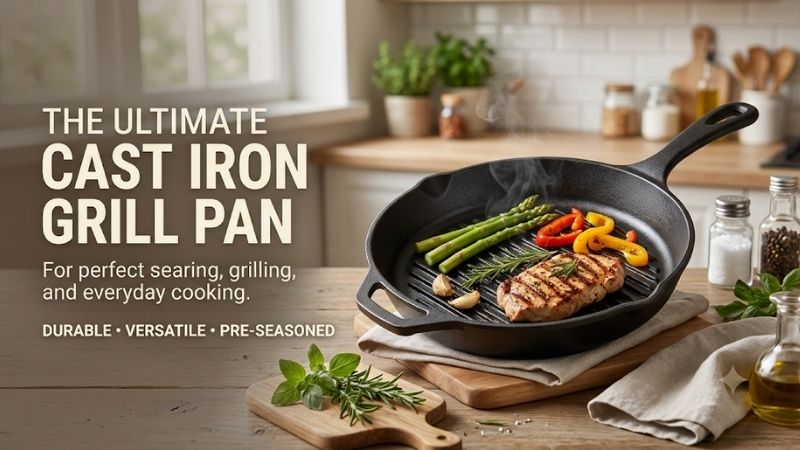
The Lodge 10.5 Inch Square Cast Iron Grill Pan is a traditional American-made seasoned cast iron model with raised grill ridges, a long handle, and an auxiliary handle. Its square cooking surface accommodates common indoor grilling foods, while its 7.33-pound weight and traditional seasoning requirements make it most suitable for users comfortable with substantial cookware.
Best for: Home cooks preparing burgers, steaks, chicken, vegetables, and grilled sandwiches.
Why we picked it: This is a recognizable, versatile cast iron grill design with a useful cooking footprint and published care information.
Key specifications:
-
Model: L8SGP3.
-
Nominal width: 10.5 inches.
-
Overall length: 17.06 inches.
-
Weight: 7.33 pounds.
-
Cooking surface: Seasoned cast iron.
-
Compatible with gas, electric, induction, ovens, and outdoor grills according to Lodge.
Features and practical performance
Raised ridges produce concentrated contact with food. This creates parallel brown marks and provides space below the food for some rendered fat.
Cast iron retains heat effectively, although it requires controlled preheating for consistent results.
The square configuration provides room for arranging rectangular sandwiches, vegetable spears, and several small portions.
What makes it different: Its conventional long-handle design offers more familiar stovetop maneuvering than compact two-handle alternatives.
Pros:
-
Substantial cooking surface.
-
Versatile heat-source compatibility.
-
Durable seasoned cast iron construction.
Cons:
-
Heavy for frequent lifting.
-
Ridges require attentive cleaning.
Buy if: You want a general-purpose ridged cast iron pan and are comfortable maintaining the seasoning.
Skip if: You need lightweight cookware or frequently cook delicate foods that require a flat surface.
Lodge 6.5 Inch Round Seasoned Cast Iron Grill Pan — Best compact option
The Lodge 6.5 Inch Round Seasoned Cast Iron Grill Pan provides a relatively small cooking surface in a more manageable cast iron format. Its nominal 6.5-inch size and approximately 2.24-pound weight distinguish it from larger grill pans, making it especially relevant for single-person meals, smaller burners, and kitchens with limited storage.
Best for: Single servings and occasional indoor grilling.
Why we picked it: It addresses buyers who value compact dimensions over cooking capacity.
Key specifications:
-
Model: L3GP.
-
Nominal diameter: 6.5 inches.
-
Overall length: approximately 10.18 inches.
-
Weight: 2.24 pounds.
-
Seasoned cast iron construction.
Features and practical performance
The smaller footprint can make this model easier to store than a full-size grill pan.
It also reduces the amount of cookware that must be washed after preparing a single portion.
The raised grill pattern supports cooking small pieces of meat and vegetables.
However, its limited capacity means ingredients must be arranged carefully.
Crowding the surface can trap moisture and reduce browning.
What makes it different: Its size and weight are substantially lower than most full-size cast iron grill pans.
Pros:
-
Compact storage requirements.
-
Relatively manageable weight.
-
Suitable for small servings.
Cons:
-
Inefficient for multiple portions.
-
Limited space for larger cuts of meat.
Buy if: You usually cook for one person.
Skip if: You regularly prepare meals for a family.
Lodge 10.25 Inch Round Seasoned Cast Iron Grill Pan — Best round option
The Lodge 10.25 Inch Round Seasoned Cast Iron Grill Pan combines a familiar circular skillet shape with the elevated ridges of a stovetop grill. Its substantial cast iron body is intended for cooking foods such as burgers and vegetables, while the round configuration may appeal to people who prefer cookware shaped similarly to conventional burners.
Best for: Home cooks who prefer round cookware.
Why we picked it: It provides a recognizable alternative to square grill pans without changing the fundamental seasoned cast iron construction.
Key specifications:
-
Model: L8GP3.
-
Nominal diameter: 10.25 inches.
-
Overall length: approximately 16.12 inches.
-
Weight: 6.13 pounds.
-
Seasoned cast iron cooking surface.
Features and practical performance
The round design suits many ordinary stovetops and can be convenient when cooking burger patties or smaller pieces of meat.
As with other ridged cast iron products, heat retention is a strength.
The pan also supports oven cooking according to Lodge’s published compatibility information.
It does not eliminate the need to manage cooking temperature, oil, or cleaning.
What makes it different: A round outline offers a familiar alternative to the corners and straight edges of square models.
Pros:
-
Practical circular cooking layout.
-
Useful for stovetop searing.
-
Traditional durable construction.
Cons:
-
Less convenient for rectangular foods.
-
Requires seasoning care.
Buy if: You prefer a conventional round pan shape.
Skip if: You want maximum rectangular food placement within a similar footprint.
Lodge Chef Collection Square Grill Pan — Best dual-handle design
The Lodge Chef Collection Square Grill Pan features a compact dual-handle configuration instead of a conventional elongated skillet handle. Its approximately 11-inch overall length, 14.5-inch overall width, and 7.04-pound weight make it a substantial cooking vessel that may be especially attractive when oven clearance and cabinet dimensions matter.
Best for: Home cooks who prefer lifting cookware with two side handles.
Why we picked it: Its handle layout differentiates it from more conventional grill pans.
Key specifications:
-
Model: LC11SGP.
-
Overall width: 11 inches.
-
Overall length including handles: 14.5 inches.
-
Weight: 7.04 pounds.
-
Naturally seasoned cast iron.
Features and practical performance
The dual handles create a different balance when lifting and carrying the pan.
They may also help the pan fit in spaces where a long skillet handle would be inconvenient.
Its raised cooking ridges perform the same basic task as those on other cast iron grill pans.
Because the handles form part of the iron body, they require appropriate heat protection.
What makes it different: The side-handle design prioritizes two-handed lifting and a shorter front-to-back profile.
Pros:
-
Useful handle arrangement.
-
Substantial cooking area.
-
Compatible with several heating methods.
Cons:
-
Both handles can become very hot.
-
Relatively heavy.
Buy if: You want compact handling geometry and two-handed lifting.
Skip if: You prefer a traditional long skillet handle.
Le Creuset Signature Square Skillet Grill — Best premium option
The Le Creuset Signature Square Skillet Grill uses enameled cast iron and a black satin enamel interior designed for browning and searing. Unlike traditional bare cast iron, it does not require routine seasoning. Its two pouring spouts, distinctive finish, and manufacturer-listed 500°F oven compatibility make it an option for buyers prioritizing premium construction and easier seasoning maintenance.
Best for: Home cooks who want enameled cast iron.
Why we picked it: The design combines a ridged cooking surface with a manufacturer-supported no-seasoning finish.
Key specifications:
-
Material: Enameled cast iron.
-
Black satin enamel interior.
-
Compatible with induction and other common cooktops.
-
Oven safe up to 500°F.
-
Dishwasher-safe according to the manufacturer, although hand washing is recommended.
Features and practical performance
The pan’s enamel eliminates the seasoning process associated with traditional raw cast iron.
High ridges create browning lines and allow some rendered fat to collect below the food.
Pouring spouts help transfer cooking liquids.
The main practical difference is maintenance rather than an assumption that the pan produces superior cooking results.
Enameled cast iron still requires proper temperature control and careful handling.
What makes it different: Its enamel finish and premium construction distinguish it from the more economical seasoned Lodge models.
Pros:
-
No traditional seasoning required.
-
Induction and oven compatibility.
-
Pouring spouts.
Cons:
-
Significantly higher purchase cost.
-
Enamel requires appropriate care.
Buy if: You want an enameled grill pan for frequent cooking.
Skip if: You prefer inexpensive cookware and do not mind traditional cast iron maintenance.
Staub 10-Inch Square Grill Pan — Best alternative enameled option
The Staub 10-Inch Square Grill Pan uses heavy enameled cast iron with a textured black interior and raised grill ridges. Its manufacturer-listed weight of approximately 7.05 pounds, induction compatibility, and 500°F oven-safe rating make it a substantial alternative for buyers who want enameled cookware without the regular seasoning associated with bare cast iron.
Best for: Cooks who prefer Staub’s enameled cast iron design.
Why we picked it: It offers a distinct manufacturer-supported alternative in the premium enameled category.
Key specifications:
-
Nominal size: 10 inches.
-
Weight: approximately 7.05 pounds.
-
Enameled cast iron construction.
-
Induction compatible.
-
Oven safe up to 500°F.
-
Manufacturer-listed dishwasher compatibility.
Features and practical performance
The raised ridges create concentrated browning contact.
The textured enamel interior is designed to support stovetop cooking without conventional seasoning.
Staub’s construction makes it practical for moving food from stovetop preparation to appropriate oven finishing when required.
However, owners still need to protect the enamel from thermal shock and inappropriate cleaning techniques.
What makes it different: Its textured interior and enamel construction offer an alternative to both traditional cast iron and Le Creuset’s design.
Pros:
-
No traditional seasoning required.
-
Compatible with induction.
-
Suitable for stovetop and oven use.
Cons:
-
Heavy.
-
Premium price category.
Buy if: You prefer enameled cast iron and the Staub handle and surface design.
Skip if: You want lightweight or inexpensive cookware.
Buying guide: What matters in a cast iron grill pan?
Cast iron grill pans differ most noticeably in cooking surface dimensions, construction, maintenance, and handling. Choosing correctly requires considering the foods you cook rather than selecting the largest pan or the most expensive finish. The following factors help distinguish genuinely useful features from characteristics that offer little benefit for a particular household.
Seasoned cast iron versus enameled cast iron
Seasoned and enameled cast iron share an iron body but use different cooking-surface finishes. Seasoned cast iron develops and maintains a protective cooking layer through use and proper care, while enameled cast iron has a manufactured surface coating that generally removes the need for traditional seasoning.
Seasoned cast iron is attractive for durability and relatively straightforward upkeep once the owner becomes familiar with it.
Enameled cast iron is attractive for buyers who want to avoid seasoning maintenance.
Neither finish eliminates the need for temperature control, careful washing, and proper storage.
Ridge height and cooking contact
Ridge height determines how much of the food directly touches the hot iron and how much space remains underneath for cooking juices. Taller ridges can create more pronounced grill marks, but they also reduce contact with the remainder of the food and make the recessed channels harder to clean.
For substantial cuts of meat, concentrated ridge contact may be desirable.
For delicate fish, unevenly shaped vegetables, and foods requiring broad browning, a flat skillet may produce more consistent results.
Choose based on the foods you cook most frequently.
Weight and handle configuration
Cast iron weight affects lifting, washing, storage, and the ease of moving a hot pan. A large square grill pan can feel substantially heavier than a small round model, particularly after food has been added. Handle design also changes how the weight is distributed during movement.
A long handle provides convenient single-direction control.
Dual side handles support two-handed lifting, but may offer less convenient repositioning on a crowded stovetop.
Buyers with limited grip strength should consider a smaller or lighter alternative.
Heat management and food safety
Cast iron’s thermal mass helps retain heat but does not prevent uneven temperatures or overcooking. The correct heat setting depends on the burner, pan size, food thickness, and cooking method. Raised grill marks can develop before the center of a thick food item reaches its required internal temperature.
Preheat gradually rather than relying on maximum heat.
Use a thermometer when cooking proteins with specific safe-temperature requirements.
Avoid leaving hot cookware unattended, and protect nearby surfaces from hot handles.
Frequently Asked Questions
Consumers often compare cast iron grill pans with ordinary skillets and outdoor grills, particularly when deciding whether another piece of cookware is worth purchasing. The following answers address common practical concerns about seasoning, induction cooking, cleaning, and how ridged surfaces affect food preparation.
Do cast iron grill pans need seasoning?
Bare cast iron grill pans generally require proper seasoning maintenance, although many models are sold with a factory-applied seasoned finish. Enameled cast iron grill pans normally do not require traditional seasoning because their cooking surfaces are protected by enamel.
Follow the specific manufacturer’s instructions.
Do not attempt to season an enameled grill pan in the same way as bare iron unless its manufacturer explicitly directs that process.
Can a cast iron grill pan go in the oven?
Many cast iron grill pans are compatible with oven cooking, but the permissible temperature depends on the specific model and any attached components. The iron body itself tolerates substantial heat, while coatings, handles, and additional materials can create model-specific limits.
Check manufacturer instructions before oven use.
Use appropriate protection when removing the pan, because cast iron handles can retain considerable heat.
Is a cast iron grill pan worth buying?
A cast iron grill pan can be useful for cooks who regularly prepare foods that benefit from raised ridges and concentrated browning. However, it is less versatile than a flat skillet for tasks such as frying eggs, preparing sauces, or cooking delicate foods.
If you already own a high-quality flat skillet, consider whether grill marks and ridged cooking genuinely add value.
Conclusion
A cast iron grill pan is most worthwhile when its raised cooking ridges, durable construction, and heat-retention characteristics match your usual meals. The Lodge 10.5 Inch Square Grill Pan is a practical general-purpose choice, while the smaller Lodge round model makes more sense for individual servings. Le Creuset and Staub offer premium enameled alternatives for buyers who want to avoid traditional seasoning. Before buying, prioritize real cooking capacity, handle design, cooktop compatibility, and cleaning requirements rather than assuming the highest-priced pan will always cook better.





Write Your Review
No reviews yet. Be the first to share your experience!