
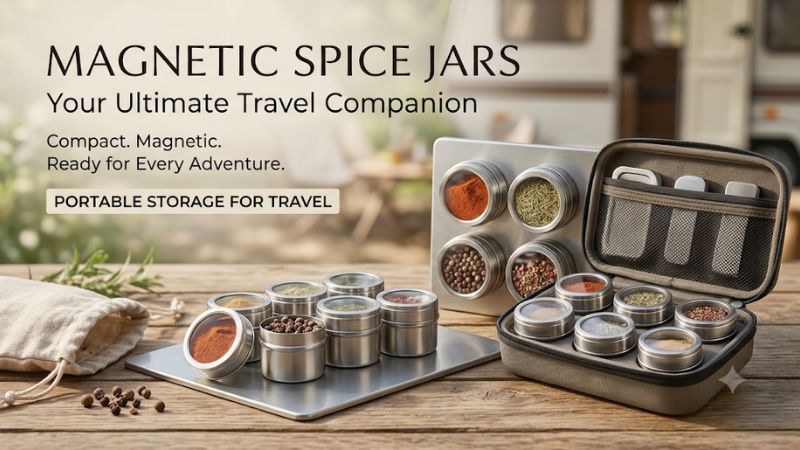
Magnetic spice jars move seasonings onto a suitable metal surface and free cramped cabinets and drawers. Jars differ in material, magnet placement, lids, set size, and accessories. This guide compares six identifiable sets and explains how to choose a stable system without sacrificing spice freshness or everyday access.
Quick Verdict: Which Magnetic Spice Jar Set Should You Choose?
There is no universal winner because a set for a six-spice starter kitchen has different requirements from a system holding twenty or more seasonings. The strongest purchase factors are verified jar count, an appropriate container material, secure closures, suitable mounting space, and reasonable access during cooking. These recommendations are based on described designs and documented product features, not on original hands-on magnet-strength or leak testing.
- Best for glass-jar presentation: Gneiss Spice Empty Magnetic Hexagonal Glass Jars, Set of 12.
- Best for sift-and-pour convenience: Talented Kitchen Magnetic Spice Tins, Set of 12.
- Best for a compact glass collection: Impresa Magnetic-Lid Hexagonal Glass Jars, Set of 15.
- Best for numerous everyday seasonings: Bekith Magnetic Spice Tins, 20-Pack.
- Best for a broad glass-jar collection: Homazing Magnetic Hexagonal Glass Spice Jars, 24-Pack.
- Best small wall-plate kit: Vetacsion Magnetic Spice Tins, Set of 8.
A good choice also accounts for what is not included. A magnetic tin does not make a painted wall magnetic, and a metal plate advertised with a set does not automatically mean the mounting method suits your kitchen wall. Transparent containers or lid windows help identify contents but can expose spices to light when positioned in a sunny location. If the only available metal surface is close to a hot range, a cool cabinet or drawer may be a better storage solution altogether.
Quick Comparison Table
The table below compares six distinct marketed sets rather than pretending that one jar shape is best for every buyer. Counts and major design features are based on product listings located for these named models; component bundles and exact specifications can change, so verify the selected listing before ordering. Where a feature was not independently confirmed, the table avoids claiming a precise value or tested level of performance.
| Product | Best For | Key Specifications or Design | Main Advantage | Main Trade-Off |
|---|---|---|---|---|
| Gneiss Spice Empty Hexagonal Glass Jars, 12 | Design-minded small kitchens | 12 empty magnetic glass jars, hexagonal shape | Cohesive display and refillable containers | Glass weight; higher commitment to decanting |
| Talented Kitchen Magnetic Tins, 12 | Quick seasoning access | 12 metal tins, listed 3-oz capacity, sift-and-pour lids | Two dispensing approaches and label bundle | Lid and magnet quality require attention |
| Impresa Magnetic-Lid Hexagonal Jars, 15 | Compact glass storage | 15 glass hexagonal jars with magnetic lids | Glass visibility and individual attachment | Magnetic-lid handling differs from base magnets |
| Bekith Magnetic Tins, 20 | Larger mixed spice collections | 20 metal tins, clear-top lids, label bundle | More positions in one purchase | Space requirements and adhesive/magnet durability |
| Homazing Hexagonal Glass Jars, 24 | Broad glass collection | 24 magnetic glass jars with shaker lids and labels | Organized display with many jars | Weight and fridge footprint increase quickly |
| Vetacsion Magnetic Tins, 8 | Starter wall-plate setup | 8 listed 3-oz tins, two metal wall plates, labels | Dedicated mounting plates included | Mounting surface and instructions must be verified |
The counts describe containers supplied, not the number of spices a household should buy. A twenty-four-jar set is useful only if the household uses and maintains that many seasonings. If you have ten routinely used spices, a smaller kit may keep you from decanting ingredients into unnecessary containers. Magnet strength, drop resistance, leak resistance, and long-term seal performance were not measured for this article.
How These Products Were Selected
Selection centered on products with identifiable names, differentiated set configurations, and accessible descriptions of their intended use. The goal was to give readers meaningful choices across glass and metal, starter and larger collections, and refrigerator-only versus wall-plate-assisted mounting. No claim of hands-on product testing, original performance measurement, or a statistically representative customer review analysis is made here.
We considered container count, described material, lid or shaker arrangement, included labeling, mounting requirements, cleaning implications, and practical use cases. Product listings are useful for identifying advertised specifications but cannot independently prove magnet strength, coating composition, food-contact certifications, durability, or leak resistance. For those concerns, buyers should check the current manufacturer instructions, relevant documentation, and independent verified evaluations where available.
- A product had to be identifiable: Not just a generic unbranded set in a promotional photo.
- It had to suit the keyword: The spice container itself needs a magnetic attachment method.
- It had to offer a buyer distinction: Different count, material, lid format, or mounting kit.
- Performance claims remained limited: No unsupported holding-weight rankings or fresh-price promises.
- Safety outweighed aesthetics: Food suitability, secure closures, heat avoidance, and installation matter.
Six Magnetic Spice Jar Sets Compared in Detail
The following reviews explain how each product configuration fits a specific storage problem. Because jar sets can change their labels, lids, or accessory counts between sellers, product-page descriptions should be treated as the basis for a purchasing checklist rather than a guarantee of every component in every box. The useful distinction is how the design affects real cooking, refilling, mounting, and cleaning—not unverified statements that one set is universally strongest.
Gneiss Spice Empty Hexagonal Magnetic Glass Jars, Set of 12
The Gneiss Spice empty twelve-jar set uses magnetic hexagonal glass containers designed to attach to a suitable metal surface and form a geometric arrangement. The jars ship empty, making them appropriate for cooks who already own seasonings and prefer to transfer selected ingredients. The unusual shape is attractive in an orderly refrigerator display, but choosing an exposed location should never come at the expense of reasonable temperature and light conditions.
Best for: Home cooks who want a small refillable glass collection with visual consistency.
Why We Picked It: The set is an identifiable, refillable glass system with a distinctive hexagonal format suited to a curated collection.
Performance & Practical Use: Best treated as a convenient display and refill format; actual magnetic hold and sealing performance were not independently measured.
What Makes It Different: A compact branded glass system with a geometric arrangement rather than round metal shaker tins.
- Verified identifying details: Twelve empty magnetic glass jars; hexagonal shape; lids are included.
- Practical features: Groupable shapes and individual jars that can be arranged to match available space.
- Pros: Glass lets you identify contents; twelve jars suit a curated core set; reusable format supports refilling.
- Cons: Glass makes a fully loaded array heavier; decanting and labeling take additional time.
- Buy if: You have a cool, suitable magnetic area and like transferring spices into matching jars.
- Skip if: You want to keep store packaging, need a lightweight travel set, or lack a suitable surface.
The difference between a glass jar and a metal tin becomes apparent during refill and cleaning. A transparent glass body lets the cook judge quantity without opening a lid, but visibility can tempt placement in bright sunlight. Plan the arrangement around a shaded refrigerator side or approved steel board rather than a sunny front panel. Because the containers are emptied and refilled, preserve ingredient identification and use properly cleaned, fully dry jars.
Gneiss Spice describes multiple jar sizes across its range, so do not assume every photograph of the brand shows the exact size in the twelve-jar product option. Check your chosen jar dimensions, the amount of paprika or cinnamon you typically consume, and the space available for removing a full jar by hand. If you cook with a narrow group of spices and dislike excess containers, the 12-set is more proportionate than a bulk collection.
Talented Kitchen Magnetic Spice Tins, Set of 12
The Talented Kitchen twelve-tin kit is a metal-container alternative with an advertised three-ounce size and sift-and-pour style lids. Listings also describe a large collection of preprinted spice labels, making the kit appealing to cooks who prefer quick identification without hand-labeling every container. The tins can be easier to position in a small area than taller conventional grocery-store bottles, provided the surface actually holds their filled weight.
Best for: Cooks who want a manageable tin set and convenient dispensing options.
Why We Picked It: The advertised sift-and-pour mechanism and supplied labels address frequent everyday seasoning tasks.
Performance & Practical Use: Dispensing can reduce steps for dry powders, but closure fit and magnet stability must be checked on the individual kit.
What Makes It Different: A primarily metal tin format with two dispensing styles rather than a plain screw-top glass jar.
- Listed specifications: Twelve magnetic metal spice tins; three-ounce capacity per tin; sift-and-pour lids.
- Accessories described: A broad preprinted label assortment, with exact counts depending on kit listing.
- Pros: Shaker-style access can simplify small additions; a label kit reduces setup work; relatively compact form.
- Cons: Opaque metal sides reduce visibility; lid fit and magnetic backing must be checked carefully.
- Buy if: You use powdered herbs and seasonings often and prefer dispensing without a separate spoon.
- Skip if: You mostly store large whole spices, want transparent jar bodies, or dislike decanting.
A sift-and-pour mechanism can be useful for adding a measured pinch of a dry seasoning, but it is not a substitute for measuring accurately in recipes that require precision. Avoid shaking a container directly above a steaming pot, because rising moisture can enter the lid opening and encourage clumping. Measure into a dry spoon when practical, and close the dispensing section completely after use.
The main buying consideration is the connection between the magnet, container, and lid. Metal tins with separate lids introduce more attachment points than a simple screw-top glass jar. A secure magnet on the back does not compensate for a loose lid, and a neat display is not worthwhile if a jar opens while being removed. Inspect components and test each filled container carefully over a safe surface before relying on a vertical arrangement.
Impresa Magnetic-Lid Hexagonal Glass Spice Jars, Set of 15
Impresa’s described fifteen-jar set combines glass spice containers with magnetic lids and a hexagonal profile. A retailer listing identifies an approximately 1.74-ounce container size, which makes this configuration better suited to smaller portions of frequently used spices than to bulk refills. The attachment through the lid is an important design difference that affects how the jar is grasped and removed from the mounting surface.
Best for: Cooks who value transparent glass in a relatively compact multi-jar setup.
Why We Picked It: This is a distinguishable smaller-capacity glass alternative with a lid-centered attachment arrangement.
Performance & Practical Use: The small glass containers support portioned storage, but lid retention is a purchase-critical feature requiring confirmation.
What Makes It Different: Magnetic attachment at the lid rather than an assumed magnet fixed to the bottom of a tin.
- Listed specifications: Fifteen glass containers; hexagonal shape; magnetic lids; a retailer lists 1.74 ounces per jar.
- Pros: Visible contents; uniform small format; a distinct lid-based attachment design.
- Cons: Smaller containers require more frequent refills; lid attachment deserves careful inspection.
- Buy if: You keep modest amounts of many spices and can confirm a compatible magnetic location.
- Skip if: You buy large quantities, need very robust transport, or find lid-based hanging inconvenient.
For a magnetic-lid system, make sure the lid remains securely attached when the jar is handled. It is especially important not to pull a hanging glass jar by the body in a way that unintentionally separates it from the lid. Different attachment systems have different handling expectations, and advertising photos cannot demonstrate real-world resistance to repeated openings. Follow the current product instructions and begin with a small, safely supervised test arrangement.
The small format can support fresher inventory habits for lightly used spices, since it discourages storing several months’ worth in one very large jar. On the other hand, the fifteen-jar count may prompt buyers to fill containers simply to complete the visual pattern. Resist that temptation. Empty, clean jars are more useful than filled jars of spices you rarely use, and old spices should not be topped up indefinitely without checking aroma and cleanliness.
Bekith Magnetic Spice Tins, 20-Pack
The Bekith twenty-tin configuration is marketed as a broader magnetic spice storage system with clear-top lids and a large label assortment. This format favors cooks who have already accumulated a substantial collection and want to consolidate different retail containers into a more uniform system. The larger quantity is useful only when enough suitable magnetic space exists for safe, accessible spacing between the tins.
Best for: Households that routinely use a larger range of dried herbs, seeds, and seasoning blends.
Why We Picked It: Its twenty-tin assortment offers more labeled positions for a household with a verified larger spice inventory.
Performance & Practical Use: Clear-top storage helps visual checks, but this is not proof of measured freshness, magnetic force, or durability.
What Makes It Different: Emphasis on a broader tin collection instead of a compact starter set.
- Listed design: Twenty magnetic tins, clear-top lids, and labels for identifying seasonings.
- Pros: More containers available from one purchase; clear lids help identify remaining contents; labels support organization.
- Cons: Higher setup effort; extensive vertical display may increase exposure to light and accidental knocks.
- Buy if: Your existing spice inventory justifies twenty positions and you can mount them securely.
- Skip if: Your collection is small, cabinet storage already works well, or the available surface is crowded.
Quantity can become an unexpected drawback. Twenty tins require enough room for your fingers to remove one without hitting its neighbors, particularly on a refrigerator door that moves often. Leave a margin around the whole display and avoid attaching containers beside a handle or along an edge. If the set is not supplied with an approved steel mounting plate, do not assume you can use it safely on painted drywall.
Clear-top windows are convenient for stock checks but do not provide the same view as an entire glass jar. Keep prominent labels even when the spice is recognizable by color: ground cumin, cinnamon, and several chili powders can look surprisingly similar. The container design is most useful to a household willing to rotate ingredients, check closure integrity, and keep the display clean rather than a buyer seeking purely decorative abundance.
Homazing Hexagonal Magnetic Glass Spice Jars, 24-Pack
The Homazing twenty-four-jar collection is a higher-count glass option marketed with hexagonal containers, shaker lids, and labels. Listings describe small jars arranged together in a honeycomb-like display, which can be visually tidy when a broad set of seasonings is genuinely used. The chief advantage is consistent container shape across many ingredients; the key practical risk is the accumulated weight and surface space required by twenty-four filled glass jars.
Best for: Home cooks with a large, frequently used seasoning collection and suitable magnetic display space.
Why We Picked It: The high-count glass arrangement suits households seeking many matching containers with shaker lids.
Performance & Practical Use: It can organize varied seasonings in a consistent pattern, but aggregate filled weight and access spacing must be assessed.
What Makes It Different: A larger clear-glass honeycomb-style group compared with opaque round tin systems.
- Listed design: Twenty-four magnetic hexagonal glass spice jars with shaker lids and labels.
- Pros: Extensive matching collection; visible spice levels; consistent organizing geometry.
- Cons: Significant combined weight; more jars to clean and label; large exposed display area.
- Buy if: You use varied cuisines and have verified a secure cool location for a broad collection.
- Skip if: You have only a few staple seasonings or need to avoid a heavily loaded refrigerator door.
A large set requires thoughtful layout. Separate the spices by frequency of use so the most common jars remain within comfortable reach. Reserve lower or more stable positions for heavier full containers if the mounting method permits. Resist placing a dense group directly over a food preparation area, where an accidental drop would interrupt cooking and potentially scatter glass into ingredients.
Do not take a claimed container capacity as a guarantee that the entire contents of a standard grocery-store jar will fit. Powder density, flake size, and actual usable internal volume vary. Check the precise listing and test a few spices before transferring everything. If the household rotates through fewer than twenty seasonings during a typical month, the larger kit may add organization work without improving access.
Vetacsion Magnetic Spice Tins With Wall Plates, Set of 8
The Vetacsion eight-tin set is marketed with two metal wall plates, preprinted labels, and three-ounce metal containers. This combination addresses a real limitation of magnetic spice systems: some kitchens do not offer a conveniently located magnetic refrigerator side. The included plates may expand placement options, but their safe use depends on appropriate wall material, the specified installation method, and the weight of the filled tins.
Best for: Smaller collections that need a dedicated mounting area rather than relying exclusively on the refrigerator.
Why We Picked It: The advertised mounting plates make this a distinct option when a suitable refrigerator side is unavailable.
Performance & Practical Use: The wall plates may offer an attachment surface if installed as instructed; wall strength and load were not independently assessed.
What Makes It Different: A smaller kit with dedicated metal mounting plates rather than jars alone.
- Listed specifications: Eight magnetic metal tins, approximately three ounces each, plus two metal mounting plates and labels.
- Pros: Small starter count; attachment plates are part of the described kit; visible lid windows.
- Cons: Installation adds complexity; plated areas must support the load and remain clear of heat.
- Buy if: Your wall surface and installation permissions suit the current mounting instructions.
- Skip if: You rent with strict no-adhesive rules or cannot verify secure mounting.
Do not confuse the presence of a plate with evidence that any adhesive will hold securely on any wall. A smooth, well-prepared surface may behave differently from textured paint, tile grout, or old cabinetry. If the instructions require screws, make sure drilling is permitted and the wall can accept suitable anchors. If the kit relies on adhesive, observe curing time and load limitations exactly, and never install where a falling glass or metal container could strike someone.
For an eight-spice starter set, the small count can actually be a strength. You can choose dependable basics and replace ingredients as needed, keeping the collection manageable without a prominent wall of jars. Where the current plate installation is unsuitable, a portable caddy or interior drawer rack provides the same organizational benefit without risky mounting.
Buying Guide: What Matters Beyond the Jar Count?
Choosing among magnetic jars is partly an exercise in materials and partly a test of the kitchen environment. Two products with the same number of containers may differ greatly in how easily they open, how their spices are dispensed, and how safely they attach to the available surface. Examine the whole system—jar, lid, magnet, labels, placement, cleaning, and refill pattern—before selecting the prettiest arrangement.
Glass Versus Metal and the Role of Container Size
Glass makes it easier to see spice quantities and identify mistaken contents before opening a jar. Metal tins are often convenient for compact layouts and may be less fragile in routine handling, although specific construction quality varies. Neither material automatically guarantees an airtight seal or safe long-term food contact; those are properties to verify for the exact product, especially when finishes, liners, or coatings are advertised.
- Glass: Excellent visibility, but heavier and breakable.
- Metal: Compact and opaque, but may dent or have less visible remaining volume.
- Small jars: Better for infrequently used spices; expect more refilling.
- Larger jars: Convenient for high-use seasonings; can encourage excessive stock.
- Shaker lids: Handy for routine seasoning but potentially awkward for large seeds or whole spices.
Measure the size of your existing spice packages before assuming a set will replace them. Ground powders, whole peppercorns, leafy oregano, and cinnamon sticks occupy different volumes for the same weight. A jar that fits paprika may not hold a bulk bag of dried basil. Buy container capacity based on actual ingredient volume, not only the number printed on an ounce label that could refer to fluid volume or a marketing convention.
Magnetic Surface, Secure Closures, and Safe Placement
A magnetic jar system needs a suitable metal surface, stable magnet-to-jar construction, and a closure that stays shut when the container is lifted or replaced. Appearance is not a reliable test: certain stainless steel alloys and finished appliance panels are not strongly magnetic. Even when a refrigerator side holds a small magnet, it may not support the same weight at every location or during repeated door movement.
Test the actual panel with an ordinary magnet, follow the organizer instructions, and begin by placing filled containers low over a clear surface. Avoid heavy displays above food, glassware, and areas where someone might be struck by a falling jar. Keep jars away from stoves, vents, steam, and sunlight, even if those locations are convenient. For wall plates, verify installation requirements and load ratings, and do not improvise mounting methods.
Labels, Cleaning, and Spice Freshness
A useful label has to remain readable from the direction in which the jar is viewed, not simply look elegant in a product photograph. Lid labels work for horizontal storage, but side labels may be easier on jars arranged vertically. For spice blends, keep ingredient details available when allergies or dietary restrictions matter. Reuse original packaging information or record ingredients rather than relying solely on decorative shorthand.
- Remove or cover old labels completely when changing contents.
- Wash components according to manufacturer instructions and dry thoroughly before filling.
- Inspect seals, magnets, and any adhesive backing periodically.
- Measure spices into a spoon instead of exposing an open jar to cooking steam.
- Store refill bags tightly sealed in a cool, dry location.
University extension guidance consistently recommends protecting dried herbs and spices from heat, light, air, and moisture. A transparent magnetic display can be attractive, but a cool, shaded placement with secure lids should win over a bright location. Replace spices when their aroma and flavor have faded rather than treating every printed best-by date as an automatic safety deadline; discard any product showing contamination, moisture damage, or other concerning changes.
Frequently Asked Questions
Magnetic spice jars can be convenient, but buyers often confuse magnetic jars with magnetic shelves, assume every refrigerator panel is compatible, or overestimate how securely a decorative lid will hold a filled container. These questions focus on avoidable purchase mistakes and on everyday handling so that a space-saving arrangement remains safe, easy to refill, and practical beyond its first photograph.
Are Magnetic Spice Jars Safe on Every Refrigerator?
No. Refrigerator surfaces differ in magnetic compatibility, coating, heat exposure, shape, and clearances. Confirm that the chosen panel attracts a magnet and that the jar manufacturer allows that style of mounting. Keep attachments away from door seals, handles, hinges, vents, and traffic paths. Test with fully loaded containers carefully, because a magnet that holds an empty jar may not hold a heavy one during repeated door movement.
Do Magnetic Spice Jars Keep Spices Fresh?
Freshness depends mainly on the container’s seal and the storage environment, not on the presence of a magnet. A well-closed jar stored in a cool, dry, shaded area can help preserve flavor, while a poorly sealed or overheated jar can accelerate deterioration. The magnetic attachment offers convenience; it is not a freshness technology. Confirm lid construction, avoid steam, and transfer only the amount you expect to use reasonably soon.
Can I Attach Magnetic Spice Jars to a Painted Wall?
Magnetic jars need a compatible metal surface. Painted drywall, wood, and most tile are not magnetic merely because a product photograph shows a wall installation. A steel mounting plate may solve the attachment problem when appropriately installed, but its adhesive or fasteners must suit the wall and total loaded weight. For rental properties, verify permission first and consider a freestanding organizer when damage or falling objects would be a concern.
Is Glass Better Than Stainless Steel for Magnetic Spices?
Neither material is superior for every household. Glass provides clear visibility and a familiar food-storage surface but is heavier and can shatter. Metal tins are often compact and less likely to break like glass, yet opaque walls hide remaining quantities and some lid mechanisms are less convenient for scooping. Evaluate the exact seal, material disclosures, mounting design, cleaning directions, and your usual spices rather than relying on a broad material preference.
How Many Magnetic Jars Should I Buy?
Count the spices you actually use, then add only a small amount of expansion capacity. A twelve-jar set can suit a curated collection; twenty or more jars make sense for cooks with substantial variety and a suitable mounting area. Avoid filling empty positions with spices you rarely need. A smaller, actively used collection is easier to label, clean, replenish, and protect from aging than a large display maintained primarily for appearance.
Conclusion
The best magnetic spice jars are those that fit both your spice habits and a genuinely compatible mounting area. Choose Gneiss Spice for a curated glass presentation, Talented Kitchen for a small sift-and-pour tin set, or a larger Bekith or Homazing kit only when your inventory justifies the extra containers. Impresa provides another compact glass option, while Vetacsion adds a small wall-plate configuration. Before buying, verify the exact listing, jar closures, loaded stability, installation requirements, and a cool, dry storage location.



Write Your Review
No reviews yet. Be the first to share your experience!