
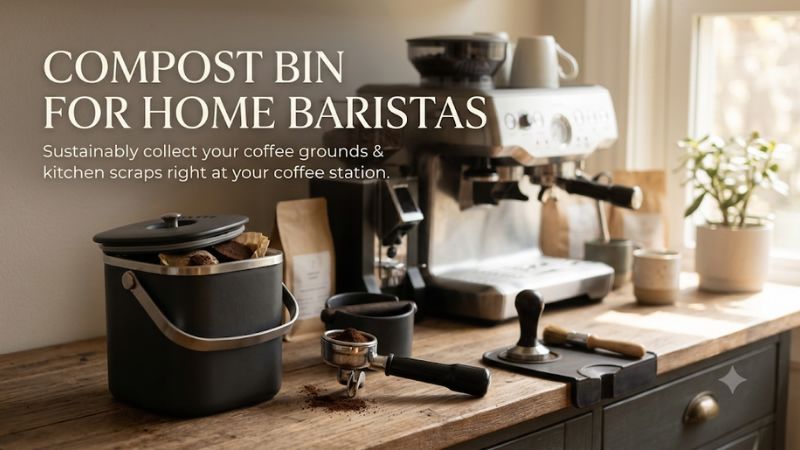
A countertop compost bin for home baristas gives used coffee grounds, cooled espresso pucks, and suitable paper filters a dedicated place during brewing and cleanup. The ideal container fits beside your coffee equipment, handles damp grounds without unnecessary mess, and is easy to empty. This guide explains how to choose the right size, lid, material, and cleaning routine.
- Quick Answer: What Should a Home Barista Buy?
- Why Coffee Waste Needs Its Own Storage Routine
- How to Choose a Countertop Compost Bin for a Coffee Station
- Comparing Compost Bin Formats for Home Baristas
- Practical Compost Setups for Different Coffee Stations
- Keeping the Coffee Station Clean While Composting
- Common Mistakes Home Baristas Should Avoid
- Frequently Asked Questions
- Conclusion
Quick Answer: What Should a Home Barista Buy?
For most home coffee stations, a compact two- to four-liter food-scrap caddy with a removable lid and washable interior is a sensible starting point. If you prepare several espresso drinks or batches of filter coffee each day, a slightly larger container may be useful. More important than capacity is a straightforward way to transfer wet grounds, empty the collector frequently, and clean residue from the interior.
Features worth prioritizing
- Compact countertop footprint.
- Wide enough opening for a portafilter knock-box transfer.
- Lid that can be opened easily.
- Smooth interior.
- Comfortable carrying handle.
- Removable parts for cleaning.
- Suitable handling of damp coffee grounds.
- Optional odor filter if useful.
- Easy placement away from electrical coffee equipment.
A coffee-scrap container should not replace a proper espresso knock box if you regularly need to knock a spent puck out of the portafilter.
Knock boxes are designed to withstand repeated impacts, while ordinary compost caddies are generally intended to receive scraps without being struck.
The most practical arrangement is to collect espresso pucks in an appropriate knock box and then transfer cooled grounds to a compost caddy.
Paper filters and loose grounds can often be placed directly into the collector if accepted by the final composting system.
Why Coffee Waste Needs Its Own Storage Routine
Home coffee brewing produces a concentrated stream of damp organic material. Espresso pucks, pour-over filters, French press grounds, and cold-brew residue all contain moisture and can accumulate quickly when several drinks are prepared each day. A caddy can keep this material from filling the sink drain or spreading across the countertop, but it must be cleaned and emptied frequently.
Common home barista waste
- Spent espresso grounds.
- Cooled espresso pucks.
- Used paper pour-over filters.
- French press grounds.
- Drained cold-brew grounds.
- Coffee-cherry or plant-based waste from specialty preparation.
- Small amounts of accepted paper packaging.
- Other food scraps collected during breakfast.
Not everything associated with coffee belongs in compost.
Plastic coffee capsules, foil seals, coated paper cups, and mixed-material packaging may require different disposal methods.
Milk, cream, and oily coffee-drink residue should not automatically be poured into an ordinary backyard compost bucket.
The final composting program determines what is accepted.
A dedicated container makes separating approved grounds and filters easier, but the household still needs a clear waste-sorting plan.
How to Choose a Countertop Compost Bin for a Coffee Station
The right compost collector should support the brewing workflow without interfering with the grinder, espresso machine, kettle, or food preparation area. Home baristas often have limited countertop space, and even a small accessory can become inconvenient if it blocks the portafilter, drip tray, or scale. The following criteria help identify a container that works with actual coffee equipment.
Match Capacity to Coffee Consumption
Coffee waste volume depends on how many drinks are prepared, the brewing method, and the amount of ground coffee used. Espresso pucks occupy relatively little space individually, but a household making many drinks can accumulate substantial wet grounds. Pour-over filters and French press grounds may also add volume, especially when combined with ordinary breakfast scraps.
Practical capacity planning
- 1–2 liters: Small stations with one or two drinks daily.
- 2–3 liters: Regular personal brewing and frequent emptying.
- Around 4 liters: Multiple daily drinks or combined breakfast scraps.
- 5 liters or more: Higher-volume household use with sufficient counter space.
These ranges are guidelines, not exact coffee-waste calculations.
A barista preparing several large French press batches may produce more waste than one making two single espresso shots.
The container should accommodate the normal interval between emptying without becoming awkward.
Avoid buying a large bucket simply because you want to empty it less frequently.
Wet grounds can develop odors and mold when left for too long.
Buying recommendation: Choose a compact size that supports frequent disposal rather than maximum storage time.
Choose a Wide Opening for Coffee Grounds
Used coffee grounds can be awkward to transfer because they clump, scatter, and stick to surfaces. A narrow-necked container may require tapping or scraping, creating additional cleanup around the grinder and coffee machine. A wide opening is more practical when emptying a French press grounds container, transferring cooled espresso pucks, or dropping a used paper filter into the caddy.
Opening features to consider
- Unobstructed lid opening.
- Adequate width for a scoop or filter.
- Easy operation with one hand.
- Smooth interior rim.
- Minimal grooves near the opening.
- Lid that can remain open during a transfer.
- No exposed mechanism directly in the scrap path.
For espresso, a dedicated knock box remains the preferred tool for removing pucks from a portafilter through impact.
The compost caddy should receive the grounds afterward, not be subjected to repeated striking.
If you use a pour-over cone, allow the filter to cool and drain before transferring it.
A large opening makes it easier to move the filter without squeezing wet grounds against the container’s edge.
Buying recommendation: Select an easy-access opening and avoid complicated narrow lids that trap grounds.
Separate the Knock Box From the Compost Caddy
Espresso preparation introduces a specific requirement that ordinary kitchen compost guides often overlook. A knock box is designed to receive the impact of a portafilter as the spent puck is removed. A food-scrap caddy is generally designed for collecting loose organic waste. Trying to combine these functions without a purpose-built product can damage the container or create mess.
Recommended workflow
- Brew espresso normally.
- Remove the portafilter safely.
- Knock the spent puck into a suitable knock box.
- Allow hot grounds to cool as appropriate.
- Transfer the grounds into the compost caddy.
- Clean the knock box and portafilter.
- Empty the compost caddy regularly.
This arrangement may seem to involve an extra step, but it protects the compost collector from unnecessary impacts.
It also allows the knock box to remain close to the espresso machine while the scrap caddy sits farther away from electrical equipment.
A small spoon or scraper may help transfer grounds, provided it is appropriate for the equipment and cleaning task.
Do not use a kitchen compost bucket as a substitute for impact-resistant espresso equipment.
Buying recommendation: Choose a compost caddy for collection and use a separate appropriate knock box for portafilter cleaning.
Consider Moisture and Odor Management
Coffee grounds are often wet when they leave the brewing equipment. This moisture can accumulate at the bottom of a collection container, especially when several batches are added throughout the day. A charcoal-filtered lid may help manage some odors, but it cannot prevent wet coffee waste from deteriorating. Ventilation can encourage airflow, yet it does not eliminate mold or insect risks.
Moisture-management practices
- Allow very hot grounds to cool before collection.
- Avoid pouring large amounts of coffee liquid into the bucket.
- Drain filters appropriately.
- Empty grounds frequently.
- Clean the interior after disposal.
- Keep the collector away from direct heat.
- Dry the container between uses.
- Inspect lids and filters for trapped residue.
A home barista should pay particular attention to cold-brew grounds because they can contain considerable retained liquid after filtration.
An ordinary kitchen caddy is not necessarily a sealed liquid container.
Do not rely on a liner to hold a substantial volume of coffee wastewater.
If a filter or grounds container is dripping, allow it to drain appropriately before transfer.
Buying recommendation: Prioritize cleaning and emptying convenience over unsupported promises of odor-free storage.
Choose Materials That Are Easy to Wash
Coffee oils and fine grounds can cling to container walls, lids, and narrow seams. This makes cleaning accessibility particularly important. Plastic food-waste caddies are often lightweight, while stainless steel options provide a different appearance and structure. Plant-based composite designs are another option, but material claims should be separated from care instructions and local disposal rules.
Material considerations
| Material | Benefit | Limitation |
|---|---|---|
| Plastic | Usually lightweight and easy to carry | May show stains or scratches |
| Stainless steel | Structured countertop appearance | Fingerprints and water spots |
| Plant-based composite | Alternative material choice | Care and end-of-life rules vary |
| Removable inner bucket | Easier emptying and rinsing | Adds another washable part |
| Charcoal filter | May manage some odors | Replacement required |
A coffee station can produce more staining residue than a simple fruit-peel collection area.
Choose a container with an interior you can reach easily using a sponge or soft cloth.
Avoid decorative grooves that trap wet grounds.
Follow the manufacturer’s exact cleaning instructions, because not all metal or plastic caddies are dishwasher-safe.
Buying recommendation: Choose a smooth, easy-to-clean interior that fits your normal washing routine.
Plan Countertop Placement Around Brewing Equipment
Home coffee stations often contain a grinder, kettle, espresso machine, scale, tamper, knock box, cups, and cleaning tools. A compost caddy should not block these items or introduce moisture near electrical components. Its location should support moving grounds efficiently while keeping the main brewing area clean.
Placement checklist
- Leave access to the grinder controls.
- Keep the portafilter path clear.
- Avoid placing scraps beside electrical outlets.
- Keep the caddy away from steam wands.
- Prevent spills near the scale.
- Preserve room for tamping and dosing.
- Avoid obstructing the kettle.
- Keep clean cups separate from scrap collection.
For a compact espresso station, the caddy may fit better on a nearby side counter or under the sink than directly beside the machine.
A larger filter-coffee station might benefit from keeping the collector near the paper-filter disposal area.
Think through the complete routine from brewing to cleanup.
The container should reduce unnecessary movements without exposing food-contact equipment to dirty scraps.
Buying recommendation: Select a location based on accessibility and hygiene, not only visual symmetry.
Check Compost Acceptance for Coffee Filters and Pods
Used coffee grounds are commonly accepted by compost systems, but other coffee-related materials require closer attention. Ordinary paper filters are often suitable, while plastic-lined filters, capsules, and mixed-material accessories may not be. Commercial collection services can also have different rules from backyard composting.
Usually suitable to investigate
- Used coffee grounds.
- Cooled espresso pucks.
- Accepted paper filters.
- Drained French press grounds.
- Coffee-related plant waste.
Check local rules before including
- Coffee capsules.
- Plastic or aluminum pods.
- Coated paper cups.
- Compostable plastic packaging.
- Tea bags containing plastic.
- Milk-based beverage residue.
- Cream and dairy waste.
- Cleaning chemicals.
A product labeled plant-based does not necessarily belong in the compost collection stream.
Similarly, a certified compostable coffee pod may require industrial processing or be rejected by local facilities.
The receiving program’s accepted-material list takes priority over marketing claims.
Buying recommendation: Organize the coffee station so accepted grounds and filters remain separate from capsules and other packaging.
Comparing Compost Bin Formats for Home Baristas
Different brewing setups benefit from different waste collection designs. A small espresso corner may need only a compact bucket, while a household making filter coffee throughout the day may prefer a larger container. Filtered lids, removable buckets, and integrated trash stations can all be useful, but each adds different maintenance requirements.
| Coffee Setup | Useful Bin Format | Primary Benefit | Main Consideration |
|---|---|---|---|
| Single espresso machine | Compact lidded caddy | Takes little space | Use a separate knock box |
| Pour-over station | Wide-opening collector | Easy filter disposal | Drain wet filters |
| French press brewing | Smooth removable bucket | Easier cleaning | Wet grounds collect quickly |
| Multiple daily coffee drinks | Four-liter caddy | Moderate capacity | Empty frequently |
| Shared home coffee bar | Integrated waste station | Consistent separation | Compatibility and placement |
| Small apartment coffee corner | Compact bin or freezer-compatible collector | Minimal clutter | Disposal routine matters |
The correct choice is the one that fits your brewing volume and allows grounds to be transferred safely.
A bin marketed as premium does not automatically improve coffee cleanup if it has a narrow opening or difficult-to-clean interior.
Practical Compost Setups for Different Coffee Stations
A home barista’s waste collection routine should fit the equipment being used and the amount of space available. Espresso, pour-over coffee, and French press brewing produce different waste shapes and moisture levels. The examples below demonstrate how to organize grounds without crowding the preparation area or confusing compost collection with coffee-equipment maintenance.
Setup One: Compact Espresso Station
A compact espresso setup may include a small grinder, single-group machine, tamper, distribution tools, and a knock box. Adding a large food-scrap bucket beside the machine can create clutter and interfere with the portafilter workflow. A small caddy placed on a nearby counter or in a suitable cabinet may provide a cleaner arrangement.
Suggested setup
- Keep the knock box beside the espresso machine.
- Use a small compost caddy nearby.
- Allow hot grounds to cool as appropriate.
- Transfer pucks without striking the caddy.
- Wipe spilled grounds promptly.
- Empty the bucket regularly.
- Clean both containers independently.
The main advantage is maintaining separate functions.
The knock box handles impact, while the compost caddy handles temporary collection.
Setup Two: Pour-Over and Filter Coffee Station
A pour-over station often produces used paper filters filled with damp coffee grounds. These are relatively easy to transfer when the collector has a wide opening, but they can drip if handled immediately after brewing. A small countertop caddy with a removable lid can simplify cleanup when placed away from the kettle and electrical equipment.
Suggested setup
- Allow the brewing equipment to cool.
- Lift the filter carefully.
- Let excess liquid drain.
- Transfer the filter and grounds to the approved collector.
- Keep the lid and rim clean.
- Empty scraps frequently.
- Wash the container after disposal.
Check whether the paper filters used are accepted by your composting destination.
Do not assume that every filter material has the same disposal requirements.
Setup Three: French Press and Cold Brew Station
French press and cold-brew preparation can produce a substantial amount of wet coffee grounds at once. A container with a wide opening and easy-to-clean interior is particularly useful because wet grounds can stick to the sides and collect at the bottom. The goal is to transfer the solids without sending large amounts of coffee sediment down the sink.
Suggested setup
- Separate grounds from remaining liquid appropriately.
- Use a suitable spoon or scraping tool.
- Transfer solids to a wide-opening caddy.
- Avoid pouring excess liquid into the scrap collector.
- Clean brewing equipment normally.
- Wash the caddy after emptying.
- Keep the collection area dry.
A smooth removable bucket can be more convenient than a decorative container with narrow seams.
The additional capacity should reflect actual waste volume rather than the size of the coffee equipment.
Keeping the Coffee Station Clean While Composting
A compost caddy is intended to simplify waste separation, but coffee grounds can still create mess if the collector is poorly placed or maintained. Fine particles may collect around lid hinges, tamper mats, drip trays, and grinder bases. Establishing a short cleaning routine after brewing helps prevent the waste station from becoming a source of residue.
Recommended cleaning routine
- Finish brewing and allow hot equipment to cool appropriately.
- Remove the spent puck or filter safely.
- Transfer accepted grounds to the caddy.
- Wipe the counter around the grinder and knock box.
- Empty the caddy when necessary.
- Wash the interior according to its care instructions.
- Clean the lid and filter housing.
- Allow components to dry.
- Replace charcoal filters as directed.
- Return the collector to its designated position.
Avoid using the same cloth for cleaning food-contact equipment and dirty waste surfaces without appropriate washing.
Keep milk residue and chemical descaling solutions separate from the compost stream unless the final facility explicitly permits them.
Common Mistakes Home Baristas Should Avoid
Coffee waste appears simple because grounds are organic, but collection can become inconvenient when grounds are transferred while hot, left wet for too long, or mixed with non-compostable packaging. Another common mistake is buying a decorative compost caddy and then using it as a portafilter knock box. Avoiding these errors protects equipment, simplifies cleaning, and keeps compost separation consistent.
Mistakes to avoid
- Striking a normal compost bucket with a portafilter.
- Pouring large amounts of coffee liquid into the collector.
- Leaving wet grounds indoors for too long.
- Storing the caddy beside electrical coffee equipment.
- Assuming all coffee pods are compostable.
- Mixing descaling chemicals into coffee grounds.
- Treating paper cups as automatically compostable.
- Overfilling the container.
- Neglecting the lid and filter housing.
- Using the same cleaning cloth for dirty waste and clean equipment.
- Choosing a bucket too large for the available counter.
- Assuming charcoal filters eliminate mold and odors.
- Forgetting the local compost facility’s material restrictions.
A simple collection routine usually works better than a complicated accessory system.
Frequently Asked Questions
Home baristas often want to reduce coffee-related waste while keeping their brewing station clean and efficient. Questions about composting grounds, paper filters, espresso pucks, and suitable containers are common because coffee equipment produces both organic residue and non-compostable packaging. The following answers clarify practical choices and common misconceptions.
Can Used Coffee Grounds Go in a Compost Bin?
Yes, used coffee grounds are a common composting ingredient and are suitable for many backyard systems and organics programs. They should still be combined appropriately with other compost materials in the final processing system rather than left to decompose indefinitely inside a kitchen caddy.
For temporary indoor collection, allow grounds to cool and manage excess moisture.
Check the receiving program’s rules, particularly when using a municipal collection service.
Can I Use a Compost Bin as an Espresso Knock Box?
An ordinary kitchen compost caddy should not be assumed suitable for repeated portafilter impacts. Espresso knock boxes are designed for removing spent pucks through controlled striking, while compost collectors are generally designed to hold waste. Using the wrong container can damage the lid, rim, or body.
Use a purpose-built knock box for impact.
Transfer the collected cooled grounds into the compost caddy afterward.
Do Paper Coffee Filters Belong in Compost?
Many ordinary paper coffee filters can be composted, particularly when they are free from plastic coatings or other unsuitable materials. However, acceptance depends on the composting system and local facility. Specialty filters and coffee capsules may have different disposal requirements.
Check the filter manufacturer’s material information when uncertain.
Do not assume every coffee-related paper or packaging product belongs in organics collection.
How Large Should a Compost Bin Be for a Coffee Bar?
A small two- to four-liter caddy is often a practical starting point for a home coffee station, depending on the number of drinks prepared and how often the contents are emptied. A person making one espresso each morning may need much less capacity than a household preparing several filter coffee batches daily.
Measure the available counter space before choosing.
Prioritize easy cleaning and regular emptying over maximum storage volume.
How Can I Keep Coffee Grounds From Smelling in the Bin?
Empty damp grounds frequently, keep the caddy clean, and avoid leaving excess liquid inside. A charcoal filter or ventilated design may help manage odors, but neither prevents all decomposition. Warm temperatures and accumulated moisture can cause problems even when the bucket appears only partially full.
Clean the lid and interior thoroughly.
Allow the container to dry between uses and follow the manufacturer’s care instructions.
Conclusion
The best countertop compost bin for home baristas should accommodate damp coffee grounds and accepted filters without crowding brewing equipment or creating unnecessary cleaning work. A compact two- to four-liter caddy with a wide opening, removable lid, and washable interior suits many home coffee stations. Keep a separate knock box for espresso pucks, manage moisture before transferring waste, and check local compost rules for filters and capsules. Good placement and frequent emptying matter more than decorative features or unsupported odor-control promises.







Write Your Review
No reviews yet. Be the first to share your experience!