
A dish drying rack for limited counter space should provide a safe place for clean dishes without taking over the kitchen. Foldable, compact, expandable, and over-the-sink designs all offer different ways to manage small dish loads. This guide explains how to measure your space, choose effective drainage, and maintain a practical drying station.
- Quick Answer: Choose the Rack That Uses the Least Permanent Space
- Understand the Challenges of Small Kitchen Drying Areas
- Types of Dish Drying Racks for Limited Counter Space
- Measure Counter and Sink Space Before Buying
- Choose the Right Drainage System
- Materials and Construction Features Worth Considering
- How to Set Up a Compact Dish Drying Station
- Common Mistakes When Buying a Compact Dish Rack
- Frequently Asked Questions
- Conclusion
Quick Answer: Choose the Rack That Uses the Least Permanent Space
For kitchens with limited counter space, foldable and over-the-sink dish racks are often the most useful starting points. A foldable rack can be stored after washing, while an over-sink design uses the basin opening instead of occupying a large countertop area. Compact direct-drain racks can also work when a small permanent drying station is preferred.
Recommended designs:
- Best for tiny counters: Over-the-sink folding rack.
- Best for occasional dishwashing: Fold-flat countertop rack.
- Best for daily handwashing: Compact rack with direct drainage.
- Best for changing dish loads: Slim expandable dish drainer.
- Best for small quantities: Rack-and-mat combination.
- Best for renters: Freestanding rack without permanent installation.
The best choice depends on your sink, counter dimensions, and dishwashing routine.
A small rack that is easy to empty and store may be more useful than a larger organizer that remains permanently in the way.
Understand the Challenges of Small Kitchen Drying Areas
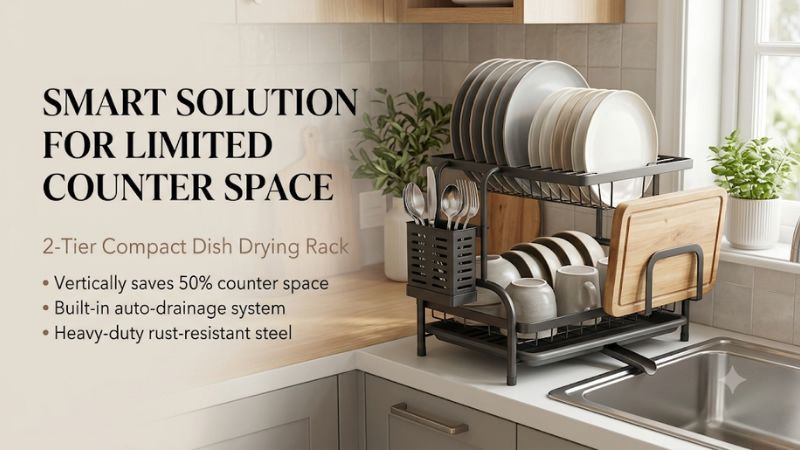
Limited counter space creates a trade-off between washing dishes and preserving room for food preparation. A traditional dish rack may occupy the same surface needed for chopping vegetables, placing a cutting board, or preparing meals. Smaller kitchens therefore benefit from systems that use vertical space, temporary sink coverage, or compact designs that can be removed after drying.
Why Traditional Dish Racks Can Be Inconvenient
Standard countertop dish racks often require enough room for the drying frame, drainage tray, and surrounding clearance. Even when the rack fits beside the sink, it may obstruct other kitchen activities or force users to stack clean dishes too closely. This can make drying less efficient and create additional cleaning work.
Common problems:
- Permanent counter occupation.
- Water collecting beneath the rack.
- Insufficient room for large dishes.
- Crowded utensil compartments.
- Difficult access to the sink.
- Limited space for food preparation.
A compact drying station should solve these problems rather than merely reduce the rack’s dimensions.
For example, a narrow rack with no adequate support for plates may occupy less space but create unstable drying conditions.
Choose a design that balances footprint and actual usefulness.
Decide Whether the Rack Must Stay Out All Day
Some households wash dishes several times a day and prefer a rack that remains beside the sink. Others use a dishwasher for most items and need temporary drying space only for a few pans, knives, or delicate glasses. These routines influence whether a permanent compact rack or a folding solution will be more convenient.
A permanent compact rack may suit:
- Frequent handwashing.
- Small daily dish loads.
- A fixed counter area beside the sink.
- Households that put dishes away regularly.
A foldable rack may suit:
- Occasional dishwashing.
- Kitchens with one small preparation surface.
- Apartments where the counter must be cleared.
- Households that prefer storing accessories after use.
Consider the time and effort required to unfold, position, clean, dry, and store the rack.
A product that requires substantial rearrangement after every meal may become inconvenient despite its compact design.
Identify the Dishes You Actually Wash by Hand
The number and type of dishes matter more than the number of people living in the home. A household with a dishwasher may handwash only knives, wooden utensils, and certain cookware. Another household may wash every plate, bowl, glass, and pan manually.
Record your typical handwashing load:
- Dinner plates.
- Small plates.
- Bowls.
- Drinking glasses.
- Mugs.
- Utensils.
- Cutting boards.
- Pots and pans.
Large cookware requires more open space than ordinary plates.
A drying mat or fold-flat platform may be useful for irregular shapes, while a structured rack is generally more appropriate when many plates need upright support.
Choose capacity around normal usage rather than rare oversized loads.
Types of Dish Drying Racks for Limited Counter Space
Space-saving dish racks use several different design strategies. Some fold flat for storage, others sit over the sink, and expandable racks increase their capacity temporarily. No single format works best in every kitchen because each changes how countertop space, sink access, and drainage are managed.
Over-the-Sink Folding Drying Racks
An over-the-sink folding rack spans a compatible sink and allows water to drip directly into the basin. Many designs roll up or fold when not in use, making them attractive for kitchens with very little counter space. Products such as the Yamazaki Tower Over-the-Sink Folding Drying Rack illustrate this approach.
Best For: Small counters with suitable sink dimensions.
Key Features:
- Over-sink placement.
- Foldable or roll-up design.
- Direct drainage into the sink.
- Compact storage.
- No permanent cabinet installation.
Pros:
- Preserves countertop space.
- Does not require a separate drainage tray.
- Easy to store between uses.
- Useful for small dish loads.
Cons:
- Requires a compatible sink.
- Can restrict sink access.
- Load limits vary.
- Not ideal for every cookware shape.
Buy If: You have a suitable sink and need temporary drying space.
Skip If: You regularly need uninterrupted access to the entire sink.
Check how the rack rests on the supporting edges.
Do not assume that every sink lip provides sufficient support, particularly when the basin is unusually narrow, wide, or shaped.
Fold-Flat Countertop Dish Racks
Fold-flat racks provide a structured drying surface during use and collapse into a thinner form afterward. They can be helpful in small apartments because they allow the counter to return to food preparation once the dishes are dry. OXO’s Aluminum Fold Flat Dish Rack is an example of a product designed around this storage advantage.
Best For: Households that clear the drying area after each washing session.
Key Features:
- Folding support structure.
- Compact stored profile.
- Plate and utensil support.
- Freestanding placement.
- Removable accessories on selected products.
Pros:
- Easy to store when folded.
- Flexible for small loads.
- No permanent installation.
- Reduces ongoing counter occupation.
Cons:
- Requires setup and folding.
- Hinges and joints need cleaning.
- Still uses counter space while drying.
Buy If: You need the countertop for meal preparation between dishwashing sessions.
Skip If: You prefer a rack that remains permanently ready for use.
Before buying, consider where the folded product will be stored.
A rack that folds thin but has no convenient storage location may still create clutter.
Compact Direct-Drain Dish Racks
Compact direct-drain racks sit beside the sink and guide water through a tray or spout into the basin. They are useful when the household washes dishes regularly but cannot accommodate a large drying station. Products such as the simplehuman Compact Steel Frame Dishrack use this approach to provide structured dish support and controlled drainage.
Best For: Small kitchens needing a permanent drying station.
Key Features:
- Compact frame.
- Drainage spout.
- Utensil holder.
- Raised dish supports.
- Removable components on some models.
Pros:
- Consistent daily availability.
- Water can flow into the sink.
- Organized plate and utensil storage.
- Appropriate for regular handwashing.
Cons:
- Requires suitable sink proximity.
- Occupies counter space permanently.
- Drainage components need maintenance.
Buy If: You wash dishes frequently and have a small suitable area beside the sink.
Skip If: You have no appropriate sink-side counter space.
The position of the spout is essential.
A rack may fit on the counter while its outlet fails to reach the sink, creating drainage problems.
Slim Expandable Dish Drainers
Expandable dish racks use sliding or extending components to increase their drying area when needed. Their compact configuration can support ordinary small loads, while the expanded arrangement accommodates additional dishes. Joseph Joseph’s Extend Slim Steel Dish Drainer illustrates this approach and is relevant for kitchens where dishwashing volume changes throughout the day.
Best For: Households with occasional larger dish loads.
Key Features:
- Expandable drying surface.
- Compact starting footprint.
- Organized dish support.
- Movable drainage outlet on selected models.
- Freestanding design.
Pros:
- Adjustable drying capacity.
- Smaller everyday footprint.
- Useful for occasional family meals.
- Flexible configuration.
Cons:
- Needs additional space when expanded.
- Sliding components require cleaning.
- Larger loads may still exceed capacity.
Buy If: You need variable capacity without permanently occupying a large counter area.
Skip If: Your countertop cannot accommodate the expanded footprint.
Measure both the compact and expanded sizes.
An organizer that fits perfectly when closed may become inconvenient when extended beside a stove or preparation area.
Dish Racks Combined With Drying Mats
Rack-and-mat systems provide upright support for plates while using an absorbent mat for bowls, cups, and other items. This can be a flexible approach for kitchens where only a few dishes are washed manually. Products such as Umbra UDry combine these functions and may be stored compactly when not needed.
Best For: Light dish loads and flexible drying arrangements.
Key Features:
- Plate-supporting rack.
- Absorbent drying mat.
- Removable components.
- Flexible surface arrangement.
- Compact storage possibilities.
Pros:
- Useful for mixed small dishes.
- Flexible placement.
- Can be stored between uses.
- Does not require installation.
Cons:
- Mat needs washing and drying.
- May not direct water into the sink.
- Less suitable for heavy cookware.
- Can remain damp if neglected.
Buy If: You want a lightweight, flexible drying station.
Skip If: You prefer direct drainage or regularly wash many large items.
A mat must not remain continuously wet.
Follow the manufacturer’s laundering and drying instructions to prevent moisture buildup and unpleasant odors.
Measure Counter and Sink Space Before Buying
The difference between a successful purchase and an inconvenient one is often a few inches of clearance. A rack may fit the counter but obstruct the faucet, prevent a cabinet door from opening, or leave insufficient room to prepare food. Measure the complete operating area, including drainage and any folding or expanding movement.
Measure the Usable Countertop Footprint
Start by identifying the space that can realistically be dedicated to drying dishes. Do not include areas occupied by fixed appliances, electrical outlets, or essential preparation equipment. Measure width, depth, and overhead clearance when cabinets are mounted above the counter.
Record:
- Available counter width.
- Available counter depth.
- Distance from the sink.
- Height beneath wall cabinets.
- Faucet clearance.
- Nearby appliance access.
- Room for removing dishes.
Leave enough clearance for hands.
If a rack requires moving a coffee maker or cutting board every time it is used, the arrangement may not be sustainable.
A smaller rack or over-sink alternative may be better.
Check Sink Dimensions for Over-Sink Designs
Over-sink racks require the sink to provide stable support at the correct points. Measure the basin opening and the surrounding rim, then compare those dimensions with the manufacturer’s stated fit range. Also consider the faucet, water controls, and other sink accessories.
Sink measurement checklist:
- Basin width.
- Basin depth from front to back.
- Supporting rim width.
- Faucet position.
- Available support points.
- Clearance from sink accessories.
- Space for normal washing activity.
Do not place a rack over a sink that cannot safely support it.
A poorly fitted over-sink organizer can shift under load, potentially dropping dishes into the basin.
Consider Clearance Above and Around the Rack
Wall cabinets, shelves, and nearby appliances can restrict vertical drying space. A tall plate may fit into the rack but strike the cabinet above when lifted out. Likewise, an expanding rack may interfere with the sink or another countertop item.
Measure with actual dishes in mind.
Important checks:
- Tallest plates.
- Drinking glass height.
- Large bowl dimensions.
- Utensil holder position.
- Expanded rack footprint.
- Opening and closing clearance.
Avoid creating a drying station that requires awkward lifting or unstable dish placement.
The best compact system should make normal cleanup easier rather than introduce new handling difficulties.
Choose the Right Drainage System
Managing water is central to successful dish drying. A compact rack that holds dishes securely but leaves puddles on the counter can create more maintenance work than it saves. Different designs use direct drainage, collection trays, or absorbent surfaces. The right approach depends on placement and how frequently dishes are washed.
Direct-to-Sink Drainage
Direct-drain racks use a spout or channel to move water toward the sink. This reduces the need to empty a separate collection tray, provided the outlet is positioned correctly. Some designs offer adjustable spouts to accommodate different sink arrangements.
Advantages:
- Water moves toward the sink.
- Less manual tray emptying.
- Useful for daily handwashing.
- Can keep the counter drier.
Limitations:
- Requires appropriate sink proximity.
- Drainage channels need cleaning.
- Incorrect positioning can cause puddles.
- Spouts may not fit every sink layout.
Test the water path with a small amount of water before loading a full rack.
Make sure the outlet remains directed toward the basin during normal use.
Drainage Trays and Collection Bases
Some dish racks collect water in a removable tray rather than sending it directly into the sink. This allows more flexible placement but creates a maintenance responsibility. Standing water should be emptied and the tray cleaned regularly.
Advantages:
- Can work away from the sink edge.
- Provides a defined water collection area.
- May protect suitable counter surfaces from dripping.
- Simple to understand.
Limitations:
- Requires emptying.
- Water can accumulate if neglected.
- Tray corners may collect residue.
- Spills can occur when moving a full tray.
A collection tray is practical when it is easy to remove and clean.
If the tray is difficult to access, the drying station may become frustrating over time.
Absorbent Drying Mats
Drying mats absorb or retain moisture from washed dishes, depending on their construction. They can be especially useful for small loads and irregular items that do not fit conventional plate slots. However, their effectiveness depends on regular cleaning and complete drying between uses.
Advantages:
- Flexible drying surface.
- Compact storage.
- Useful for bowls and cups.
- No rigid drainage structure.
Limitations:
- Requires laundering or cleaning.
- Can remain damp.
- May not suit heavy cookware.
- Does not automatically direct water away.
Choose a mat that matches the household’s cleaning routine.
Do not leave wet textiles permanently on sensitive countertop materials.
Materials and Construction Features Worth Considering
Dish drying racks are regularly exposed to water, detergent residue, and physical contact with plates and utensils. Construction quality affects cleaning, stability, and long-term usability, but no material is universally best. Evaluate the complete product, including the frame, drainage surfaces, feet, joints, and removable accessories.
Stainless Steel and Aluminum Frames
Metal frames can provide structured support with relatively narrow rods or rails. Stainless steel and aluminum are common materials for dish racks, but their durability depends on exact construction, finish, and maintenance. Not all metal products provide the same resistance to staining or corrosion.
Features to inspect:
- Smooth dish-contact surfaces.
- Stable joints.
- Appropriate corrosion-resistant construction.
- Non-slip feet.
- Accessible drainage components.
- Manufacturer cleaning instructions.
Avoid scraping delicate glassware against rough or damaged surfaces.
Inspect joints and contact points periodically.
Polymer and Mixed-Material Racks
Polymer racks can be lightweight and easy to clean, while mixed-material designs combine metal supports with plastic trays or removable utensil holders. The main advantage is design flexibility, although exact heat tolerance, cleaning methods, and long-term durability vary.
Advantages:
- Lightweight construction.
- Flexible shapes.
- Removable components.
- Often simple to wipe.
- Suitable for compact designs.
Potential limitations:
- Some components may discolor.
- Parts can wear or crack.
- Not every design is dishwasher-safe.
- Drainage channels can collect residue.
Follow product-specific instructions rather than assuming every polymer rack tolerates high-temperature washing.
Stability and Dish Protection
A dish drying rack should support plates, bowls, and glasses without excessive wobbling. Raised separators can keep plates upright, while suitable cup supports prevent glasses from resting against heavier cookware.
Stability checklist:
- Base rests flat.
- Feet do not slide easily.
- Plate slots match common dishes.
- Tall glasses remain supported.
- Heavy pans do not overload the rack.
- Utensil holders remain securely attached.
Do not stack fragile glassware beneath heavy dishes.
An organizer should support normal loading safely and predictably.
How to Set Up a Compact Dish Drying Station
A small drying area works best when items have predictable positions and water is managed properly. Place the rack where it does not interfere with normal sink access or meal preparation, then test it using the dishes most frequently washed by hand. A well-planned arrangement often reduces the need for a larger rack.
Position the Rack for Convenient Workflow
Choose a location near the sink that allows washed items to move directly to the drying surface without crossing a crowded preparation area. For direct-drain models, position the outlet correctly before loading dishes. For folding racks, identify a suitable storage location once the rack is dry.
Setup steps:
- Clean and dry the intended surface.
- Position the rack securely.
- Check sink and faucet clearance.
- Test drainage.
- Add a few dishes.
- Confirm stability.
- Adjust the arrangement before normal use.
If dishes must be carried across the kitchen to reach the rack, consider whether a different location would be more convenient.
Arrange Dishes for Airflow
Clean dishes need enough space for water to drain and surfaces to dry. Overcrowding can trap moisture and make the rack unstable. Use plate slots for compatible dishes, angle bowls appropriately, and keep utensils from becoming densely packed.
Practical placement:
- Plates upright.
- Bowls positioned for drainage.
- Glasses stable and appropriately inverted.
- Utensils separated where possible.
- Heavy cookware supported securely.
- Sharp items handled according to safety guidance.
Do not balance large pans on top of fragile glassware.
A smaller number of dishes positioned securely is better than an overloaded rack.
Clear the Rack After Dishes Are Dry
A compact kitchen benefits when clean dishes are put away promptly. This frees drying space for the next load and prevents the rack from becoming permanent storage. Foldable racks can then be cleaned, dried, and stored.
Create a simple household routine:
- Put dry dishes away.
- Empty standing water.
- Wipe the counter.
- Clean the drainage outlet as needed.
- Dry removable components.
- Store foldable accessories when appropriate.
The process should be easy enough to repeat every day.
Common Mistakes When Buying a Compact Dish Rack
Small dish racks can underperform when shoppers focus only on dimensions or appearance. A rack may be narrow but unstable, a foldable system may lack a convenient storage location, or an over-sink model may interfere with normal washing. These problems are usually avoidable through realistic measurement and consideration of daily kitchen habits.
Choosing the Smallest Rack Without Checking Capacity
A very small rack may appear ideal for a cramped countertop, but it becomes inconvenient if it cannot hold an ordinary meal’s dishes safely.
Consider your typical plates, bowls, glasses, and cookware.
Choose sufficient capacity for normal usage rather than relying on the smallest advertised footprint.
A slightly larger but more effective rack may produce less clutter overall.
Ignoring Drainage Direction
A direct-drain rack needs an appropriate path for water to reach the sink.
If the spout does not extend far enough, water may collect on the counter.
Check the sink edge, counter height, and outlet position before buying.
A design that works in a product photograph may not match your kitchen geometry.
Forgetting About Cleaning and Storage
Foldable racks, drying mats, and expandable systems all require some maintenance.
A rack that folds compactly but remains wet in a closed cabinet may develop problems.
Clean and dry components according to manufacturer instructions.
Plan a realistic storage location before purchasing.
The easiest organizer is the one that fits both your kitchen and your daily habits.
Frequently Asked Questions
Limited-counter-space dish drying requires balancing capacity, drainage, and convenience. Shoppers often want to know whether over-sink models are safe, whether foldable racks are practical for daily use, and what materials work best in wet environments. These questions help clarify important purchase decisions before committing valuable kitchen space.
What Is the Best Dish Drying Rack for Very Small Counters?
An over-the-sink folding rack or compact fold-flat design is often a practical option. The best choice depends on sink geometry, dish volume, and whether you need the basin accessible while items dry. A compact direct-drain rack can also work when a small permanent counter area is available. Measure carefully and prioritize stable dish support.
Are Over-the-Sink Drying Racks Safe?
They can be appropriate when the rack is designed for the sink dimensions, rests securely on suitable support edges, and is used within its rated capacity. An incorrectly sized or overloaded rack may shift or fall. Check the manufacturer’s specifications and test the placement carefully. Avoid placing heavy cookware on a rack that is not intended to support it.
Are Foldable Dish Racks Good for Daily Use?
Foldable racks can be useful when the countertop must serve several purposes throughout the day. However, they require setup, cleaning, drying, and storage after use. If the household washes dishes continuously, a compact permanent rack may be more convenient. Choose based on how frequently the drying station is needed.
Is a Dish Drying Mat Better Than a Rack?
A mat is flexible and compact, making it useful for small loads or irregular dishes. A structured rack may provide better upright support for multiple plates and glasses. Mats require washing and thorough drying, while racks require cleaning around their supports and drainage components. Neither approach is universally better; a combined rack-and-mat system may suit mixed loads.
How Can I Stop Water From Collecting Under a Dish Rack?
Choose a drainage method compatible with the kitchen layout. Direct-drain racks should have their outlets correctly positioned over the sink, while collection trays must be emptied regularly. Mats should be washed and dried according to their instructions. Keep the counter clean, check for blocked drainage channels, and avoid leaving standing water for extended periods.
Can I Use a Compact Dish Rack for a Family?
Yes, provided its intended capacity matches the family’s normal handwashing routine. A household with a dishwasher may need only a small rack for specialty cookware and delicate items. A family washing all dishes manually may benefit from an expandable rack or additional drying space. Avoid overloading a compact rack simply to accommodate a larger dish collection.
Conclusion
A dish drying rack for limited counter space should provide stable drying without permanently occupying valuable kitchen work areas. Over-the-sink and fold-flat models are useful when the counter must remain clear, while compact direct-drain and expandable racks suit households with frequent or changing dish loads. Measure the sink and countertop, select a suitable drainage method, and choose a design that can be cleaned easily. The best solution is one that supports everyday washing without creating additional clutter or standing water.










Write Your Review
No reviews yet. Be the first to share your experience!