
A fillet knife helps separate fish flesh from bones and skin using a narrow blade designed for controlled, precise cutting. However, blade length, flexibility, grip, and maintenance requirements vary substantially between models. This guide compares six identifiable fillet knives, including manual and electric options, and explains which designs suit occasional home cooks, frequent fish preparation, and different fish sizes.
- Quick Verdict: Which Fillet Knife Is Best?
- Quick Comparison Table
- How We Selected These Fillet Knives
- Six Fillet Knives Reviewed in Detail
- Buying Guide: How to Choose a Fillet Knife
- Fillet Knife Versus Boning Knife
- Safe Filleting and Food Handling
- Cleaning, Sharpening, and Storage
- Common Buying Mistakes
- Frequently Asked Questions
- Conclusion
Quick Verdict: Which Fillet Knife Is Best?
For many home cooks, a flexible manual fillet knife around six to eight inches is a practical choice. Shorter blades can provide control when preparing smaller fish, while longer blades may be convenient for larger fillets. Electric models reduce the need for repeated manual sawing, but they introduce power, cleaning, and storage requirements that may not be worthwhile for occasional use.
Our six recommendations:
- Best versatile eight-inch manual option: Victorinox Fibrox Flexible Filleting Knife.
- Best premium forged design: WÜSTHOF Classic 7-Inch Fillet Knife.
- Best compact textured-handle option: Dexter-Russell SOFGRIP 6-Inch Flexible Fillet Knife.
- Best traditional fishing-style design: Rapala Fish ‘n Fillet 7½-Inch Knife.
- Best soft-grip fishing alternative: Rapala Soft Grip 7½-Inch Fillet Knife.
- Best powered option for frequent fish processing: Rapala Deluxe Electric Fillet Knife Set.
These selections represent meaningful differences in intended use and construction rather than a ranking based on original detailed research.
The right knife should match the fish, the cutting environment, and the user’s experience. A long flexible blade is not automatically the best choice for a small trout, and a powerful electric knife is unnecessary for someone who fillets fish only occasionally.
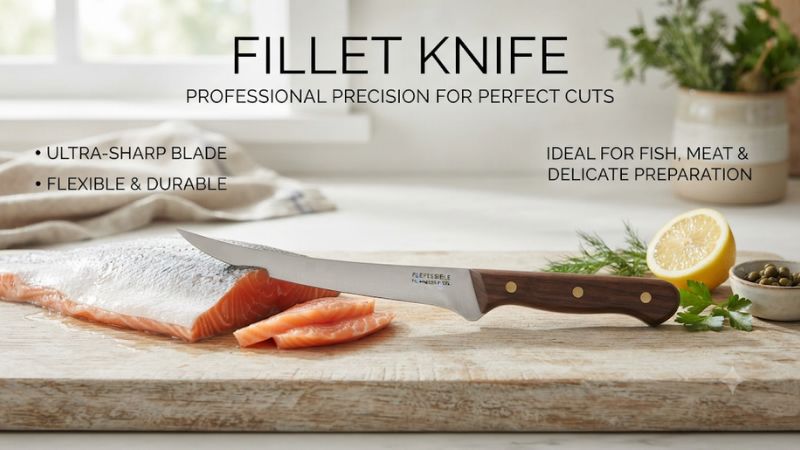
Quick Comparison Table
A fillet knife should be selected according to the relationship between blade length, flexibility, fish size, and handling conditions. Some knives use washable synthetic handles intended for food preparation, while traditional fishing models emphasize a compact sheath and portability. Electric systems use moving blades and therefore require a different approach to operation and maintenance.
| Product | Blade Length | Design | Best For | Main Trade-Off |
|---|---|---|---|---|
| Victorinox Fibrox Flexible Filleting Knife | 8 inches | Flexible stainless blade, Fibrox handle | Versatile home fish preparation | Long for very small fish |
| WÜSTHOF Classic Fillet Knife | 7 inches | Forged flexible blade, riveted handle | Premium kitchen cutlery | Higher purchase commitment |
| Dexter-Russell SOFGRIP Flexible Fillet Knife | 6 inches | Narrow flexible blade, textured handle | Smaller fish and compact workspaces | Less reach on large fillets |
| Rapala Fish ‘n Fillet Knife | 7½ inches | Flexible blade, birch handle, leather sheath | Traditional manual fish filleting | Wooden handle and sheath need care |
| Rapala Soft Grip Fillet Knife | 7½ inches | Flexible blade, soft-grip handle | Users preferring a synthetic fishing grip | Sheath and blade still require cleaning |
| Rapala Deluxe Electric Fillet Knife Set | 6 and 7½ inches | Powered reciprocating blades | Frequent fish preparation | Motor, electrical safety, extra storage |
This comparison does not imply that all six products are interchangeable.
An electric fillet knife handles differently from a manual blade and should be used only according to its operating instructions. Likewise, a knife sold for fishing trips may have a different handle or storage system from one intended primarily for home kitchens.
How We Selected These Fillet Knives
The recommendations were chosen to compare recognizable models with documented manufacturer features. We considered blade length, flexibility, grip, intended environment, maintenance, storage, and the practical requirements of preparing different fish. No original cutting-force measurements, yield comparisons, edge-retention testing, or durability experiments were performed.
Evaluation criteria:
- Blade length: Compatibility with small and large fish.
- Flexibility: Ability to follow suitable contours.
- Handle: Grip design and cleaning considerations.
- Manual or powered operation: Appropriate use and complexity.
- Blade profile: Narrow construction intended for filleting.
- Storage: Sheath or suitable protective arrangement.
- Maintenance: Cleaning and sharpening requirements.
- User suitability: Occasional home use versus frequent preparation.
Manufacturer statements about performance describe product intentions, not independent proof that one knife produces better fillets in every situation.
The comparisons below focus on what a buyer can reasonably assess before purchasing.
Six Fillet Knives Reviewed in Detail
Each knife offers a different approach to separating fish flesh from bones and skin. The Victorinox and WÜSTHOF models are recognizable kitchen cutlery choices, while Dexter-Russell provides commercial-style handle design. Rapala offers traditional fishing-oriented knives and a powered system. The ideal purchase depends on fish size, preparation frequency, storage, and willingness to maintain the equipment properly.
Victorinox Fibrox Flexible Filleting Knife, 8 Inches
The Victorinox Fibrox Flexible Filleting Knife is a kitchen-oriented fish knife with an eight-inch flexible blade and a synthetic Fibrox handle. The manufacturer identifies the flexible blade as suitable for following fish contours and removing fillets. Its design is relevant for home cooks who want a recognized manual knife without purchasing an electric system or a traditional fishing sheath.
Best For: Versatile fish preparation in a home kitchen.
Why We Picked It: Its documented eight-inch blade and flexible construction make it a useful general-purpose filleting option.
Key Specifications:
- Brand: Victorinox.
- Product: Fibrox Flexible Filleting Knife.
- Blade length: 8 inches.
- Representative model: 5.3763.20.
- Blade type: Flexible.
- Handle: Fibrox synthetic grip.
- Use: Fish filleting and skinning.
- Operation: Manual.
Features & Benefits:
- Flexible blade follows suitable fish contours.
- Eight-inch length provides reach on larger fillets.
- Synthetic handle is intended for kitchen use.
- Narrow profile supports precise cutting.
- No motor or battery required.
Pros:
- Recognizable manufacturer.
- Versatile blade length.
- Flexible cutting profile.
- Straightforward manual operation.
Cons:
- May feel long for very small fish.
- Requires edge maintenance.
- Grip comfort is personal.
- Protective storage may need to be purchased separately.
Buy If: You regularly prepare medium-size fish and want a manual kitchen fillet knife.
Skip If: You primarily clean very small fish or prefer a shorter working blade.
Performance & Practical Use
The flexible blade can help a cook follow the shape of fish during controlled cutting. An eight-inch length is useful when working with larger portions because it provides enough edge to make longer strokes.
However, a longer blade also requires additional cutting-board space and careful hand placement.
For small fish, a six-inch knife may feel easier to maneuver.
What Makes It Different
The Fibrox model emphasizes straightforward kitchen utility rather than an outdoor sheath or powered cutting system.
It is especially relevant to households purchasing whole fish from grocery stores or fish markets.
The exact blade variant should be confirmed because Victorinox offers several similar filleting configurations.
WÜSTHOF Classic 7-Inch Fillet Knife
The WÜSTHOF Classic 7-Inch Fillet Knife is a flexible forged fish knife with a narrow blade and a traditional triple-riveted handle. The manufacturer describes the blade as suitable for delicate filleting and slicing tasks. Its seven-inch length creates a middle ground between compact six-inch knives and longer eight- or nine-inch alternatives.
Best For: Home cooks who prefer premium forged kitchen cutlery.
Why We Picked It: Its recognizable Classic construction and moderate blade length provide a different option from stamped professional-style knives.
Key Specifications:
- Brand: WÜSTHOF.
- Series: Classic.
- Blade length: 7 inches.
- Construction: Forged.
- Blade: Flexible filleting profile.
- Handle: Triple-riveted synthetic design.
- Use: Fish preparation and delicate slicing.
- Operation: Manual.
Features & Benefits:
- Flexible blade supports controlled filleting.
- Seven-inch length suits varied fish.
- Forged construction offers a familiar Western knife format.
- Riveted handle coordinates with the Classic range.
- Suitable for household fish preparation.
Pros:
- Manageable blade length.
- Premium forged construction.
- Recognizable handle design.
- Dedicated fish-filleting profile.
Cons:
- Higher purchase commitment.
- Requires careful sharpening.
- Not intended for bone chopping.
- Premium construction may be unnecessary for occasional use.
Buy If: You regularly prepare fish and prefer traditional forged knives.
Skip If: You need a low-cost occasional-use tool or prefer a soft synthetic fishing handle.
Performance & Practical Use
The seven-inch blade can provide a useful balance of reach and maneuverability, particularly when moving between smaller and medium-size fish.
The flexible profile is intended for delicate separation work rather than cutting through hard bones.
As with other fillet knives, sharpness and controlled technique strongly influence the result.
What Makes It Different
WÜSTHOF’s Classic construction combines a familiar forged design with a specialist fish-preparation blade.
It may appeal to households already using knives from the same collection.
However, ownership of matching premium cutlery is a preference rather than evidence of superior filleting performance.
Dexter-Russell SOFGRIP 6-Inch Flexible Fillet Knife
The Dexter-Russell SOFGRIP 6-Inch Flexible Fillet Knife is a compact manual model associated with the manufacturer’s food-processing range. The manufacturer describes a narrow flexible blade and a soft, slip-resistant handle designed for controlled work. It is relevant for home cooks who prepare smaller fish or prefer a shorter blade for detailed cutting.
Best For: Smaller fish and users seeking a compact flexible blade.
Why We Picked It: The six-inch working length and textured handle provide a distinct alternative to larger filleting models.
Key Specifications:
- Brand: Dexter-Russell.
- Series: SOFGRIP.
- Model family: SG136FF.
- Blade length: 6 inches.
- Blade profile: Flexible fillet blade.
- Handle: Soft-grip synthetic construction.
- Operation: Manual.
- Use: Fish filleting.
Features & Benefits:
- Shorter blade supports detailed movements.
- Flexible construction follows suitable contours.
- Soft-grip handle emphasizes control.
- Compact dimensions help in smaller work areas.
- Practical food-processing design.
Pros:
- Manageable six-inch blade.
- Textured handle.
- Recognizable commercial-kitchen manufacturer.
- Useful for smaller fish.
Cons:
- Less reach on large fillets.
- May require more strokes for long cuts.
- Narrow blade is unsuitable for forceful chopping.
- Protective storage must be considered.
Buy If: You regularly prepare small fish or want a compact manual fillet knife.
Skip If: You often fillet large salmon or require substantial cutting length.
Performance & Practical Use
A six-inch blade can make detailed work feel manageable, particularly when the cutting board is not very large.
The soft-grip handle may appeal to users who prefer a textured synthetic surface.
However, the knife still requires safe control, clean hands, and a stable work area.
No grip material makes a slippery cutting board safe.
What Makes It Different
The Dexter-Russell model emphasizes practical food-processing design rather than premium finish or traditional wooden styling.
It is a reasonable candidate for buyers who value manageable blade length and grip construction.
The main limitation is the shorter cutting edge when working with large fish.
Rapala Fish ‘n Fillet 7½-Inch Knife
The Rapala Fish ‘n Fillet is a long-established fishing-oriented fillet knife with a flexible blade and a traditional birchwood handle. The manufacturer offers several blade sizes; the seven-and-a-half-inch version provides a middle-to-long manual option. The classic design includes a leather sheath and is associated with fish preparation outside conventional kitchen settings.
Best For: Buyers who prefer traditional manual fishing-style equipment.
Why We Picked It: The recognizable birch handle and leather sheath create a distinct ownership experience from synthetic kitchen knives.
Key Specifications:
- Brand: Rapala.
- Product: Fish ‘n Fillet Knife.
- Selected blade length: 7½ inches.
- Other family sizes: 4, 6, and 9 inches.
- Handle: Birchwood.
- Blade: Flexible filleting design.
- Storage: Leather sheath.
- Operation: Manual.
Features & Benefits:
- Flexible blade intended for filleting.
- Traditional wooden handle.
- Protective sheath included in the classic configuration.
- Several size options within the family.
- Suitable for controlled fish preparation.
Pros:
- Established recognizable design.
- Included sheath.
- Practical blade length.
- Available in several size configurations.
Cons:
- Wood and leather require appropriate moisture care.
- Sheath should not receive a wet blade.
- Grip preference varies.
- May not be the simplest option for dishwasher-oriented kitchens.
Buy If: You appreciate traditional fishing cutlery and can maintain the handle and sheath.
Skip If: You want entirely synthetic components that are straightforward to rinse and dry.
Performance & Practical Use
The seven-and-a-half-inch blade can support smooth manual cutting along suitable fish contours.
Its traditional handle may feel familiar to buyers who have used fishing knives before.
However, the blade should be cleaned and dried after use, and the leather sheath should remain in appropriate condition.
Never put a dirty or wet knife directly into long-term sheath storage.
What Makes It Different
The Rapala classic combines an established design with traditional natural materials.
It appeals to users who want a dedicated fish-preparation knife rather than a general kitchen aesthetic.
The trade-off is additional attention to the birch handle and sheath.
Rapala Soft Grip 7½-Inch Fillet Knife
The Rapala Soft Grip Fillet Knife is a separate product family that combines the manufacturer’s flexible fillet blade with a softer textured handle. The selected seven-and-a-half-inch configuration offers a practical working length while changing the handling experience compared with the traditional birchwood model.
Best For: Buyers who prefer a synthetic, soft-grip fishing knife.
Why We Picked It: The handle design is a meaningful distinction from Rapala’s traditional Fish ‘n Fillet range.
Key Specifications:
- Brand: Rapala.
- Product: Soft Grip Fillet Knife.
- Selected blade length: 7½ inches.
- Family size options: 4, 6, 7½, and 9 inches.
- Handle: Soft-grip synthetic construction.
- Blade: Flexible filleting design.
- Operation: Manual.
Features & Benefits:
- Flexible blade for fish preparation.
- Soft handle intended for comfortable control.
- Choice of several blade lengths.
- No battery or power cord.
- Different grip experience from wooden models.
Pros:
- Textured synthetic grip.
- Familiar manual cutting method.
- Practical midrange blade length.
- Multiple size options.
Cons:
- Still requires sharpening.
- Handle texture must be cleaned thoroughly.
- Does not eliminate slipping risks.
- The correct sheath configuration should be confirmed.
Buy If: You want Rapala’s filleting format with a synthetic handle.
Skip If: You strongly prefer natural wood or want a compact six-inch blade instead.
Performance & Practical Use
A soft-grip handle can make a knife feel different from a smooth wooden model during repeated preparation.
However, hand size and grip technique strongly influence comfort.
The seven-and-a-half-inch blade is useful for medium-to-large fish, but it may feel cumbersome when preparing very small species.
What Makes It Different
The Soft Grip’s main distinction is its handle construction.
Compared with the classic birchwood version, it may suit buyers who prefer synthetic surfaces and a different grip texture.
Actual cutting results still depend on blade condition and user technique.
Rapala Deluxe Electric Fillet Knife Set
The Rapala Deluxe Electric Fillet Knife Set is a powered fish-processing system supplied with six-inch and seven-and-a-half-inch reciprocating blade options. Unlike manual fillet knives, it uses an electric motor to move the cutting blades. This design may appeal to users who regularly process larger amounts of fish, but it introduces additional setup, electrical safety, cleaning, and storage considerations.
Best For: Frequent fish preparation where a powered system is genuinely useful.
Why We Picked It: The electric mechanism provides a fundamentally different approach from manual filleting.
Key Specifications:
- Brand: Rapala.
- Product: Deluxe Electric Fillet Knife Set.
- Operation: Electric reciprocating blades.
- Included blade lengths: 6 and 7½ inches.
- Configuration: Powered handle with interchangeable blades.
- Power: Confirm the current product’s electrical specifications.
- Use: Fish filleting according to manufacturer instructions.
Features & Benefits:
- Motor moves the cutting blades.
- Different blade sizes suit varied fish.
- Can support repeated fish-processing tasks.
- Dedicated powered system.
- Specialized equipment for frequent use.
Pros:
- Powered cutting action.
- Two blade-length options.
- Distinct approach to repeated work.
- Useful for appropriate high-volume tasks.
Cons:
- Requires power and electrical safety.
- More parts to maintain.
- More storage than a manual knife.
- Not necessary for occasional fish dinners.
Buy If: You frequently process fish and are comfortable following powered-tool instructions.
Skip If: You only prepare fish occasionally or prefer the simplicity of a manual knife.
Performance & Practical Use
A powered reciprocating system changes how the user controls the cut. The motor moves the blades, but the operator must still position the fish, control the tool, and follow safe operating instructions.
It should never be used with damaged electrical components or in conditions prohibited by the manufacturer.
Cleaning must be performed with the power disconnected as directed.
What Makes It Different
Unlike the other five products, the Deluxe Electric is a powered system rather than a traditional manual knife.
Its value depends on repeated fish-processing work.
For a household buying one or two whole fish occasionally, a conventional manual fillet knife is usually a simpler starting point.
Buying Guide: How to Choose a Fillet Knife
The best fillet knife fits the fish, the user’s preferred handling style, and the preparation environment. A highly flexible blade may be useful for working along fish contours, while a firmer knife may suit certain larger cuts. Blade length, grip security, storage, and cleaning should all be evaluated before choosing a model.
Choose Blade Length According to Fish Size
Shorter fillet knives can be easier to maneuver around small fish, while longer knives provide additional cutting reach.
Four- to six-inch blades may suit:
- Smaller fish.
- Detailed trimming.
- Compact cutting boards.
- Beginners preferring shorter movements.
Seven- to eight-inch blades may suit:
- Medium fish.
- Many common whole-fish preparations.
- Longer slicing strokes.
- General home filleting.
Nine-inch and longer blades may suit:
- Larger fish.
- Longer fillets.
- Experienced users.
- Spacious preparation areas.
The exact choice depends on technique and fish anatomy rather than size alone.
A longer knife can be less convenient in a cramped kitchen.
Understand Blade Flexibility
Flexibility allows the blade to bend around fish contours during suitable cutting motions.
Flexible blades:
- Useful for delicate flesh.
- Can follow curved surfaces.
- Require controlled pressure.
- May feel less stable during forceful tasks.
Stiffer blades:
- Provide more resistance to bending.
- Can feel predictable on selected larger fish.
- May be less adaptable to narrow contours.
- Should not be used for prying.
A fillet knife should never be used to break bones through force.
Choose the blade’s intended stiffness for the fish and technique.
Prioritize Handle Security
Fish preparation can involve moisture and slippery ingredients, so a comfortable grip matters.
Features to evaluate:
- Textured synthetic or suitable wooden handle.
- Comfortable shape.
- Secure construction.
- Easy-clean surfaces.
- Appropriate finger clearance.
- Suitable balance.
A textured handle does not eliminate risk.
Keep the workstation clean and avoid handling a sharp knife when the grip cannot be maintained securely.
Choose Manual or Electric Operation
A manual fillet knife is simpler, portable within applicable rules, and generally easier to maintain.
Electric systems may assist with repeated work but require more attention.
Manual advantages:
- No power source.
- Fewer components.
- Compact storage.
- Direct blade control.
Electric advantages:
- Powered reciprocating movement.
- Useful for certain repetitive tasks.
- Interchangeable blades on selected systems.
Electric limitations:
- Electrical precautions.
- More cleaning steps.
- Additional storage.
- Potentially greater cost.
Most occasional home cooks can begin with a suitable manual knife.
Fillet Knife Versus Boning Knife
Fillet knives and boning knives both use relatively narrow blades, but they are optimized for different food-preparation needs. A boning knife is commonly designed to work around meat joints and connective tissue, while a fish fillet knife emphasizes flexibility and controlled separation along fish structures. The terms sometimes overlap in manufacturer catalogs, so buyers should inspect the exact blade rather than relying only on its name.
When a Fillet Knife Is the Better Choice
Choose a fillet knife when fish is the main ingredient and you want a blade designed to work along its natural shape.
Typical uses:
- Removing fillets from fish.
- Separating skin when appropriate.
- Trimming fish flesh.
- Preparing different fish sizes.
- Portioning suitable fillets.
A flexible blade can help with delicate cuts, but technique remains essential.
When a Boning Knife Is More Appropriate
A boning knife is generally more relevant to poultry, pork, beef, and other meat cuts.
Typical uses:
- Trimming connective tissue.
- Working around joints.
- Removing meat from certain bones.
- Preparing boneless portions.
- Controlled meat trimming.
A flexible boning knife can overlap with fish preparation, but it may not provide the same length or profile as a dedicated fillet knife.
Choose according to the primary ingredient.
Safe Filleting and Food Handling
Fish preparation requires a stable cutting surface and careful food safety. A specialized knife makes cutting more manageable, but it does not reduce the risks associated with raw seafood, sharp blades, or slippery workstations. Home cooks should begin with appropriate instruction, use controlled movements, and keep raw fish separate from ready-to-eat foods.
Prepare the Work Area Before Cutting
Clear the counter and provide enough space for the fish and knife.
Safety checklist:
- Clean, stable cutting board.
- Adequate lighting.
- Secure knife grip.
- Organized preparation space.
- Separate containers for waste.
- Access to suitable cleaning supplies.
- No loose utensils near the blade.
Do not attempt detailed filleting on an unstable board.
If the fish is difficult to control, stop and adjust the setup rather than forcing the blade.
Prevent Cross-Contamination
Raw fish can carry harmful microorganisms.
Food safety practices:
- Wash hands after handling raw seafood.
- Clean knives and boards appropriately.
- Keep raw fish away from ready-to-eat foods.
- Refrigerate seafood promptly.
- Follow safe cooking guidance.
- Inspect fish for spoilage.
- Dispose of waste appropriately.
Fish intended for raw consumption requires specialized safety considerations beyond ordinary refrigerator storage.
A fillet knife does not make raw fish safe to eat.
Use Controlled Movements
A fillet knife should be guided rather than forced.
Avoid twisting the blade against hard bones or making uncontrolled cuts toward the supporting hand.
Work deliberately and seek qualified instruction when learning to process unfamiliar fish species.
The goal is consistent control, not speed.
Cleaning, Sharpening, and Storage
Fillet knives need careful maintenance because they frequently contact raw seafood and moisture. Blade steel, handle material, sheath construction, and power components all affect cleaning requirements. A knife that is easy to maintain may be more useful than a premium model requiring a complicated routine.
Clean Manual Fillet Knives Properly
Follow manufacturer care instructions after each use.
Routine steps:
- Clean away food residue.
- Wash carefully with suitable detergent.
- Rinse as instructed.
- Dry the blade and handle.
- Inspect the edge.
- Store with the blade protected.
Wooden handles and leather sheaths require particular attention to moisture.
Do not store a wet blade in a closed sheath.
Maintain the Cutting Edge
A dull fillet knife may require excessive pressure and become difficult to control.
Use an appropriate sharpening method for the blade.
Flexible knives should not be bent aggressively during sharpening.
If you are unfamiliar with the required technique, professional sharpening may be more suitable.
Avoid unapproved abrasive methods that can damage the edge.
Store the Knife Safely
A fitted sheath, blade guard, or suitable knife organizer can protect the cutting edge.
Keep the knife away from children and separate from ordinary utensils.
For electric models, disconnect power before cleaning and follow the manufacturer’s blade-removal and storage instructions.
Never leave exposed blades loose on a counter or in a sink.
Common Buying Mistakes
A fillet knife purchase can disappoint when the buyer chooses a blade based on appearance rather than fish size, maintenance, and handling experience. Another mistake is assuming a powered knife is always better or that an extremely flexible blade is universally easier to use. Matching the product to the task provides a more reliable basis for purchasing.
Buying the Longest Blade Available
A nine-inch blade may be useful for large fish but awkward for smaller species.
Choose enough length for your normal preparation tasks.
A manageable six- or seven-inch blade may provide better control in a compact home kitchen.
Confusing Flexibility With Strength
A flexible blade can follow curves but should not be forced into hard bones.
Do not use it as a pry bar or cleaver.
Flexibility is a cutting characteristic, not permission to bend the knife beyond its intended use.
Ignoring Sheath and Handle Care
Traditional wooden handles and leather sheaths require proper cleaning and drying.
Synthetic grips need cleaning around textured surfaces.
An included sheath is useful only when it fits correctly and remains in suitable condition.
Buying Electric Equipment for Occasional Use
An electric fillet knife adds components, cleaning requirements, and storage needs.
If you prepare fish only a few times per year, a manual model may be enough.
Choose a powered system when its repeated-use benefits justify the additional complexity.
Frequently Asked Questions
Fillet knife buyers often ask about blade size, flexibility, sharpening, and whether one knife can handle multiple fish species. These questions depend on the fish, working environment, and the user’s experience. An appropriate knife supports careful cutting, but it cannot replace safe technique or proper seafood handling.
What Size Fillet Knife Is Best for Beginners?
A six- to seven-inch manual fillet knife can be manageable for many beginners preparing small-to-medium fish. An eight-inch blade may offer more cutting length for larger species. The correct size depends on fish anatomy, cutting-board space, and user comfort. A longer blade is not automatically more versatile or easier to control.
Should a Fillet Knife Be Flexible or Stiff?
Flexible blades can follow fish contours and help with delicate separation, while stiffer blades provide more resistance to bending. Different fish and cutting tasks favor different characteristics. Beginners should choose a blade they can control and avoid excessive force. No fillet knife should be used for chopping through hard bones.
Can I Use a Fillet Knife for Chicken?
Some fillet knives can perform selected trimming tasks on poultry, but their flexible profiles may be less appropriate for working around firm joints than a suitable boning knife. Use the blade only for tasks it is designed to handle. If poultry is the main ingredient, a dedicated boning knife may be a better choice.
Are Electric Fillet Knives Worth It?
They can be useful for people who process fish frequently and prefer powered reciprocating cutting. However, they require electrical safety, cleaning, blade maintenance, and storage. For occasional home cooking, a manual knife is generally simpler. The right choice depends on preparation volume and the user’s willingness to manage the equipment.
How Often Should I Sharpen a Fillet Knife?
Sharpening frequency depends on use, cutting-board material, steel, and handling. Maintain the edge according to manufacturer guidance and sharpen when performance declines. Avoid forcing a dull knife through fish. A properly maintained blade supports more controlled work, but sharpening should be performed using a suitable method.
Can One Fillet Knife Handle All Fish?
A versatile manual knife can handle many fish types, but no single blade is ideal for every species and size. Small fish may favor shorter blades, while large fillets may benefit from additional length. Very delicate flesh can require greater flexibility. Choose according to the fish you prepare most often rather than assuming one model is universally best.
Conclusion
The best fillet knife matches the fish you prepare, the blade control you prefer, and the maintenance you can manage. Victorinox offers a versatile eight-inch kitchen option, WÜSTHOF provides premium forged construction, and Dexter-Russell offers a compact textured-handle design. Rapala’s traditional and Soft Grip knives suit manual fish preparation, while its Deluxe Electric set serves more frequent processing needs. Start with an appropriate manual blade unless your workload justifies powered equipment, and prioritize safe handling, cleaning, and protected storage.










Write Your Review
No reviews yet. Be the first to share your experience!