
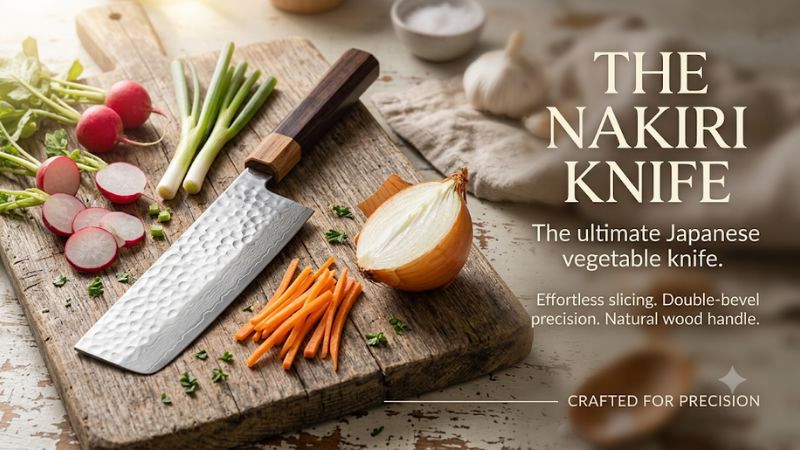
A Nakiri knife is designed for efficient vegetable preparation, with a broad rectangular blade and a cutting edge suited to controlled chopping and slicing. However, not all nakiri knives feel or perform the same. Blade length, steel, handle design, weight, and sharpening requirements affect everyday use. This guide compares six recognizable models and helps home cooks choose one that fits their preparation habits.
Quick Verdict: Which Nakiri Knife Is Right for You?
A good nakiri should feel comfortable during repeated vegetable preparation and provide enough blade length for the ingredients you normally cut. Premium Japanese designs may appeal to cooks who enjoy precise edge maintenance, while familiar Western-style handles can feel more natural to buyers moving from a chef’s knife. The best purchase depends on comfort and care requirements, not price alone.
Six practical recommendations:
- Best premium Japanese-style option: Shun Classic 6.5-Inch Nakiri.
- Best familiar Western handle: WÜSTHOF Classic 7-Inch Hollow Edge Nakiri.
- Best distinctive all-metal design: Global G-5 7-Inch Vegetable Knife.
- Best traditional Japanese value option: Tojiro Classic Nakiri 165mm F-502.
- Best textured synthetic grip: Mercer Culinary Genesis 7-Inch Nakiri.
- Best decorative Japanese-style option: MIYABI Kaizen II 5000FCD 6.5-Inch Nakiri.
These labels reflect differences in construction and intended buyer, not original comparative knife testing.
A nakiri primarily excels at vegetables. It is not intended for chopping through bones, splitting frozen foods, or replacing a heavy-duty cleaver.
Quick Comparison Table
The six models below represent different approaches to the Japanese vegetable-knife profile. Some use relatively lightweight or streamlined construction, while others emphasize forged blades, familiar handles, or decorative finishes. The comparison focuses on verifiable model identity and practical differences without inventing measured edge retention, cutting speed, or laboratory performance.
| Nakiri Knife | Blade Length | Main Design | Best For | Primary Trade-Off |
|---|---|---|---|---|
| Shun Classic Nakiri | 6.5 inches | Japanese-style Damascus-clad blade, Pakkawood handle | Cooks who appreciate refined vegetable preparation | Premium care and purchase commitment |
| WÜSTHOF Classic Hollow Edge Nakiri | 7 inches | Forged German steel, scalloped blade, riveted handle | Cooks accustomed to Western handles | More substantial design |
| Global G-5 Vegetable Knife | 7 inches | All-stainless construction, textured metal handle | Minimalist kitchens and all-metal preference | Metal grip is not for everyone |
| Tojiro Classic Nakiri F-502 | 165mm | VG10-core clad blade, bolstered construction | Home cooks exploring Japanese cutlery | Requires suitable edge care |
| Mercer Genesis Nakiri M20907 | 7 inches | Forged German steel, Santoprene handle | Practical grip and everyday vegetable prep | Less decorative than premium Japanese knives |
| MIYABI Kaizen II 5000FCD Nakiri | 6.5 inches | Japanese-style Damascus construction | Enthusiasts seeking a refined presentation | Higher maintenance and cost considerations |
All six are designed for controlled kitchen cutting, but they differ in how they feel in the hand.
A knife that performs well for one cook may be less comfortable for another because of handle shape, weight distribution, or preferred cutting technique.
How We Selected These Nakiri Knives
This roundup focuses on identifiable manufacturer models rather than generic knives whose steel, dimensions, or construction cannot be confirmed. We considered vegetable-cutting suitability, blade length, handle design, maintenance, and practical buyer needs. The products were not physically tested, so the recommendations should be read as informed comparisons of documented features rather than firsthand performance rankings.
Evaluation criteria:
- Blade profile: Suitability for vegetable chopping and slicing.
- Blade length: Practical dimensions for home cutting boards.
- Construction: Forged, clad, or all-metal design.
- Handle: Comfort-related design characteristics.
- Steel: Maintenance and sharpening considerations.
- Care: Cleaning and storage requirements.
- Value: Whether the construction provides features a buyer actually needs.
- Versatility: Suitability for everyday plant-focused meal preparation.
The distinction between design and measured performance matters. A manufacturer may describe a knife as exceptionally sharp, but that does not establish how long its edge remains sharp in every home kitchen. Cutting board material, technique, frequency of use, and maintenance influence the outcome.
Six Nakiri Knives Compared in Detail
A nakiri’s broad profile can make it satisfying to chop onions, cabbage, herbs, and other vegetables, but different handle and steel choices change how it fits into everyday cooking. The six reviews below explain the strengths each design offers, the trade-offs buyers should consider, and which users are most likely to appreciate the model.
Shun Classic 6.5-Inch Nakiri
The Shun Classic 6.5-Inch Nakiri, identified as model DM0728, is a Japanese-style vegetable knife with a broad rectangular blade and a relatively straight cutting edge. The Classic series uses Shun’s layered steel construction and a Pakkawood handle. Its profile is intended for controlled vegetable cutting, making it appealing to cooks who prepare greens, root vegetables, and finely sliced ingredients regularly.
Best For: Home cooks who want a premium Japanese-style vegetable knife.
Why We Picked It: The identifiable Shun Classic design pairs a traditional nakiri profile with a recognizable handle and blade construction.
Key Specifications:
- Brand: Shun.
- Series: Classic.
- Model: DM0728.
- Blade length: 6.5 inches.
- Blade profile: Rectangular nakiri.
- Handle: Pakkawood.
- Maintenance: Handwashing and careful drying recommended.
Features & Benefits:
- Broad blade supports controlled vegetable cutting.
- Relatively straight edge suits chopping motions.
- Layered steel construction creates a distinctive finish.
- Handle is designed for comfortable food preparation.
- Suitable for many everyday vegetables.
Pros:
- Recognizable premium Japanese design.
- Practical six-and-a-half-inch blade.
- Strong focus on vegetable preparation.
- Distinctive finish and handle.
Cons:
- Greater purchase commitment than entry-level options.
- Requires careful edge maintenance.
- Not intended for bones or frozen foods.
- Blade finish does not eliminate sticking.
Buy If: You prepare vegetables frequently and appreciate Japanese-style cutlery.
Skip If: You want a budget knife for occasional use or prefer a heavier Western-style handle.
Performance & Practical Use
The six-and-a-half-inch blade provides enough length for many common vegetables without requiring an unusually large cutting board. It is suitable for thinly slicing cucumbers, chopping greens, and preparing onions for everyday meals.
A nakiri is most effective when the cutting motion suits its relatively straight edge. Cooks who rely heavily on exaggerated rocking cuts may need time to adapt.
What Makes It Different
Shun’s layered blade construction and Pakkawood handle distinguish it from simpler commercial-style knives.
That makes the model appealing to enthusiasts, but decorative layers are not themselves proof of better performance.
The correct buyer values the complete design and is willing to maintain the edge appropriately.
WÜSTHOF Classic 7-Inch Hollow Edge Nakiri
The WÜSTHOF Classic 7-Inch Hollow Edge Nakiri is a forged German-steel vegetable knife with a broad blade and a familiar triple-riveted handle. The manufacturer identifies a seven-inch blade, a Rockwell hardness of approximately 58 HRC, and a series of blade indentations intended to reduce food adhesion. This design may appeal to cooks transitioning from conventional Western chef’s knives.
Best For: Home cooks who prefer a familiar riveted handle and forged construction.
Why We Picked It: Its documented German-steel design offers a useful contrast to Japanese-style layered knives.
Key Specifications:
- Brand: WÜSTHOF.
- Series: Classic.
- Blade length: 7 inches.
- Production: Forged.
- Steel hardness: 58 HRC.
- Blade design: Hollow-edge nakiri.
- Country of origin: Germany.
- Model: 1040132617.
Features & Benefits:
- Broad blade supports vegetable chopping.
- Scalloped indentations are designed to reduce food sticking.
- Forged construction provides a familiar structural format.
- Riveted handle suits many Western-style grips.
- Seven-inch length accommodates larger vegetables.
Pros:
- Familiar handle construction.
- Seven-inch cutting edge.
- Documented hardness and production method.
- Suitable for common vegetable tasks.
Cons:
- May feel more substantial than some lightweight Japanese knives.
- Indentations do not prevent all sticking.
- Requires appropriate sharpening.
- Not a bone-chopping cleaver.
Buy If: You want a dedicated vegetable knife with a Western-style handle.
Skip If: You prefer a compact six-inch blade or an all-metal minimalist handle.
Performance & Practical Use
The seven-inch blade can be useful when working through cabbage, larger onions, and repeated vegetable-preparation tasks.
Scalloped blade indentations may help some moist ingredients release, but outcomes depend on ingredient shape, moisture, and technique.
Do not assume that hollow-ground indentations prevent every slice from sticking.
What Makes It Different
The Classic Nakiri combines the Japanese vegetable-blade profile with familiar WÜSTHOF construction.
This may reduce the adjustment for cooks accustomed to German chef’s knives.
Its appeal comes from combining these design characteristics rather than claiming universally superior cutting results.
Global G-5 7-Inch Vegetable Knife
The Global G-5 is a seven-inch vegetable knife associated with the brand’s distinctive all-stainless construction. It uses a broad blade profile appropriate for chopping vegetables and a textured metal handle. This design stands apart from knives with separate wooden or polymer handles and is particularly relevant for cooks who appreciate streamlined tools.
Best For: Home cooks who prefer all-metal knife construction.
Why We Picked It: The G-5 provides a distinctive handle and construction approach within the nakiri-style category.
Key Specifications:
- Brand: Global.
- Model: G-5.
- Blade length: 7 inches.
- Knife type: Vegetable knife with nakiri-style profile.
- Construction: Stainless steel blade and metal handle design.
- Handle: Textured metal.
- Use: Vegetable preparation.
Features & Benefits:
- Wide blade suits chopping and slicing.
- Metal handle provides a distinctive grip profile.
- Streamlined construction appeals to minimalist kitchens.
- Seven-inch cutting length supports medium-to-large vegetables.
- No traditional wooden handle panels.
Pros:
- Distinctive all-metal appearance.
- Broad vegetable-focused blade.
- Practical seven-inch size.
- Easy-to-identify model design.
Cons:
- Metal grip may not suit every hand.
- Balance can feel different from riveted knives.
- Requires careful edge protection.
- Users unfamiliar with the handle should assess comfort.
Buy If: You prefer the Global handle style and regularly prepare vegetables.
Skip If: You dislike metal handles or prefer substantial textured polymer grips.
Performance & Practical Use
The G-5 can serve as a dedicated vegetable-preparation knife for onions, cabbage, peppers, and similar ingredients.
The broad blade is also useful for gathering chopped food, although scraping with the cutting edge should be avoided.
A separate bench scraper is better for moving ingredients across the board without unnecessarily wearing the edge.
What Makes It Different
Global’s metal handle and streamlined visual design are its clearest distinctions.
However, the way a handle feels is personal.
Buyers should prioritize a secure, comfortable grip over visual preference, especially when chopping for extended periods.
Tojiro Classic Nakiri 165mm F-502
The Tojiro Classic Nakiri F-502 is a Japanese vegetable knife with a 165mm blade and VG10-core clad construction. It is part of Tojiro’s established kitchen-cutlery range and uses a bolstered handle design. The blade length is comparable to a six-and-a-half-inch nakiri, making it useful for home cooks seeking a traditional vegetable-focused format without an oversized knife.
Best For: Cooks exploring Japanese vegetable-cutlery designs.
Why We Picked It: Its identifiable VG10-clad construction and standard 165mm profile provide a clear comparison with the other knives.
Key Specifications:
- Brand: Tojiro.
- Series: Classic.
- Model: F-502.
- Blade length: 165mm.
- Blade construction: VG10-core clad steel.
- Knife type: Nakiri.
- Handle: Bolstered construction.
Features & Benefits:
- Standard 165mm vegetable-blade length.
- Broad blade supports straight chopping.
- VG10-core clad construction.
- Dedicated vegetable-preparation profile.
- Suitable for many everyday cooking tasks.
Pros:
- Recognizable Japanese knife model.
- Manageable blade length.
- Clear material identity.
- Useful for plant-focused preparation.
Cons:
- Requires suitable edge maintenance.
- Not intended for hard bone cutting.
- Some cooks may prefer a longer blade.
- Exact handle feel should be assessed before purchase.
Buy If: You want a traditional 165mm Japanese nakiri from an established manufacturer.
Skip If: You prefer a longer seven-inch knife or an especially soft, textured handle.
Performance & Practical Use
The 165mm blade is a practical size for chopping vegetables on ordinary household cutting boards.
It can be used to prepare onions, leafy greens, and medium-size root vegetables with controlled push-cutting motions.
As with other nakiri knives, hard twisting and prying actions are inappropriate.
What Makes It Different
The Tojiro Classic emphasizes a straightforward Japanese vegetable-knife configuration with VG10-core clad construction.
It provides an alternative to decorative premium knives and familiar Western designs.
The best purchase depends on how the handle and edge-care requirements fit the user’s routine.
Mercer Culinary Genesis 7-Inch Nakiri
The Mercer Culinary Genesis Nakiri, model M20907, is a seven-inch precision-forged knife made from high-carbon German cutlery steel. The manufacturer identifies a Santoprene handle, full-tang construction, a bolster, and NSF certification. This gives it a distinctly practical commercial-kitchen character compared with some decorative Japanese-style knives.
Best For: Home cooks who prioritize a textured synthetic handle.
Why We Picked It: Its documented construction, grip material, and standard seven-inch length make it a practical everyday option.
Key Specifications:
- Brand: Mercer Culinary.
- Series: Genesis.
- Model: M20907.
- Blade length: 7 inches.
- Steel: High-carbon German cutlery steel.
- Construction: Precision forged.
- Handle: Santoprene.
- Certification: NSF.
- Listed hardness: 56 ± 1 HRC.
Features & Benefits:
- Textured handle supports grip.
- Seven-inch blade provides substantial vegetable-cutting length.
- Forged construction uses a defined bolster and tang.
- Blade profile suits repeated chopping.
- Straightforward professional-style appearance.
Pros:
- Textured handle design.
- Clear manufacturer specifications.
- Full-tang forged construction.
- Useful size for everyday vegetables.
Cons:
- More utilitarian appearance.
- Handwashing is recommended.
- Requires suitable edge maintenance.
- May not appeal to buyers seeking traditional Japanese aesthetics.
Buy If: You value a practical grip and familiar forged construction.
Skip If: You prefer a lightweight wooden handle or a decorative layered finish.
Performance & Practical Use
The handle is particularly relevant when comparing Mercer with models using polished wood or metal.
Its textured design is intended to offer secure control during food preparation.
However, even a nonslip handle does not make cutting safe when hands, boards, or ingredients are unstable.
Maintain proper cutting technique and a clean preparation surface.
What Makes It Different
Mercer emphasizes practical kitchen construction rather than decorative steel layering.
Its specifications are clearly documented, making it easier to compare blade size and handle material.
For buyers who regularly chop vegetables and prefer a utilitarian tool, that may be more valuable than elaborate blade finishing.
MIYABI Kaizen II 5000FCD 6.5-Inch Nakiri
The MIYABI Kaizen II 5000FCD 6.5-Inch Nakiri is a Japanese-style vegetable knife offered through ZWILLING’s MIYABI collection. It features a decorative layered blade appearance and an approximately six-and-a-half-inch cutting edge. The model is relevant to enthusiasts who want a refined vegetable knife and are prepared to maintain a specialized kitchen blade carefully.
Best For: Enthusiasts who value Japanese-inspired craftsmanship and blade presentation.
Why We Picked It: Its identifiable Kaizen II series provides a premium alternative with a distinctive design identity.
Key Specifications:
- Brand: MIYABI.
- Series: Kaizen II 5000FCD.
- Blade length: 6.5 inches.
- Knife type: Nakiri.
- Design: Layered Damascus-style blade construction.
- Use: Vegetable cutting and preparation.
- Care: Follow manufacturer handwashing and edge-care guidance.
Features & Benefits:
- Broad vegetable-focused blade.
- Manageable blade length.
- Decorative layered appearance.
- Designed for controlled slicing and chopping.
- Premium Japanese-style presentation.
Pros:
- Distinctive aesthetic.
- Practical vegetable-blade dimensions.
- Recognizable MIYABI series.
- Appealing to cutlery enthusiasts.
Cons:
- Greater purchase commitment.
- Specialized maintenance expectations.
- Decorative finish does not guarantee superior results.
- Not suitable for bones or frozen food.
Buy If: You enjoy Japanese-style cutlery and are comfortable maintaining a premium blade.
Skip If: You need an inexpensive general-purpose knife with minimal maintenance requirements.
Performance & Practical Use
The Kaizen II can serve cooks who prepare vegetables regularly and appreciate careful, controlled slicing.
Its broad blade makes it suitable for many of the same tasks as the other nakiri knives in this roundup.
However, appearance alone should not determine the purchase. Handle comfort and edge maintenance remain important.
What Makes It Different
The primary distinction is its premium layered presentation within the MIYABI range.
It is an appealing option for an enthusiast, but not automatically a better first nakiri than a simpler model.
Choose it when the design and maintenance expectations match your interests and budget.
Buying Guide: How to Choose a Nakiri Knife
A nakiri is a specialized vegetable knife, and its usefulness depends on the type of chopping a household performs. Blade length, steel construction, handle comfort, and cutting-board compatibility matter more than decorative finish alone. Before buying, consider whether you want a primary vegetable knife or an occasional supplement to an existing chef’s knife.
Choose the Right Blade Length
Most nakiri knives in this comparison have blades around 165mm to seven inches long. Both sizes can work well for everyday vegetables, but the preferred length depends on cutting-board size, hand comfort, and ingredient volume.
Shorter blades may suit:
- Smaller cutting boards.
- Compact kitchens.
- Fine vegetable preparation.
- Cooks preferring lighter-feeling tools.
Longer blades may suit:
- Larger vegetables.
- Frequent batch preparation.
- Broader cutting boards.
- Cooks accustomed to seven- or eight-inch knives.
Do not assume a difference of half an inch determines cutting performance.
Weight distribution, blade height, edge geometry, and handle fit can matter more.
Understand the Nakiri Edge Profile
A nakiri has a broad blade with a comparatively straight cutting edge. This supports a chopping motion in which a substantial section of the edge contacts the cutting board.
Good uses include:
- Slicing cucumbers.
- Dicing onions.
- Preparing leafy greens.
- Cutting peppers.
- Chopping herbs.
- Preparing vegetables for stir-fries.
The shape is less suited to pronounced rocking cuts than many Western chef’s knives.
Practice a controlled push-cutting motion and avoid forcing the edge through unusually hard ingredients.
A nakiri should not be confused with a heavy meat cleaver merely because both have broad blades.
Compare Steel and Sharpening Requirements
Steel hardness, heat treatment, blade geometry, and maintenance influence cutting performance, but no single label tells the full story. Higher hardness can support a particular edge design while sometimes requiring careful handling. Softer steels may respond differently to honing and sharpening.
Evaluate:
- Stated steel composition.
- Manufacturer hardness information.
- Recommended sharpening method.
- Corrosion-care requirements.
- Blade construction.
- Intended cutting tasks.
Avoid buying solely on Rockwell hardness.
A well-maintained suitable knife is generally more useful than an expensive blade neglected between uses.
Choose the Handle That Fits Your Grip
Handle style is one of the most personal aspects of knife selection. Some cooks prefer traditional rounded or D-shaped handles, while others find a contoured riveted handle or textured polymer grip more comfortable.
Check for:
- Comfortable handle length.
- Secure grip.
- Appropriate balance.
- Smooth transitions.
- No uncomfortable pressure points.
- Suitable material care.
If possible, handle the knife before buying.
An appealing online photograph cannot reveal whether the grip feels comfortable during repeated chopping.
Prioritize Cutting-Board Compatibility
Use a stable cutting board made from a surface suitable for quality kitchen knives. Very hard surfaces such as glass, stone, and ceramic can damage cutting edges.
Practical board considerations:
- Stable placement.
- Adequate working area.
- Suitable wood or polymer construction.
- Easy cleaning.
- Enough room for guiding hands.
- Appropriate separation of raw and ready-to-eat foods.
Do not use a nakiri directly on a countertop.
The right board supports both edge care and safer chopping.
Nakiri Versus Santoku and Chef’s Knives
Many shoppers already own a chef’s knife or Santoku and wonder whether a nakiri provides a meaningful benefit. These blades overlap in everyday vegetable preparation, but their shapes emphasize different cutting movements. A nakiri is most worthwhile when its broad, relatively straight edge suits the cook’s preferred technique and the types of produce prepared regularly.
Nakiri Versus Santoku
A Santoku is usually more versatile across vegetables, boneless meat, and other general kitchen tasks, while a nakiri emphasizes vegetable preparation.
Nakiri advantages:
- Broad rectangular blade.
- Straight chopping focus.
- Useful for repeated vegetable preparation.
- Easy-to-recognize cutting profile.
Santoku advantages:
- More general-purpose shape.
- Different tip geometry.
- Suitable for several ingredient categories.
- Often practical as a primary kitchen knife.
Choose a nakiri when vegetable chopping is a major part of cooking.
Choose a Santoku when one knife must handle a broader range of everyday tasks.
Nakiri Versus Western Chef’s Knife
A Western chef’s knife often has a curved edge that supports rocking cuts. A nakiri usually encourages more direct chopping and push cutting.
Neither approach is inherently superior.
Choose a nakiri when:
- Vegetables dominate preparation.
- You prefer straighter chopping strokes.
- You want a dedicated vegetable tool.
Choose a chef’s knife when:
- You frequently use rocking cuts.
- You prefer one multipurpose blade.
- You work with many different ingredient types.
- You already have an established chef’s-knife technique.
A nakiri can complement a chef’s knife without replacing it.
Care, Storage, and Sharpening
A nakiri should be maintained according to its steel, handle, and manufacturer instructions. Even corrosion-resistant blades benefit from prompt cleaning and drying. Because the broad edge is intended for controlled cutting, twisting through hard ingredients or striking inappropriate surfaces can create damage that ordinary sharpening may not correct.
Wash and Dry the Knife Correctly
Many quality nakiri manufacturers recommend handwashing rather than dishwasher cleaning.
Basic care routine:
- Clean after use with appropriate mild detergent.
- Avoid leaving the blade submerged.
- Rinse carefully.
- Dry the blade and handle.
- Inspect for damage.
- Store with the edge protected.
Never leave a sharp nakiri loose in a sink where another person may reach into the water.
Do not store a damp blade in a closed sheath.
Store the Blade Safely
Suitable storage includes a compatible knife block, drawer organizer, magnetic holder installed according to instructions, or fitted protective guard.
Storage priorities:
- Protect the edge.
- Avoid contact with other utensils.
- Keep the knife dry.
- Prevent accidental falls.
- Limit children’s access.
- Do not leave blades exposed on counters.
The broad profile requires a guard or slot designed for the actual blade dimensions.
A narrow chef’s-knife sheath may not fit a nakiri safely.
Sharpen Without Damaging the Edge
Sharpening requirements vary by steel and blade geometry.
Follow manufacturer recommendations for the correct method and angle.
A suitable whetstone or professional sharpening service may be appropriate, depending on the knife and user experience.
Avoid aggressive sharpening without understanding the blade profile.
An improperly selected sharpener can damage a quality edge.
Frequently Asked Questions
Nakiri shoppers often want to understand whether the knife replaces a chef’s knife, how to use its broad blade, and which construction details matter. The best answers depend on vegetable-preparation habits and willingness to maintain the blade. A nakiri can be an excellent dedicated tool without being the most versatile knife in every kitchen.
What Is a Nakiri Knife Best Used For?
A nakiri is primarily designed for vegetable preparation, including chopping leafy greens, slicing cucumbers, dicing onions, and cutting other suitable produce. Its broad blade and relatively straight edge favor controlled chopping and push-cutting motions. It is not a heavy cleaver and should not be used for bones, frozen ingredients, or prying tasks.
Can a Nakiri Replace a Chef’s Knife?
It can handle many vegetable-preparation tasks, but it does not replace every function of a general-purpose chef’s knife. The blade shape is less suited to some rocking-cut techniques and tasks requiring a pointed tip. Home cooks who primarily prepare vegetables may use a nakiri frequently, while others may prefer it as a complementary tool.
Is a Six-and-a-Half-Inch Nakiri Large Enough?
For many home kitchens, a six-and-a-half-inch nakiri is sufficient for everyday vegetables. A seven-inch model provides slightly more cutting length and may feel more convenient with larger ingredients. The correct choice depends on cutting-board size, grip comfort, and food-preparation volume. Blade length alone does not determine the knife’s quality.
Are Hollow-Edge Nakiri Knives Better?
Scalloped or hollow-edge indentations are intended to help some foods release from the blade, but they do not prevent all sticking. Moisture, food texture, blade geometry, and cutting technique affect adhesion. Choose hollow-edge construction only when it offers a meaningful benefit for your cooking habits rather than assuming it is universally superior.
Do Nakiri Knives Need Special Sharpening?
They require sharpening appropriate to their steel and edge geometry. Some Japanese-style knives benefit from careful whetstone maintenance, while other manufacturers recommend different compatible methods. Follow the knife’s instructions and avoid aggressive sharpening tools that could damage the edge. Professional sharpening can be useful when you lack suitable equipment or experience.
Is a Nakiri Knife Good for Beginners?
Yes, if the beginner understands its intended vegetable-cutting role and practices safe handling. The broad blade can feel manageable for controlled chopping, but it still requires a stable cutting board and proper technique. Beginners seeking one knife for every kitchen task may find a general-purpose chef’s knife or Santoku more versatile.
Conclusion
The right Nakiri knife depends on vegetable-preparation habits, handle preference, and maintenance expectations. Shun and MIYABI offer premium Japanese-style designs, WÜSTHOF provides familiar forged construction, Global emphasizes its all-metal profile, Tojiro offers a recognizable VG10-clad option, and Mercer focuses on practical grip and everyday use. Choose the blade that feels comfortable and suits your cutting board, then maintain it carefully. A well-matched nakiri can become a valuable tool for regular vegetable preparation without replacing every other kitchen knife.



Write Your Review
No reviews yet. Be the first to share your experience!