
A dish organizer rack can make plates, small serving dishes, and platters easier to retrieve without lifting heavy stacks. The best designs differ in storage direction, supported plate sizes, shelf footprint, and installation requirements. Compare six identifiable organizers for kitchen cabinets and drawers, including vertical plate stands, adjustable holders, and racks that separate stacked dinnerware.
- Quick Verdict: Which Dish Organizer Rack Should You Buy?
- Quick Comparison Table
- How We Selected These Dish Storage Racks
- Six Dish Organizer Racks Reviewed in Detail
- Buying Guide: How to Choose a Dish Organizer Rack
- How to Organize Dishes for Everyday Use
- Common Buying Mistakes
- Frequently Asked Questions
- Conclusion
Quick Verdict: Which Dish Organizer Rack Should You Buy?
For everyday cabinet organization, a compact plate holder is a sensible starting point. Vertical stands help separate plates so individual dishes can be removed without disturbing a stack, while adjustable plate holders can stabilize a group of stacked dishes in a drawer. Wider horizontal racks may make better use of cabinet height, but they have different loading and access requirements.
Our six recommendations:
- Best simple bamboo plate stand: IKEA OSTBIT Plate Holder.
- Best adjustable plate holder: IKEA UPPDATERA Plate Holder.
- Best medium-to-large vertical plate rack: Yamazaki Tower Dish Storage Rack, Model 2964.
- Best compact plate stand: Yamazaki Plate Dish Stand.
- Best wide cabinet organization: Yamazaki Tower Dish Storage Rack Wide.
- Best for plates, platters, and mixed flat cookware: YouCopia StoreMore Cookware Rack.
These recommendations focus on storing clean dishes, not replacing a dedicated dish drying rack.
Some plate stands can support temporary drying when the manufacturer permits it, but an ordinary cabinet-storage organizer may lack a drainage tray or other features needed for wet dishes.
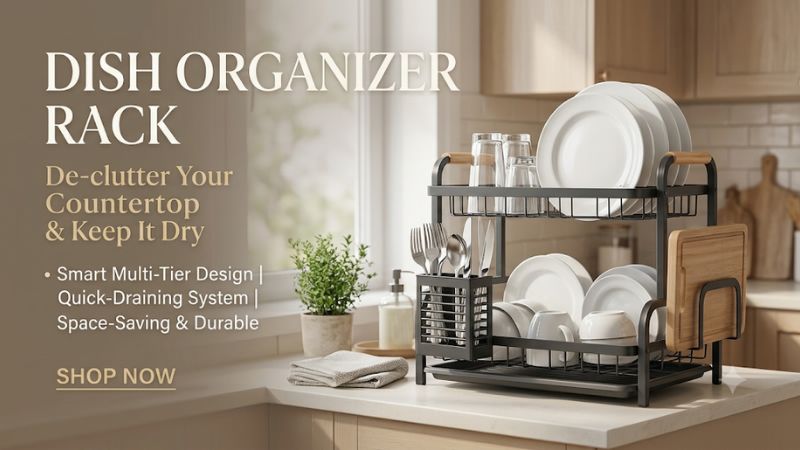
Quick Comparison Table
A useful comparison should show how a rack holds plates and which kitchen layout it suits. The six products below include fixed bamboo slots, adjustable plate holders, vertical steel stands, horizontal shelf separators, and a configurable cookware rack. These formats are not interchangeable, and actual capacity depends on plate size, thickness, weight, and available cabinet space.
| Product | Best For | Key Design | Main Advantage | Main Trade-Off |
|---|---|---|---|---|
| IKEA OSTBIT Plate Holder | Basic plate and lid storage | Bamboo stand with fixed dividers | Simple, portable, multipurpose | Fixed spacing |
| IKEA UPPDATERA Plate Holder | Stacked plates in drawers | Adjustable holder for defined plate diameters | Stable grouped storage | Not intended for upright individual plate separation |
| Yamazaki Tower Dish Storage Rack 2964 | Medium-to-large plates | Steel vertical rack with silicone stopper | Easier individual retrieval | Requires suitable plate diameter and cabinet height |
| Yamazaki Plate Dish Stand | Smaller plates and trays | Compact vertical steel stand | Narrow footprint | Limited stated load capacity |
| Yamazaki Tower Dish Storage Rack Wide | Wide cabinet shelves | Broad steel rack separating stacked dishes | Uses horizontal cabinet space | Must respect load rating and shelf width |
| YouCopia StoreMore Cookware Rack | Platters and mixed flat cookware | Adjustable vertical dividers | Flexible spacing | Not dedicated exclusively to dinner plates |
The intended use matters more than the number of visible positions in a product photograph. A heavy stoneware dinner plate needs different support from a lightweight side plate, while an oversized serving platter may require a particularly wide compartment.
Always compare the complete product dimensions and manufacturer load limits with your actual dinnerware.
How We Selected These Dish Storage Racks
The six selections were chosen for recognizable product identities, documented storage features, and meaningful differences in how they organize dishes. We considered cabinet compatibility, plate size, stability, cleaning, maintenance, and the intended storage orientation. The goal is to help readers choose a suitable system rather than claim that one rack has been proven strongest through original testing.
Evaluation criteria:
- Product identity: A specific manufacturer model or identifiable product family.
- Plate compatibility: Stated or practical support for common plate dimensions.
- Storage method: Individual vertical positions, grouped plate holders, or shelf separation.
- Cabinet fit: Width, depth, height, and retrieval clearance.
- Materials: Bamboo, steel, silicone, or modular mixed construction.
- Stability: Support points and available weight guidance.
- Maintenance: Ease of removing and cleaning the rack.
- Use case: Everyday plates, serving dishes, platters, or mixed cookware.
No original load testing, scratch-resistance measurements, or controlled comparison of dish breakage was conducted.
Manufacturer specifications were used to identify relevant features. Buyers should verify the selected model, especially when a manufacturer sells similar racks in several sizes.
Six Dish Organizer Racks Reviewed in Detail
The following reviews explain how each organizer works and which households may benefit from its design. Some products store plates upright, making individual pieces easier to access. Others secure a stack for carrying or organizing a deep drawer. Understanding that distinction is essential because a rack that supports several plates may not provide the retrieval method a buyer expects.
IKEA OSTBIT Bamboo Plate Holder
The IKEA OSTBIT Plate Holder is a simple bamboo stand with fixed dividers that can hold plates, lids, cutting boards, and other suitable flat kitchen items. It is marketed as a versatile organization accessory rather than a complex mechanical storage system. Its compact freestanding construction makes it relevant for households that want an inexpensive, portable way to separate dishes inside a cabinet.
Best For: Everyday plate storage and small mixed kitchen collections.
Why We Picked It: The straightforward bamboo structure can serve several flat-item storage needs without permanent installation.
Key Specifications:
- Brand: IKEA.
- Product: OSTBIT Plate Holder.
- Material: Bamboo.
- Design: Fixed-divider plate stand.
- Installation: Freestanding.
- Intended uses: Plates, pot lids, and suitable flat accessories.
- Exact measurements: Check the current product configuration.
Features & Benefits:
- Provides individual spaces for suitable plates.
- Can also hold some lids and cutting boards.
- Requires no mounting hardware.
- Portable between cabinets.
- Natural material appearance.
Pros:
- Simple construction.
- Multiple practical uses.
- Easy to reposition.
- Suitable for small kitchens.
- No permanent modifications.
Cons:
- Fixed divider spacing.
- Large or heavy plates require careful stability assessment.
- Bamboo needs appropriate moisture care.
- Not every unusually thick dish will fit.
Buy If: You want a simple rack for clean plates or flat kitchen accessories.
Skip If: You need adjustable compartments or a heavy-duty installed drawer system.
Performance & Practical Use
The strongest benefit is uncomplicated access. Plates can be placed in separate upright positions, making it easier to retrieve a particular dish without lifting a stack.
The rack is also useful when the household occasionally stores pot lids or cutting boards in the same area.
However, changing its purpose frequently can become inconvenient if the stored items differ substantially in thickness.
What Makes It Different
OSTBIT is a compact bamboo organizer rather than a dedicated metal drawer installation.
It is practical for renters and households beginning kitchen organization.
Its limitation is that fixed slots offer less flexibility than adjustable systems, so measuring the actual plates is important.
IKEA UPPDATERA Plate Holder
The IKEA UPPDATERA Plate Holder is designed to stabilize a group of stacked plates in a kitchen drawer or suitable storage area. IKEA offers versions intended for different plate diameters, including a larger configuration designed for approximately 7 3/8- to 12 1/4-inch plates. Adjustable sides allow the holder to fit around the stack and help keep plates together when the drawer is opened or the holder is lifted.
Best For: Deep drawers containing a stack of dinner plates.
Why We Picked It: The adjustable plate-size design provides a distinct alternative to traditional upright racks.
Key Specifications:
- Brand: IKEA.
- Product: UPPDATERA Plate Holder.
- Larger configuration: Intended for plates approximately 7 3/8–12 1/4 inches in diameter.
- Design: Adjustable plate-stack holder.
- Finish: Anthracite.
- Use: Drawer or suitable cabinet storage.
- Variants: Smaller plate-size version also offered.
Features & Benefits:
- Holds a group of plates together.
- Adjusts to supported plate diameters.
- Helps organize deep drawers.
- Can simplify moving a compatible plate stack.
- Provides a defined position for one dinnerware category.
Pros:
- Adjustable for a range of plate sizes.
- Useful for deep drawers.
- Helps stabilize stacks.
- Designed for grouped plate storage.
Cons:
- Does not separate every plate vertically.
- Requires enough drawer clearance.
- Heavy stacks remain heavy.
- Plate shape and rim design affect suitability.
Buy If: You store dinner plates in a deep drawer and want a defined holder for the stack.
Skip If: Your primary goal is removing one plate without lifting or moving the others.
Performance & Practical Use
The UPPDATERA concept is different from an ordinary plate stand. Instead of turning each plate upright, it organizes a horizontal stack and helps maintain its position.
This can be useful in a kitchen where deep drawers replace traditional upper cabinets.
However, removing a plate from the bottom of the stack still requires handling the dishes above it.
What Makes It Different
Its key advantage is the adjustable fit around grouped plates rather than individual upright slots.
That makes it especially relevant for organized drawer storage.
Buyers seeking one-at-a-time access should compare a vertical rack instead of assuming these products have the same function.
Yamazaki Tower Dish Storage Rack, Model 2964
The Yamazaki Tower Dish Storage Rack, identified by model 2964 in white and 2965 in black, is a steel organizer designed to hold medium-to-large plates upright. Manufacturer specifications describe compatibility with plates approximately 20–24 centimeters in diameter, a powder-coated steel structure, and a silicone stopper intended to reduce sideways movement.
Best For: Medium-to-large dinner plates stored upright in a cabinet.
Why We Picked It: The documented plate diameter range and stopper design provide a clear use case for everyday dinnerware.
Key Specifications:
- Brand: Yamazaki.
- Product: Tower Dish Storage Rack.
- Model: 2964 / 2965.
- Dimensions: Approximately 33 x 16.5 x 20 centimeters.
- Recommended plate diameter: 20–24 centimeters.
- Material: Powder-coated steel.
- Stopper: Silicone.
- Listed load capacity: 9 kilograms.
- Assembly: Not required.
Features & Benefits:
- Holds suitable plates upright.
- Makes individual dishes easier to identify.
- Silicone stopper helps control sideways movement.
- Steel frame provides defined structural support.
- Freestanding design requires no drilling.
Pros:
- Specific plate-size guidance.
- Dedicated vertical storage.
- Documented load rating.
- No assembly required.
Cons:
- Limited to suitable plate dimensions.
- Requires enough cabinet height.
- Wide plates may not fit as intended.
- International product availability can vary.
Buy If: You own plates within the stated diameter range and want individual upright access.
Skip If: Your dinnerware is substantially larger or your cabinet has limited vertical clearance.
Performance & Practical Use
Vertical storage can reduce the need to lift several plates to retrieve a particular pattern or size. This may be especially useful for households that own multiple dinnerware sets.
The silicone stopper is a practical construction feature, but it does not mean that plates cannot slip or fall under improper loading.
Keep the total stored weight within the specified limit.
What Makes It Different
This model provides a more defined combination of size guidance, metal construction, and load rating than a general-purpose plate holder.
Its suitability depends on plate geometry, particularly diameter and rim shape.
An accurate fit check is essential before purchasing.
Yamazaki Plate Dish Stand
The Yamazaki Plate Dish Stand is a compact steel organizer intended for smaller plates and similar flat kitchen items. The manufacturer describes a narrow design measuring approximately 24 x 10 x 10 centimeters and recommends it for plates with diameters around 16–21 centimeters and heights up to 3.5 centimeters. It can also hold compatible lids, trays, and cutting boards in suitable circumstances.
Best For: Smaller plates and compact cabinet spaces.
Why We Picked It: Its narrow footprint and stated plate range make it a useful alternative to larger dinner-plate racks.
Key Specifications:
- Brand: Yamazaki.
- Product: Plate Dish Stand.
- Dimensions: Approximately 24 x 10 x 10 centimeters.
- Recommended plate diameter: 16–21 centimeters.
- Maximum recommended plate height: 3.5 centimeters.
- Material: Powder-coated steel.
- Listed load capacity: 1 kilogram.
- Accessories: Cushioning pieces.
- Assembly: None.
Features & Benefits:
- Stores small-to-medium plates upright.
- Compact footprint fits suitable shelves.
- Can support certain lids and trays.
- No mounting required.
- Defined compartments separate flat items.
Pros:
- Narrow design.
- Clear compatibility guidance.
- Simple setup.
- Multipurpose use.
Cons:
- Low listed load capacity.
- Not intended for heavy stacks.
- Limited suitability for oversized plates.
- Fixed spacing.
Buy If: You need to organize small plates, saucers, or lightweight flat accessories.
Skip If: You want to store heavy stoneware dinner plates or a large collection.
Performance & Practical Use
The compact dimensions make this stand relevant for apartment kitchens and small cupboards.
It can support a modest collection without requiring an entire cabinet to be dedicated to dishes.
However, the one-kilogram load rating must be taken seriously. Several heavy ceramic plates can exceed that amount quickly.
What Makes It Different
Compared with larger Yamazaki racks, the Plate Dish Stand is intended for a much lighter, smaller collection.
Its practical value comes from compact storage rather than maximum capacity.
Buyers should weigh their plates or estimate total weight carefully before relying on it.
Yamazaki Tower Dish Storage Rack Wide
The Yamazaki Tower Dish Storage Rack Wide is a broad steel organizer intended to separate stored plates within a cabinet. Manufacturer documentation describes a footprint of approximately 45 x 19.5 centimeters and a height of 8.5 centimeters, with a listed load rating of two kilograms. It is intended to accommodate suitable plates within a roughly 15–26 centimeter diameter range, using a different layout from upright individual-slot stands.
Best For: Wide cabinet shelves where separating dish stacks is more important than individual upright storage.
Why We Picked It: The low, wide format makes use of horizontal space while providing an alternative to a single tall stack.
Key Specifications:
- Brand: Yamazaki.
- Product: Tower Dish Storage Rack Wide.
- Model: 7914 / 7915.
- Dimensions: Approximately 45 x 19.5 x 8.5 centimeters.
- Plate size range: Approximately 15–26 centimeters.
- Material: Powder-coated steel.
- Listed load capacity: 2 kilograms.
- Assembly: None.
Features & Benefits:
- Creates separate storage areas for dishes.
- Makes use of wide cabinet shelves.
- Low structure suits certain vertical clearances.
- Provides a defined place for multiple dinnerware categories.
- Can reduce reliance on one large stack.
Pros:
- Wide organized layout.
- No assembly.
- Useful for suitable cabinets.
- Can separate different dish categories.
Cons:
- Requires a relatively wide shelf.
- Load rating limits heavy dinnerware.
- Not intended for every plate shape.
- Less useful in narrow apartment cabinets.
Buy If: You have a wide shelf and need to separate light-to-moderate dish groups.
Skip If: Your cabinet is narrow or you own particularly heavy plate sets.
Performance & Practical Use
The wide format may be more convenient for households that want to keep everyday dinner plates separate from side plates or small serving dishes.
However, a wide rack does not necessarily hold the same weight as a more substantial vertical stand.
Check both the number and weight of dishes before loading.
What Makes It Different
Its main distinction is the broad, low storage arrangement.
This can make better use of some cabinet layouts than an upright rack, particularly when vertical height is restricted.
The trade-off is the relatively large horizontal footprint and a specific load limit.
YouCopia StoreMore Cookware Rack
The YouCopia StoreMore Cookware Rack is an adjustable vertical organizer designed for pans, lids, platters, and cutting boards. Although it is not a dedicated dinner-plate holder, the manufacturer describes its use for flat kitchen equipment, making it relevant to households storing serving platters and other compatible dishware. Its adjustable dividers allow the user to create spaces of different widths rather than relying on fixed plate slots.
Best For: Serving platters, large flat dishes, and mixed cookware.
Why We Picked It: The adjustable divider system offers greater flexibility for irregular flat kitchen items.
Key Specifications:
- Brand: YouCopia.
- Product: StoreMore Cookware Rack.
- Design: Adjustable upright storage.
- Dividers: Removable and repositionable.
- Base: Non-slip support.
- Installation: Freestanding.
- Intended uses: Cookware, platters, cutting boards, and compatible flat accessories.
Features & Benefits:
- Adjustable spaces accommodate varied thicknesses.
- Upright storage reduces flat-item stacking.
- Can organize platters with cookware accessories.
- No cabinet drilling required.
- Dividers allow layout changes.
Pros:
- Flexible divider spacing.
- Useful for irregular shapes.
- Multipurpose cabinet organization.
- Simple repositioning.
Cons:
- Not specifically designed for every dinner-plate shape.
- Large ceramic dishes require careful stability assessment.
- Adjustable dividers occupy support space.
- Exact configuration must be verified.
Buy If: You want to organize serving platters alongside lids, trays, and other flat kitchen items.
Skip If: You primarily need a specialized holder for a stack of ordinary dinner plates.
Performance & Practical Use
Adjustable vertical support can be useful for oval serving platters and differently sized dishes that would not fit conventional plate stands.
However, a broad ceramic platter may be heavy and top-heavy when upright.
The rack’s suitability depends on the exact item dimensions and intended load.
What Makes It Different
Unlike specialized plate holders, the StoreMore is designed around mixed flat cookware organization.
Its flexibility is valuable when a household owns several kinds of serving equipment.
For ordinary circular plates, a dedicated plate rack may provide more predictable support.
Buying Guide: How to Choose a Dish Organizer Rack
The best dish-storage system depends on the dishes being stored and where they will be retrieved. A rack inside an upper cabinet needs different access considerations from a holder placed in a deep drawer. Buyers should measure both the storage space and the dinnerware, evaluate supported weight, and choose between upright separation and grouped plate stacks.
Decide Between Vertical and Horizontal Storage
Vertical plate racks separate dishes so individual pieces can be retrieved without lifting a full stack. Horizontal holders keep plates together and may be more suitable for certain drawer arrangements or low cabinets.
Vertical storage works well for:
- Different plate sizes.
- Mixed dinnerware patterns.
- Serving platters.
- Frequently selected individual pieces.
- Cabinets with sufficient height.
Horizontal storage works well for:
- Matching plate stacks.
- Deep drawer organization.
- Low-clearance cabinets.
- Grouped dinnerware categories.
Neither orientation is universally better.
A heavy ceramic plate may be safer in a stable horizontal stack than in a narrow rack not designed for its weight.
Measure Plates and Cabinet Clearance
Begin with the largest plate in your collection. Measure its diameter, thickness, rim height, and approximate weight. Square plates and irregular serving dishes require additional attention because they may contact rack supports differently from round plates.
Record:
- Plate diameter or maximum width.
- Plate thickness.
- Rim profile.
- Total weight of the intended group.
- Cabinet interior width.
- Cabinet depth.
- Cabinet height.
- Clear opening size.
Check whether the plate can be removed without striking the cabinet frame.
A rack that fits inside a cabinet may still be difficult to use if the door opening is narrow.
Evaluate Stability and Weight Capacity
Plates can be surprisingly heavy when several ceramic or stoneware pieces are combined. A rack’s visible size does not establish its safe load capacity.
Stability checklist:
- Manufacturer load rating.
- Support spacing.
- Base footprint.
- Plate diameter compatibility.
- Non-slip contact points.
- Cabinet shelf strength.
- Accessibility when loaded.
Do not exceed published weight limits.
A decorative lightweight stand should not be used for a large stack of heavy dinner plates merely because the plates appear to fit.
Choose Suitable Materials
Bamboo and steel are common dish-organizer materials.
Bamboo:
- Natural appearance.
- Fixed divider structures.
- Requires moisture care.
- Often portable.
Powder-coated steel:
- Slim structural supports.
- Can provide defined weight ratings.
- May include silicone contact points.
- Requires cleaning and finish inspection.
Mixed-material adjustable racks:
- Flexible spacing.
- Removable components.
- Useful for irregular flat items.
- More parts to maintain.
The best material depends on construction and care requirements, not appearance alone.
How to Organize Dishes for Everyday Use
A dish rack becomes useful when the arrangement reflects how often plates and serving items are used. Frequently used dinnerware should be placed within comfortable reach, while occasional serving platters can occupy secondary positions. Avoid storing heavy dishes so high that removal becomes awkward or unsafe.
Group Dishes by Size and Purpose
Organizing by type makes it easier to locate the correct plate without moving other items.
Suggested categories:
- Dinner plates.
- Side plates.
- Dessert plates.
- Saucers.
- Serving platters.
- Specialty dishes.
Keep frequently used plates in accessible positions.
Avoid mixing incompatible shapes in one narrow rack.
A small number of well-arranged categories is easier to maintain than a complicated layout.
Protect Fragile Dinnerware
Some dinnerware has delicate finishes or raised decorative rims that can be damaged by careless contact.
Choose smooth support surfaces and avoid forcing plates into narrow spaces.
Useful precautions:
- Do not overload dividers.
- Keep plates within supported dimensions.
- Avoid dragging decorated edges across rough surfaces.
- Use suitable protective separators when needed.
- Keep heavy stacks stable.
- Check for chipped dishes before storage.
A rack can improve organization, but it cannot guarantee that fragile plates will never chip or break.
Keep Clean, Dry Dishes in Cabinet Storage
Cabinet organizers are primarily intended for storing clean dishes.
Dishes should be washed and dried appropriately before entering enclosed storage.
Some freestanding stands may also be used for drying when specified by the manufacturer, but they may not include a water-management system.
Do not place dripping dishes onto moisture-sensitive cabinet shelves.
Use a proper dish drying rack or suitable drying surface when needed.
Common Buying Mistakes
Dish storage racks are often chosen according to appearance or advertised plate capacity. That can lead to mismatches involving heavy stoneware, narrow cabinet openings, or incorrect assumptions about whether the organizer is intended for wet dishes. Buyers can prevent these problems through careful measurement and by respecting each product’s documented use.
Confusing a Plate Holder With a Dish Drainer
A cabinet plate holder does not automatically include drainage.
Choose a drying rack when the main task is handling wet dishes.
Choose a cabinet organizer when the task is storing clean, dry dinnerware.
A product can sometimes serve both functions, but only when its materials and instructions support that use.
Buying Without Checking Plate Weight
A small steel stand may fit several plates geometrically while exceeding its published load rating.
Calculate the combined weight of the intended contents.
Do not treat visible compartment count as an indication of safe capacity.
A more substantial organizer or horizontal stack may be appropriate for heavy dishes.
Ignoring Cabinet Retrieval Space
A plate can fit on the rack but remain difficult to remove through the cabinet opening.
Measure the full retrieval path.
Check hinges, shelf height, and the direction in which the plate must be lifted.
A practical organizer should make daily access easier, not require awkward tilting.
Frequently Asked Questions
Dish organizer racks raise questions about vertical versus horizontal storage, material selection, stability, and compatibility with different dinnerware styles. The best answers depend on the actual plates and cabinet rather than a universal product ranking. Proper measurements and realistic weight limits are essential for a convenient long-term setup.
Is It Better to Store Plates Vertically?
Vertical storage can make individual plates easier to retrieve and reduce the need to lift a stack. However, a suitable rack must support the plates securely and accommodate their diameter, thickness, and weight. Heavy or unusually shaped dishes may be better stored horizontally. Choose according to the collection and available cabinet space.
Can a Dish Organizer Rack Be Used for Drying Plates?
Some plate stands are suitable for temporary drying when the manufacturer permits that use, but many cabinet organizers are designed primarily for storing clean, dry dishes. A dedicated drying rack usually provides better drainage features. Do not place wet dishes in an enclosed cabinet or onto moisture-sensitive shelving simply because a rack holds them upright.
Are Bamboo Plate Holders Durable?
Bamboo holders can be practical for suitable dishes when constructed and maintained appropriately. Their durability depends on joint quality, storage conditions, load, and cleaning. Avoid prolonged moisture exposure unless the manufacturer allows it. A bamboo holder should not be assumed suitable for every heavy dish collection based only on its appearance.
How Many Plates Can an Organizer Hold?
Capacity varies with the rack design and the plates’ dimensions and weight. A product may accommodate several thin side plates but fewer thick stoneware dinner plates. Follow manufacturer load ratings and check the space required for safe retrieval. Do not use the maximum advertised count when doing so makes the organizer unstable or inconvenient.
Can Dish Organizer Racks Work in Drawers?
Some designs are intended for deep drawers, particularly adjustable holders that stabilize plate stacks. Upright plate racks require sufficient drawer height and clearance beneath the cabinet frame. Check the total loaded dimensions before buying. The drawer’s slides and bottom structure must also be able to support the combined weight.
Are Dish Organizer Racks Good for Small Kitchens?
Yes, when they solve a specific access problem without consuming excessive shelf space. Compact vertical stands may be helpful for a few plates, while horizontal separators can make better use of certain low cabinets. Measure carefully and avoid purchasing a large rack for a small collection. A simpler arrangement is sometimes more efficient.
Conclusion
The best dish organizer rack is the one that matches your dinnerware and cabinet layout. IKEA OSTBIT offers simple bamboo separation, UPPDATERA organizes plate stacks, Yamazaki provides compact, vertical, and wide steel designs, and YouCopia StoreMore accommodates suitable platters and flat cookware. Measure plate diameter, thickness, combined weight, and retrieval clearance before purchasing. Prioritize stable support and easy access, and use dedicated dish-drying equipment when handling wet dishes.










Write Your Review
No reviews yet. Be the first to share your experience!