
A bread knife should cut through crusty loaves without crushing the soft interior or requiring excessive downward pressure. Serration shape, blade length, flexibility, and handle comfort all influence how a knife handles sourdough, sandwich bread, bagels, and pastries. This guide compares six identifiable models and explains the trade-offs that matter before purchasing a dedicated bread-cutting knife.
- Quick Verdict: Which Bread Knife Should You Buy?
- Quick Comparison Table
- How We Selected These Bread Knives
- Six Bread Knives Compared in Detail
- Buying Guide: How to Choose a Bread Knife
- Bread Knife Uses Beyond Ordinary Loaves
- Cleaning, Sharpening, and Safe Storage
- Common Bread Knife Buying Mistakes
- Frequently Asked Questions
- Conclusion
Quick Verdict: Which Bread Knife Should You Buy?
For most home kitchens, a serrated blade around nine or ten inches is a practical choice because it can span many common loaves while allowing a controlled sawing motion. Budget-friendly professional-style knives may provide sufficient everyday functionality, while forged premium models offer different handle and construction options. The right knife depends on the bread you cut and the maintenance you prefer.
Six recommended choices:
- Best practical long-blade option: Mercer Culinary Millennia 10-Inch Wide Wavy Edge Bread Knife.
- Best lightweight multipurpose bread-and-pastry design: Victorinox Swiss Classic 10-Inch Bread and Pastry Knife.
- Best traditional forged construction: WÜSTHOF Classic 9-Inch Double-Serrated Bread Knife.
- Best Japanese-style premium option: Shun Classic 9-Inch Bread Knife.
- Best distinctive precision serration: ZWILLING Pro 9-Inch Z15 Bread Knife.
- Best traditional wooden handle: Opinel N°116 Parallèle Bread Knife.
These are use-case recommendations based on documented product features, not firsthand testing or an independently measured cutting-performance ranking.
A sharp serrated bread knife should be used with controlled movements on a suitable cutting board. Excessive pressure, unstable bread, or careless handling can still cause crushing, slipping, or injury.
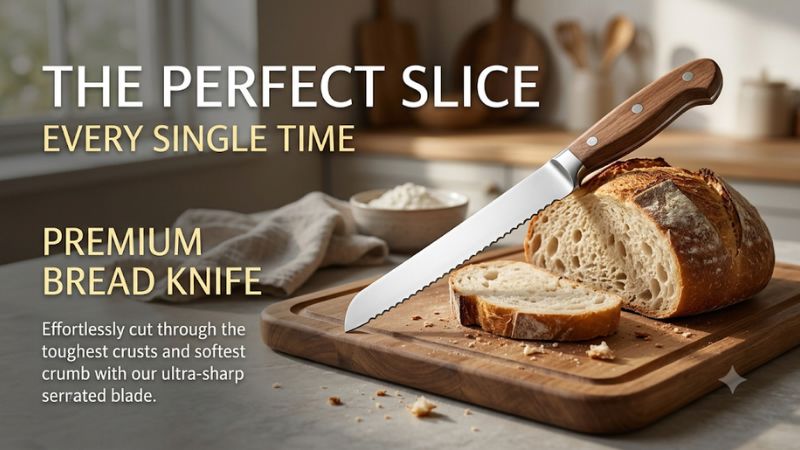
Quick Comparison Table
The six bread knives below differ in blade length, serration design, handle materials, and construction. A long, flexible-feeling blade can be useful for large loaves, while a shorter, more rigid design may feel more manageable for daily sandwich bread. Different serration patterns may influence how a knife initiates and continues a cut, but exact performance varies with the bread and cutting technique.
| Bread Knife | Blade Length | Key Design | Best For | Main Trade-Off |
|---|---|---|---|---|
| Mercer Millennia Wide Wavy Edge | 10 inches | Stamped Japanese steel, textured synthetic handle | Crusty loaves and value-conscious cooks | Long blade needs storage space |
| Victorinox Swiss Classic Bread and Pastry | Approximately 10.2 inches | Lightweight wavy-edge blade | Bread, pastries, and cake preparation | Long overall footprint |
| WÜSTHOF Classic Double-Serrated | 9 inches | Forged German construction, double-serrated edge | Premium traditional kitchen use | Higher purchase commitment |
| Shun Classic Bread Knife | 9 inches | Japanese-style construction, serrated blade | Enthusiasts and delicate baked goods | Premium care requirements |
| ZWILLING Pro Z15 Bread Knife | 9 inches | Forged-style Pro design, Z15 serration pattern | Cooks preferring a structured handle | More elaborate design than basic models |
| Opinel N°116 Parallèle | 21cm | Curved serrated stainless blade, beechwood handle | Traditional bread slicing | Wooden handle needs moisture care |
This table is intended to distinguish products, not to establish that one serration system is universally superior.
A bread knife’s results depend on the bread’s crust, interior texture, loaf size, and the user’s cutting motion.
How We Selected These Bread Knives
The six products were selected because they are recognizable manufacturer models with meaningful differences in blade construction, length, serration, and grip. We prioritized practical details that help buyers understand which knife suits their household. No original cutting-force measurements, crust-damage comparisons, edge-retention trials, or long-term durability tests were performed.
Evaluation criteria:
- Blade length: Suitability for common loaf sizes.
- Serration: Intended cutting profile for crust and crumb.
- Handle: Comfort-related design characteristics.
- Construction: Stamped, forged, or other manufacturer-described methods.
- Bread compatibility: Crusty loaves, soft bread, bagels, and pastries.
- Storage: Space and blade protection requirements.
- Maintenance: Washing and sharpening considerations.
- Value: Whether specialized features match actual kitchen use.
The strongest choice is a knife that feels controlled and fits the foods a household cuts regularly.
A premium model is not automatically necessary for occasional toast preparation.
Six Bread Knives Compared in Detail
Each knife below provides a different combination of features. Some prioritize a long serrated edge and practical handle, while others offer distinctive blade construction or a traditional wooden appearance. Understanding how these design choices affect storage, maintenance, and intended use is more valuable than relying on vague claims about ultimate sharpness or professional quality.
Mercer Culinary Millennia 10-Inch Wide Wavy Edge Bread Knife
The Mercer Culinary Millennia 10-Inch Wide Wavy Edge Bread Knife, model M23210, is a professional-style serrated knife made from high-carbon Japanese steel. The manufacturer describes a stamped blade, textured Santoprene-and-polypropylene handle, and protective finger guard. Its long wavy edge is designed for cutting through firm bread crusts while minimizing damage to softer interiors.
Best For: Home cooks who want a practical ten-inch bread knife with a textured grip.
Why We Picked It: The documented blade, handle, and construction details make it a useful straightforward option.
Key Specifications:
- Brand: Mercer Culinary.
- Series: Millennia.
- Model: M23210.
- Blade length: 10 inches.
- Blade material: High-carbon Japanese steel.
- Construction: Stamped.
- Handle: Santoprene and polypropylene.
- Edge: Wavy serration.
- Certification: NSF.
Features & Benefits:
- Long blade accommodates many full-size loaves.
- Wavy serration is designed for bread crust.
- Textured handle provides a defined grip surface.
- Protective finger guard is incorporated into the design.
- Practical construction suits frequent kitchen use.
Pros:
- Ten-inch cutting length.
- Textured synthetic handle.
- Clear manufacturer specifications.
- Suitable for varied bread types.
Cons:
- Long blade requires storage space.
- Handwashing is recommended.
- Serrated sharpening requires appropriate technique.
- Stamped construction may not appeal to forged-knife enthusiasts.
Buy If: You regularly slice large loaves and want a practical serrated knife.
Skip If: You only cut small rolls or have very limited storage space.
Performance & Practical Use
A ten-inch blade provides useful travel across the width of a large loaf, allowing the user to work with long controlled sawing strokes.
The wide wavy edge is particularly relevant to crusty sourdough and similar breads, where a straight-edged knife may struggle to initiate a cut without pressure.
However, a long serrated blade still requires a stable board and careful technique.
What Makes It Different
Mercer emphasizes practical construction and grip rather than decorative blade finishing.
Its professional-style features can appeal to cooks who want a working kitchen tool without unnecessary complexity.
The main consideration is whether a ten-inch blade fits the household’s cutting boards and storage arrangement.
Victorinox Swiss Classic 10-Inch Bread and Pastry Knife
The Victorinox Swiss Classic Bread and Pastry Knife, model 6.8633.26B, is a Swiss-made wavy-edge knife with a blade measuring approximately 10.2 inches. The manufacturer describes a lightweight handle and suitability for slicing crusty bread, pastries, and cake layers. Its relatively light construction distinguishes it from some heavier forged designs.
Best For: Cooks who regularly prepare bread, pastries, and cakes.
Why We Picked It: The identifiable bread-and-pastry profile offers multipurpose baking utility.
Key Specifications:
- Brand: Victorinox.
- Series: Swiss Classic.
- Model: 6.8633.26B.
- Blade length: Approximately 10.2 inches.
- Edge: Wavy.
- Handle material: Thermoplastic elastomer.
- Country of origin: Switzerland.
- Manufacturer care designation: Dishwasher-safe.
Features & Benefits:
- Long blade supports broad bread slices.
- Wavy edge suits crusty and soft baked goods.
- Lightweight construction can feel manageable.
- Useful for leveling certain cakes.
- Ergonomic handle is designed for controlled handling.
Pros:
- Long multipurpose blade.
- Suitable for pastries as well as bread.
- Lightweight design.
- Recognizable manufacturer information.
Cons:
- Long overall knife requires adequate storage.
- Lightweight feel may not suit everyone.
- Dishwasher-safe designation does not eliminate the benefits of careful handwashing.
- Broad pastry tasks still require appropriate technique.
Buy If: You bake cakes and regularly slice bread or pastries.
Skip If: You prefer a shorter blade or more substantial forged construction.
Performance & Practical Use
The long wavy edge can be useful when leveling a cake layer because it provides cutting length across a broad surface.
It also works as a bread-slicing tool for crusty loaves and soft baked goods.
However, cake-leveling results depend on technique and the cake’s texture.
A long blade does not automatically prevent tearing or uneven cuts.
What Makes It Different
The Swiss Classic model combines a lightweight handle with a long multipurpose wavy edge.
It is distinct from heavier premium forged knives.
Although Victorinox identifies this model as dishwasher-safe, handwashing and careful drying can still be a sensible way to protect a cutting edge during everyday maintenance.
WÜSTHOF Classic 9-Inch Double-Serrated Bread Knife
The WÜSTHOF Classic 9-Inch Double-Serrated Bread Knife is a forged German-steel knife designed with a specialized double-serrated edge and a familiar triple-riveted handle. The manufacturer markets the serration pattern for controlled cutting through a variety of breads. This model suits buyers who want a premium bread knife that coordinates with traditional Western kitchen cutlery.
Best For: Home cooks who prefer forged construction and a classic riveted handle.
Why We Picked It: Its double-serrated design provides a clear construction difference from ordinary wavy-edge knives.
Key Specifications:
- Brand: WÜSTHOF.
- Series: Classic.
- Blade length: 9 inches.
- Blade design: Double serration.
- Construction: Forged.
- Handle: Triple-riveted.
- Country of origin: Germany.
- Model: 1040101123.
Features & Benefits:
- Specialized serration is intended for bread cutting.
- Nine-inch blade suits many common loaves.
- Forged construction provides a traditional format.
- Riveted handle appeals to cooks familiar with Western knives.
- Dedicated bread-cutting design.
Pros:
- Distinctive serration pattern.
- Premium forged construction.
- Familiar handle shape.
- Useful blade length.
Cons:
- Higher purchase commitment.
- Specialized serrations can complicate sharpening.
- May be unnecessary for occasional bread slicing.
- Requires appropriate protected storage.
Buy If: You frequently cut crusty bread and appreciate traditional forged knives.
Skip If: You want the simplest inexpensive bread knife or prefer a lightweight stamped blade.
Performance & Practical Use
A nine-inch blade can accommodate many artisan and sandwich loaves without becoming excessively long.
The double-serrated pattern is intended to engage bread crust effectively, but its results still depend on technique and the texture of the bread.
Do not press aggressively downward.
Use gentle back-and-forth strokes on a stable cutting board.
What Makes It Different
The primary distinction is WÜSTHOF’s specialized double-serrated edge.
This feature may appeal to buyers seeking a more elaborate bread-cutting design.
However, it should not be considered universally superior without direct comparative testing across the breads the household actually uses.
Shun Classic 9-Inch Bread Knife
The Shun Classic 9-Inch Bread Knife, model DM0705, is a Japanese-style serrated knife intended for slicing bread and baked goods. It belongs to Shun’s Classic collection, which uses distinctive layered blade construction and a recognizable handle design. The knife is relevant to buyers who already own Shun cutlery or prefer a coordinated premium kitchen collection.
Best For: Enthusiasts who appreciate Japanese-style premium cutlery.
Why We Picked It: Its identifiable Classic construction offers a different handle and design approach from Western forged bread knives.
Key Specifications:
- Brand: Shun.
- Series: Classic.
- Model: DM0705.
- Blade length: 9 inches.
- Blade type: Serrated bread knife.
- Handle: Pakkawood.
- Construction: Shun Classic layered blade design.
- Maintenance: Manufacturer handwashing guidance.
Features & Benefits:
- Nine-inch serrated blade for baked goods.
- Designed for crusty and delicate breads.
- Distinctive Japanese-style appearance.
- Coordinates with Shun Classic collections.
- Suitable for ordinary home baking tasks.
Pros:
- Recognizable premium construction.
- Useful blade length.
- Dedicated bread-cutting profile.
- Distinctive handle and finish.
Cons:
- Premium price positioning.
- Careful maintenance required.
- Decorative construction does not guarantee superior cutting.
- Serrated edge needs appropriate sharpening support.
Buy If: You want a bread knife that coordinates with an existing Shun collection.
Skip If: You prefer simple practical value or rarely slice whole loaves.
Performance & Practical Use
The nine-inch blade is appropriate for many bread sizes and can support controlled slicing through crusty exteriors.
It can also be useful when cutting softer sandwich loaves, provided the user employs gentle strokes.
Avoid twisting the blade through bread or pressing so hard that the interior collapses.
What Makes It Different
Shun’s layered appearance and handle design distinguish it from utilitarian commercial-style knives.
The purchase is most compelling for cooks who already appreciate the brand’s grip and care requirements.
A premium finish does not replace sound cutting technique or regular maintenance.
ZWILLING Pro 9-Inch Z15 Bread Knife
The ZWILLING Pro 9-Inch Bread Knife With Z15 Serration is a distinct member of the company’s Pro cutlery series. It uses a nine-inch blade with a specialized serration pattern and a handle associated with the Pro range. The manufacturer positions it as a dedicated knife for bread and other suitable baked goods, making it relevant for cooks who want a structured Western-style design.
Best For: Home cooks who prefer ZWILLING Pro construction and a nine-inch blade.
Why We Picked It: Its identifiable Z15 serration distinguishes it from conventional wavy-edge designs.
Key Specifications:
- Brand: ZWILLING.
- Series: Pro.
- Blade length: 9 inches.
- Edge: Z15 serration.
- Product identifier: 38406-233.
- Design: Dedicated bread knife.
- Handle: ZWILLING Pro handle configuration.
Features & Benefits:
- Specialized serration pattern.
- Nine-inch blade for common loaves.
- Recognizable Pro series construction.
- Intended for bread slicing.
- Coordinates with other ZWILLING Pro knives.
Pros:
- Specific serration design.
- Practical blade length.
- Established manufacturer model.
- Familiar Western-style knife format.
Cons:
- More expensive than basic bread knives.
- Serrated sharpening is specialized.
- May offer little additional value for occasional toast preparation.
- Requires adequate drawer or block storage.
Buy If: You regularly slice bread and prefer the ZWILLING Pro series.
Skip If: Your household only needs a basic serrated knife for occasional use.
Performance & Practical Use
A nine-inch blade can work well for standard sourdough and sandwich loaves, provided the handle fits the user’s grip comfortably.
The distinctive serration is a design feature, but actual results vary by bread texture.
A very firm crust requires controlled sawing rather than excessive downward pressure.
What Makes It Different
The Z15 serration is the defining characteristic of this model.
It gives buyers a different option from traditional wavy-edge knives.
However, the value of a specialized serration should be considered alongside purchase cost and access to suitable sharpening services.
Opinel N°116 Parallèle Bread Knife
The Opinel N°116 Parallèle Bread Knife is a French-made kitchen knife with a curved serrated blade approximately 21cm long and a varnished beechwood handle. The manufacturer identifies X50CrMoV15 stainless steel and a blade hardness of approximately 56–57 HRC. Its traditional wood-and-steel appearance makes it relevant for buyers who appreciate straightforward kitchen tools.
Best For: Households wanting a traditional wooden-handled bread knife.
Why We Picked It: Its curved 21cm blade and beechwood handle provide a clear alternative to synthetic-handled designs.
Key Specifications:
- Brand: Opinel.
- Series: Parallèle.
- Model: N°116.
- Blade length: 21cm, approximately 8.3 inches.
- Blade steel: X50CrMoV15 stainless.
- Listed hardness: 56–57 HRC.
- Handle: Varnished beechwood.
- Country of origin: France.
Features & Benefits:
- Curved serrated blade for bread slicing.
- Manageable length for common loaves.
- Traditional wooden handle.
- Stainless steel construction.
- Recognizable French kitchen-knife design.
Pros:
- Traditional appearance.
- Practical blade size.
- Clearly documented material.
- Suitable for ordinary bread cutting.
Cons:
- Shorter than ten-inch alternatives.
- Wood requires moisture care.
- Large wide loaves may benefit from more cutting length.
- Serration still requires appropriate maintenance.
Buy If: You prefer a wooden handle and normally slice modest-size loaves.
Skip If: You frequently cut very wide sourdough boules or want a dishwasher-oriented synthetic handle.
Performance & Practical Use
The curved serrated blade is intended to support a comfortable slicing motion through bread crust.
Its slightly shorter length may feel manageable on ordinary cutting boards.
However, a very wide loaf may require additional strokes compared with a ten-inch knife.
Use a stable board and avoid forcing the cut.
What Makes It Different
The N°116 combines French kitchen-cutlery styling with a varnished wooden handle and documented stainless-steel construction.
Its appeal is simplicity and traditional feel rather than elaborate mechanisms.
The handle should be cleaned and dried according to manufacturer instructions to preserve its condition.
Buying Guide: How to Choose a Bread Knife
The correct bread knife depends on loaf size, crust texture, handle comfort, and how frequently baked goods are sliced. Most buyers do not need multiple serrated bread knives. One suitable model can cover sandwich bread, sourdough, bagels, and certain pastries when used correctly. Choosing blade length and serration design carefully is more important than purchasing the most expensive option.
Choose the Right Bread Knife Length
Bread knives commonly have blades around eight to ten inches long. A longer blade can span a larger loaf and permit extended sawing strokes, while a shorter knife may be easier to store and handle on compact boards.
Eight-inch advantages:
- Manageable for smaller loaves.
- Easier storage.
- Suitable for many sandwiches and rolls.
- Less cumbersome on narrow boards.
Nine-inch advantages:
- Versatile middle ground.
- Suitable for many artisan loaves.
- Useful everyday length.
- Available in premium constructions.
Ten-inch advantages:
- More cutting length for broad loaves.
- Useful for cakes and pastries.
- Longer sawing strokes.
- Practical for frequent baking.
The best choice depends on the bread you actually purchase or bake.
A very large knife may be unnecessary when the household primarily uses sliced packaged bread.
Understand Serration Types
Bread knives use different tooth shapes and patterns. Some have broad wavy serrations, while others use finer or more complex designs.
Common variations:
- Wavy edges.
- Conventional pointed serrations.
- Double-serrated arrangements.
- Specialized branded tooth patterns.
- Curved serrated blades.
A serrated edge helps engage bread crust while moving through the softer interior.
However, the exact result depends on the tooth geometry and cutting motion.
Avoid interpreting a more complicated serration as automatic proof of better performance.
Consider Blade Flexibility and Control
Some bread knives feel relatively flexible, while others are more rigid.
A very flexible blade may require careful control to maintain a straight line across a broad loaf.
A more rigid blade may feel stable but less adaptable for certain pastry tasks.
Evaluate:
- Blade stiffness.
- Handle balance.
- Blade length.
- Comfort during sawing.
- Knuckle clearance.
- Control on a stable board.
The knife should allow smooth controlled movement without forcing the user into an uncomfortable grip.
Choose a Comfortable Handle
A bread knife may require repeated sawing movements, especially when cutting thick crusts. Handle comfort therefore matters.
Handle features:
- Appropriate thickness.
- Secure grip.
- Comfortable shape.
- Smooth transitions.
- Material suitable for cleaning.
- Stable blade-to-handle construction.
Synthetic handles may be convenient to maintain, while wooden handles offer a traditional appearance but require moisture care.
Neither material guarantees better slicing.
Bread Knife Uses Beyond Ordinary Loaves
A serrated bread knife can be useful for more than bread. Depending on its blade design, it may help slice certain cakes, pastries, and foods with a firm exterior and softer center. However, a bread knife is not a universal kitchen knife, and some tasks require more specialized tools.
Slicing Sourdough and Crusty Artisan Bread
Crusty bread can be difficult to slice with a plain-edged knife because the surface resists initial cutting.
A serrated bread knife is designed to engage the crust with a gentle sawing motion.
Useful technique:
- Place the loaf on a stable board.
- Position the cutting edge carefully.
- Begin with light controlled strokes.
- Continue sawing without excessive pressure.
- Keep the guiding hand clear.
- Complete the cut before moving the slice.
Avoid crushing the loaf from above.
The serrations should perform the cutting rather than relying on force.
Cutting Sandwich Bread and Bagels
Soft sandwich bread can tear or compress when cut with an unsuitable knife.
A bread knife with a controlled serrated edge can reduce the need for heavy downward pressure.
For bagels, place the food on a stable cutting surface and use a safe cutting method rather than holding it in the palm while slicing toward the hand.
Do not rush through a resistant crust.
The combination of a stable board and controlled movement matters more than speed.
Slicing Cakes and Pastries
Some long bread-and-pastry knives are suitable for leveling cake layers or slicing delicate baked goods.
Potential uses:
- Leveling cake tops.
- Slicing sponge cake.
- Portioning certain pastries.
- Cutting sandwich loaves.
- Preparing filled bread products.
However, very delicate pastries may require a different blade or cutting technique.
A serrated edge can still tear soft food when used carelessly.
Cleaning, Sharpening, and Safe Storage
Serrated knives have different maintenance requirements from ordinary straight-edge knives. Their teeth can become damaged when used on hard surfaces, while sharpening may require a specialized tool or professional service. Correct storage also matters because exposed serrations can injure users and contact other utensils.
Wash and Dry the Knife Properly
Follow the specific manufacturer’s care instructions.
Many quality knife makers recommend handwashing, even when certain models are identified as dishwasher-safe.
Routine care:
- Clean after use.
- Use appropriate mild detergent.
- Avoid prolonged soaking.
- Rinse carefully.
- Dry the blade and handle.
- Protect the edge during storage.
Do not leave a serrated knife loose in a sink of cloudy water.
Another person may not see the cutting edge.
Understand Serrated Knife Sharpening
Serrated edges generally require a sharpening approach different from broad straight-edge knives.
A conventional pull-through sharpener may not be suitable for the tooth pattern.
Options include:
- Manufacturer-approved sharpening methods.
- Suitable tapered sharpening tools.
- Professional sharpening services.
- Manufacturer maintenance programs where offered.
Do not aggressively grind the serrations without understanding their geometry.
An incorrect method can permanently alter the edge.
Choose Safe Storage
A bread knife should be kept in a suitable block, drawer organizer, or fitted blade guard.
Storage priorities:
- Complete edge protection.
- Adequate length.
- Safe handle access.
- No contact with loose utensils.
- Secure placement.
- Child access control where needed.
Long bread knives may not fit standard chef’s-knife drawer slots.
Measure the blade before choosing a storage accessory.
Common Bread Knife Buying Mistakes
Bread knives can be disappointing when buyers focus on appearance or serration marketing without considering loaf size, comfort, and maintenance. Another common mistake is purchasing an expensive knife for a task that happens only occasionally. A practical choice should match the household’s bread habits and the space available for safe use and storage.
Buying a Blade That Is Too Short
A short serrated knife may be adequate for small rolls but inefficient for wide artisan loaves.
Measure the breads normally purchased.
Choose a blade long enough for controlled sawing strokes.
For frequent sourdough slicing, nine or ten inches may be more convenient than a small utility serrated knife.
Assuming More Serrations Mean Better Cutting
The number or complexity of serrations does not establish universal performance.
Bread texture, blade geometry, and technique all matter.
Choose an identifiable knife with an appropriate edge profile rather than relying on marketing terms alone.
Ignoring Storage Requirements
Long bread knives need suitable drawer or block space.
A knife that cannot be stored with its edge protected creates unnecessary risk.
Check storage compatibility before buying.
A compact household may prefer a manageable blade length and fitted guard.
Using Excessive Downward Pressure
A serrated bread knife is intended to cut through a controlled sawing motion.
Pressing too hard can crush soft bread and increase the chance of slipping.
Use a stable board, keep fingers clear, and allow the serrations to work.
Frequently Asked Questions
Bread knife shoppers often want to understand blade length, serration style, sharpening, and whether one knife can handle several baked goods. The most useful answers depend on the breads prepared at home. A suitable serrated knife should be comfortable, safely maintained, and used with controlled technique rather than excessive pressure.
What Is the Best Bread Knife Length?
For many households, nine or ten inches is a versatile length that accommodates common sandwich and artisan loaves. Shorter blades may be sufficient for rolls and smaller breads. The right length depends on loaf width, cutting-board size, storage space, and personal comfort. A longer knife is not automatically better for every task.
Are Expensive Bread Knives Worth It?
Premium knives may offer different steel construction, handles, finishes, and serration designs. However, a more expensive bread knife is not automatically necessary for ordinary home use. Buyers should prioritize suitable length, comfortable grip, stable cutting performance, and manageable maintenance. A practical midrange or professional-style knife may meet everyday needs.
Can a Bread Knife Be Sharpened?
Yes, many serrated bread knives can be sharpened with suitable tools or professional services. However, the process differs from sharpening a plain-edge knife and depends on the tooth geometry. Follow manufacturer guidance and avoid inappropriate pull-through sharpeners. Some specialized serration patterns may be best serviced professionally.
Can I Use a Bread Knife for Tomatoes?
A serrated knife can slice tomatoes when its blade is appropriate for the task and used carefully. However, a long bread knife may be cumbersome for small tomatoes. A shorter serrated utility knife may offer better control. Always use a stable cutting board and keep fingers away from the edge.
Is a Bread Knife Better Than a Chef’s Knife for Sourdough?
A serrated bread knife is generally more suitable for crusty sourdough because its teeth can engage the firm exterior without relying entirely on downward pressure. A chef’s knife may struggle with a hard crust, depending on its edge and the loaf. Use a controlled sawing motion rather than forcing either knife through the bread.
Should I Put a Bread Knife in the Dishwasher?
Follow the exact manufacturer’s care instructions. Some manufacturers identify particular knives as dishwasher-safe, while others recommend handwashing only. Careful handwashing and prompt drying can help protect the edge and handle regardless of that designation. Avoid leaving a long serrated knife loose among other utensils where it can contact hard objects.
Conclusion
The right bread knife depends on loaf size, crust texture, handle preference, and maintenance expectations. Mercer offers a practical ten-inch wavy-edge option, Victorinox provides a lightweight bread-and-pastry design, WÜSTHOF and ZWILLING offer specialized serrations, Shun appeals to premium Japanese-style cutlery buyers, and Opinel offers a traditional wooden handle. Choose a blade long enough for your usual bread, use controlled sawing strokes, and protect the serrated edge during cleaning and storage. A comfortable, well-maintained knife will usually matter more than decorative features.
Write Your Review
No reviews yet. Be the first to share your experience!