
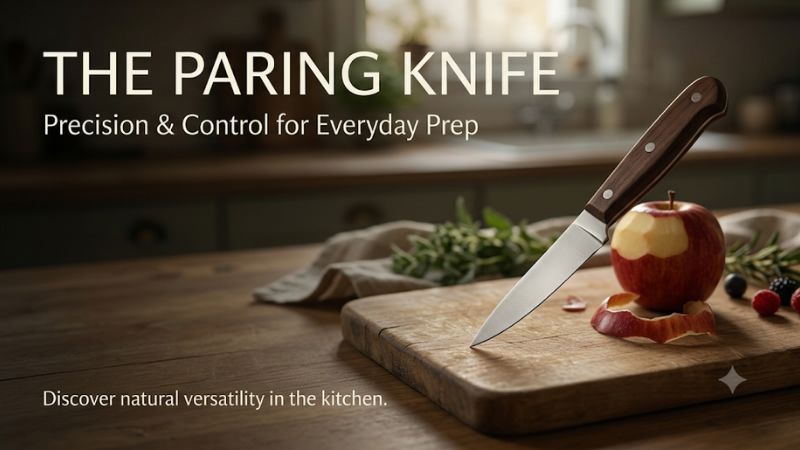
A dependable paring knife makes small kitchen tasks easier to control, from peeling apples and hulling strawberries to trimming vegetables and preparing delicate garnishes. Unlike a chef’s knife, its short blade is intended for detailed work. This guide compares six established options and explains how blade shape, grip, maintenance, and storage affect everyday usefulness.
- Quick Verdict: Which Paring Knife Is Best?
- Quick Comparison Table
- How We Selected These Paring Knives
- Detailed Reviews of Six Paring Knives
- Buying Guide: How to Choose the Best Paring Knife
- Paring Knife Uses Around the Home Kitchen
- Safe Storage and Cleaning Practices
- Common Paring Knife Buying Mistakes
- Frequently Asked Questions
- Conclusion
Quick Verdict: Which Paring Knife Is Best?
A paring knife should feel secure and maneuverable during precise preparation. Most household models have blades around three to four inches long, but small differences in length, tip shape, and handle design can noticeably change how they feel. Some knives emphasize accessible everyday utility, while others provide forged construction, premium materials, or a protective sheath.
Our six recommended products:
- Best practical everyday pick: Victorinox Swiss Classic Straight-Edge Paring Knife.
- Best accessible forged alternative: Mercer Culinary Renaissance 3.5-Inch Paring Knife.
- Best traditional German design: WÜSTHOF Classic 3.5-Inch Paring Knife.
- Best for a larger gripping area: ZWILLING Pro 4-Inch Paring Knife.
- Best premium Japanese option: Shun Classic 3.5-Inch Paring Knife.
- Best for convenient protected storage: Kuhn Rikon COLORI+ 4-Inch Paring Knife.
Victorinox is a sensible starting point for someone who wants an uncomplicated tool for fruits, vegetables, and everyday trimming.
Mercer offers a forged design at a different buying position, while WÜSTHOF provides traditional German construction.
ZWILLING’s four-inch blade offers a little more cutting reach and its distinctive curved bolster. Shun appeals to cooks interested in refined Japanese materials, whereas Kuhn Rikon stands out through its included matching sheath.
A paring knife should be selected for the tasks it will perform, not because it looks like a miniature chef’s knife.
Quick Comparison Table
Short kitchen knives vary in blade shape, handle size, sharpening expectations, and intended food preparation tasks. A three-inch knife can be useful for small detailed work, while a four-inch blade provides more reach for certain fruit and vegetable cuts. The table compares six identifiable designs and their practical limitations without suggesting that any model has undergone independent performance testing for this article.
| Knife | Blade Length | Construction or Feature | Best For | Main Limitation |
|---|---|---|---|---|
| Victorinox Swiss Classic Straight Edge | About 3–3.25 in | Stainless blade, synthetic handle | General peeling and trimming | Simple utilitarian appearance |
| Mercer Renaissance | 3.5 in | Forged German steel | Everyday precise preparation | More substantial than very light models |
| WÜSTHOF Classic | 3.5 in | Forged blade, riveted handle | Traditional home cutlery | Premium purchase category |
| ZWILLING Pro | 4 in | Curved bolster | Slightly longer precision work | May feel long for tiny detail tasks |
| Shun Classic | 3.5 in | VG-MAX core, Pakkawood handle | Refined detail preparation | Requires careful maintenance |
| Kuhn Rikon COLORI+ | 4 in | Coated blade, protective sheath | Everyday prep and protected storage | Coating requires appropriate care |
The best product depends on what you cut most often and how you store your tools.
A short pointed knife is useful for removing strawberry stems, while a slightly longer blade may feel more versatile when cutting small vegetables on a board.
How We Selected These Paring Knives
The shortlist focuses on recognizable manufacturer products with different constructions, handle designs, and storage features. We evaluated everyday precision tasks, blade length, cleaning, edge maintenance, and whether each design provides a meaningful reason for a home cook to choose it. Product descriptions inform the assessments, but we do not claim to have independently measured sharpness, grip security, or long-term durability.
Selection criteria
- Precision: Suitability for peeling, hulling, and trimming.
- Blade length: Control for small ingredients.
- Tip design: Ability to approach detailed cuts.
- Handle: Comfortable grip without unnecessary bulk.
- Material: Published blade and handle construction.
- Maintenance: Appropriate sharpening and washing.
- Safety: Secure storage and intended use.
- Value: Useful daily features rather than decoration.
- Versatility: Ability to handle several small preparation tasks.
We chose both practical and premium knives because home cooks have different priorities.
Someone preparing children’s snacks every day may prefer a lightweight knife with a synthetic handle, while an enthusiast may value a premium blade and handle finish.
Neither purchase is automatically correct for everyone.
Detailed Reviews of Six Paring Knives
A paring knife is most effective when its blade and handle fit the user’s hand and the ingredient being prepared. The following six products address different priorities, including accessible price positioning, forged construction, premium blade materials, and protected drawer storage. Each review identifies a practical use case along with limitations that buyers should consider before ordering.
Victorinox Swiss Classic Straight-Edge Paring Knife — Best Everyday Value
The Victorinox Swiss Classic Straight-Edge Paring Knife is a compact Swiss kitchen knife designed for detailed food preparation. Its stainless steel blade and lightweight synthetic handle make it appropriate for peeling fruit, trimming vegetables, and completing smaller cutting tasks that would be awkward with a full-size chef’s knife. The straight-edge pointed version should be distinguished from Victorinox’s serrated paring variants.
Key Specifications
- Brand: Victorinox.
- Series: Swiss Classic.
- Example straight-edge model: 6.7603.
- Blade: Stainless steel.
- Cutting edge: Straight.
- Tip: Pointed.
- Handle: Synthetic.
- Intended use: Peeling, trimming, and small preparation tasks.
Why We Picked It
The Swiss Classic offers practical simplicity.
A home cook does not necessarily need premium layered steel or a forged handle to peel an apple or trim a mushroom.
The lightweight construction also appeals to users who prefer a compact tool.
Features and Practical Performance
Use the knife for tasks such as hulling strawberries, removing small blemishes from fruit, and cutting small vegetables on a stable board.
The pointed tip is useful when accuracy matters.
However, a short sharp blade still requires careful hand positioning.
Users should avoid cutting toward their palm or using the knife to pry objects apart.
The synthetic handle is straightforward to maintain, but the entire knife should be cleaned according to the manufacturer’s instructions.
Pros
- Compact and lightweight.
- Straight pointed blade.
- Practical synthetic handle.
- Suitable for everyday detailed preparation.
- Simple design.
Cons
- Limited reach for larger ingredients.
- Less decorative construction.
- Requires protective storage despite its small size.
Buy If
You want a straightforward paring knife for daily fruit and vegetable preparation.
Skip If
You specifically prefer a premium forged blade or decorative handle material.
Mercer Culinary Renaissance 3.5-Inch Paring Knife — Best Forged Value
The Mercer Culinary Renaissance 3.5-Inch Paring Knife is a forged small kitchen knife designed for detail work and ordinary food preparation. It features German cutlery steel, a conventional handle, and a shortened bolster that provides a different edge-access arrangement from full-bolster knives. The model offers a practical comparison for shoppers considering forged construction without moving immediately to the highest-priced brands.
Key Specifications
- Brand: Mercer Culinary.
- Series: Renaissance.
- Model: M23540.
- Blade length: 3.5 inches.
- Steel: High-carbon German cutlery steel.
- Construction: Forged.
- Bolster: Shortened.
- Handle: Triple-riveted construction.
Why We Picked It
The Renaissance offers an established forged paring knife design with features relevant to long-term use.
A shortened bolster can improve access near the heel when using an appropriate sharpening method.
That is useful for someone who plans to maintain the knife over several years.
Features and Practical Performance
The knife can be used to peel pears, trim vegetables, cut small fruit, and prepare garnishes.
Its 3.5-inch blade balances detail control with enough reach for modest cutting tasks on a board.
However, a forged construction label should not be treated as proof that it cuts better than every stamped alternative.
Edge condition, sharpening, and the user’s technique remain important.
The handle should be assessed for comfort, especially if the knife will be used repeatedly for peeling.
Pros
- Forged construction.
- Shortened bolster.
- Versatile 3.5-inch length.
- Traditional handle.
- Useful alternative to premium forged models.
Cons
- More substantial than some lightweight paring knives.
- Requires ordinary sharpening maintenance.
- Handle comfort depends on the user.
Buy If
You want an established forged paring knife with practical everyday construction.
Skip If
You prefer the lightest possible synthetic-handled knife.
WÜSTHOF Classic 3.5-Inch Paring Knife — Best Traditional Design
The WÜSTHOF Classic 3.5-Inch Paring Knife is a German-made forged knife intended for precise kitchen tasks such as peeling, trimming, and small ingredient preparation. Its traditional triple-riveted synthetic handle and pointed blade create a familiar configuration for cooks who already use Western-style kitchen cutlery. The 3.5-inch length is useful for detail work without reducing the knife to a specialized peeling shape.
Key Specifications
- Brand: WÜSTHOF.
- Series: Classic.
- Example article number: 1040100409.
- Blade length: 3.5 inches.
- Construction: Forged German steel.
- Handle: Triple-riveted synthetic material.
- Blade: Straight edge with pointed tip.
- Intended use: Precision preparation.
Why We Picked It
The WÜSTHOF Classic provides a familiar premium paring knife format.
Its handle and blade shape suit cooks who want the same general feel as their larger Classic-series kitchen knives.
That consistency may be useful in a coordinated cutlery collection.
Features and Practical Performance
The pointed blade is suitable for removing small fruit blemishes, trimming mushrooms, or slicing garlic cloves.
For peeling tasks, the user should maintain a secure grip and controlled movement.
The blade should not be forced through hard pits or used to open packages.
Although the knife is relatively short, it can still cause serious injury if handled carelessly.
After preparation, handwash and dry the blade.
Protect the edge rather than leaving it loose among other utensils.
Pros
- Traditional forged construction.
- Familiar handle design.
- Versatile pointed blade.
- Useful 3.5-inch length.
- Established manufacturer care guidance.
Cons
- Higher purchase category.
- Traditional handle may not suit everyone.
- No included protective sheath in every configuration.
Buy If
You want a premium conventional paring knife for precise everyday food preparation.
Skip If
You prefer a lightweight budget model or want a knife supplied with a guard.
ZWILLING Pro 4-Inch Paring Knife — Best Longer Blade
The ZWILLING Pro 4-Inch Paring Knife is a German-made forged blade featuring the curved bolster design associated with the Pro series. Its four-inch length provides slightly more reach than traditional three- or 3.5-inch paring knives while remaining suitable for controlled small-food preparation. This makes it relevant to users who find very short blades restrictive but do not want a five-inch utility knife.
Key Specifications
- Brand: ZWILLING.
- Series: Pro.
- Model: 38400-103.
- Blade length: 4 inches.
- Construction: Forged.
- Manufacturing: Made in Germany.
- Bolster: Curved.
- Handle: Traditional three-rivet construction.
- Intended use: Peeling and precision cutting.
Why We Picked It
Some users prefer a little more blade length for slicing small fruit and vegetables on a board.
The ZWILLING Pro offers that additional reach while retaining a paring-knife format.
Its curved bolster also supports a particular approach to controlled gripping.
Features and Practical Performance
This knife can be practical for trimming small vegetables, slicing shallots, and cutting fruit into serving pieces.
The four-inch length may feel more versatile on a board than a very short blade.
However, it may be less convenient for detailed work performed close to a small ingredient.
The curved bolster is designed for grip comfort, but hand size and technique determine whether it feels natural.
The knife should be sharpened according to the manufacturer’s guidance.
Pros
- Useful four-inch blade.
- Forged German construction.
- Curved bolster.
- Familiar Western handle.
- Versatile small-preparation applications.
Cons
- Longer than some users prefer for detailed peeling.
- Premium construction increases purchase cost.
- Requires proper care and storage.
Buy If
You want a slightly longer paring knife and prefer the feel of ZWILLING’s Pro handle.
Skip If
You mainly perform very delicate in-hand trimming and prefer an especially short blade.
Shun Classic 3.5-Inch Paring Knife — Best Premium Japanese Option
The Shun Classic 3.5-Inch Paring Knife is a Japanese-made precision blade featuring the brand’s VG-MAX cutting core, layered stainless steel construction, and Pakkawood handle. Its short pointed blade is intended for careful tasks such as peeling, trimming, and small vegetable preparation. The knife is especially relevant to cooks who appreciate premium materials and are prepared to maintain a finer edge responsibly.
Key Specifications
- Brand: Shun.
- Series: Classic.
- Model: DM0700.
- Blade length: 3.5 inches.
- Cutting core: VG-MAX.
- Construction: Layered stainless steel.
- Handle: Pakkawood.
- Country of manufacture: Japan.
- Intended use: Precision kitchen cutting.
Why We Picked It
The Shun Classic offers a distinctive material and handle combination.
Its appeal lies in refined construction and the enjoyment of using premium kitchen cutlery.
However, layered blade finishes should not be treated as proof of universally better performance.
Features and Practical Performance
Use the knife for preparing small fruit, trimming vegetables, and creating precise garnishes.
A fine edge can be effective when properly maintained, but it should not be twisted or used to cut hard pits.
The Pakkawood handle also requires appropriate moisture care.
Handwash the knife, dry it promptly, and store it with suitable edge protection.
Users who want a knife that can be left wet or handled roughly may be better served by a straightforward utility design.
Pros
- VG-MAX core.
- Japanese manufacture.
- Refined blade construction.
- Pakkawood handle.
- Suitable for careful precision tasks.
Cons
- Premium purchase category.
- Requires careful edge and handle maintenance.
- Fine blade should not be used for prying or hard pits.
Buy If
You enjoy premium Japanese cutlery and want a small precision knife for careful home preparation.
Skip If
You need a low-maintenance utility knife for rough handling.
Kuhn Rikon COLORI+ 4-Inch Paring Knife — Best Protected Storage
The Kuhn Rikon COLORI+ Paring Knife combines a lightweight stainless steel blade, coated surface, colorful grip, and matching protective sheath. Its four-inch format is useful for everyday fruit and vegetable preparation, while the sheath provides a defined storage solution for households without space for a conventional knife block. The storage feature is especially relevant to apartments and compact kitchens.
Key Specifications
- Brand: Kuhn Rikon.
- Series: COLORI+.
- Product: Straight-edge Paring Knife.
- Blade length: Approximately 4 inches.
- Blade: Japanese stainless steel.
- Finish: Silicone-based nonstick coating.
- Handle: Secure-grip synthetic construction.
- Accessory: Matching protective sheath.
- Intended use: Everyday small-food preparation.
Why We Picked It
A protective sheath can be a valuable feature for someone who stores knives in a small drawer.
It reduces exposure of the cutting edge during ordinary storage and helps protect the blade from contact with other objects.
However, a sheathed knife must still be stored securely and kept away from unsupervised children.
Features and Practical Performance
The knife is suitable for peeling apples, slicing small vegetables, and preparing fruit.
Its coated surface may help reduce food adhesion during certain cuts, although actual results depend on the ingredient.
The sheath should fit the blade correctly and be cleaned when necessary.
Do not put a wet blade into an enclosed guard for prolonged storage.
Moisture trapped around the blade can create maintenance problems.
The coating also requires care, so avoid abrasive cleaning methods unless approved by the manufacturer.
Pros
- Matching protective sheath.
- Lightweight design.
- Practical four-inch blade.
- Secure-grip handle.
- Convenient for compact drawer storage.
Cons
- Protective coating needs appropriate care.
- Sheath must be kept clean and dry.
- Four-inch length may feel long for tiny detail work.
Buy If
You want a practical paring knife with a manufacturer-supplied storage guard.
Skip If
You prefer uncoated blades or already have a suitable knife block.
Buying Guide: How to Choose the Best Paring Knife
A paring knife should give you control over small food preparation tasks without requiring excessive force. The correct choice depends on blade length, tip design, handle shape, material, and how the knife will be maintained and stored. A model with premium steel can still be unsuitable when the handle is uncomfortable or the blade is longer than the user prefers.
Choose the Right Blade Length
Paring knife blades commonly range from about two-and-a-half to four inches. Shorter blades can feel maneuverable for small detailed tasks, while longer versions offer additional reach when cutting fruit or vegetables on a board. The best length should match the user’s hand, cutting style, and normal ingredients.
Length considerations
- 2.5–3 inches: Fine trimming and compact detail work.
- 3–3.5 inches: General peeling and preparation.
- 4 inches: Additional reach for small board-based cutting.
- 5 inches or longer: Often better considered a utility knife.
A longer blade is not automatically more versatile for delicate work.
For hulling a small strawberry, a short pointed knife may be more controllable.
For slicing several small tomatoes on a board, an additional half inch can be convenient.
Understand Straight, Serrated, and Bird’s-Beak Blades
Not every paring knife has the same edge shape. A straight-edge spear-point knife is versatile for peeling and trimming, while a serrated model may be useful on small soft-skinned produce. A curved bird’s-beak blade is specialized for particular peeling and turning tasks but less convenient for ordinary chopping.
Common blade types
- Straight edge: General fruit and vegetable preparation.
- Serrated edge: Certain tomatoes and soft-skinned foods.
- Bird’s-beak shape: Curved peeling and decorative work.
- Sheepsfoot shape: Selected controlled preparation tasks.
- Utility-style blade: Longer cuts outside typical paring work.
Choose the blade profile according to your most frequent tasks.
A specialized curved peeler may be excellent for one technique without being the best all-purpose purchase.
Prioritize Handle Control Over Decoration
A small knife often requires precise hand movements, so handle comfort and secure gripping are essential. A very thin handle may be difficult for someone with larger hands, while a substantial handle may feel disproportionate to a short blade. Handle materials also influence cleaning and moisture care.
Handle factors
- Grip circumference.
- Texture.
- Finger clearance.
- Material.
- Balance.
- Comfort during repetitive movements.
- Ease of washing.
- Suitable hand position.
No material guarantees safe use with wet or greasy hands.
Clean and dry your hands as appropriate before working with a sharp knife.
Consider Sharpening and Long-Term Care
A paring knife is frequently used for detailed cutting, making edge condition important. A dull edge can require more pressure and reduce precision. However, sharpening recommendations depend on the blade’s steel, bevel, and manufacturer instructions, so one method should not be assumed correct for every product.
Maintenance priorities
- Check edge condition periodically.
- Use suitable sharpening tools.
- Follow manufacturer guidance.
- Avoid glass and stone boards.
- Wash after cutting foods.
- Dry immediately.
- Protect the edge in storage.
- Inspect handle integrity.
A well-maintained basic knife can be more useful than a premium model that has not been sharpened correctly.
Evaluate Storage Before Buying
The knife’s small size makes it easy to underestimate storage risks. A short exposed blade can still cut someone reaching into a drawer. Proper blade guards, in-drawer organizers, knife blocks, and secure magnetic storage can help prevent contact with the edge.
Suitable storage formats
- Manufacturer-compatible blade sheath.
- In-drawer knife tray.
- Knife block with a correctly sized slot.
- Secure magnetic strip installed properly.
- Protective knife roll.
- Closed storage with dedicated blade protection.
Avoid storing the knife loose with forks and spoons.
Do not place a damp blade inside a protective sheath until it is ready for storage.
Paring Knife Uses Around the Home Kitchen
A paring knife can handle many detail tasks, but its usefulness depends on choosing the right cutting method for the ingredient. Some work is safer on a cutting board, while other techniques require skilled, controlled handling. The following examples illustrate where a compact blade adds value without implying that it replaces larger kitchen knives.
Fruit Preparation and Peeling
Peeling and trimming fruit are among the most common reasons to own a paring knife. A short pointed blade can remove localized blemishes and prepare small ingredients with greater control than a large chef’s knife. However, a dedicated vegetable peeler may still be more convenient for peeling large quantities of apples, potatoes, or carrots.
Typical tasks
- Removing small fruit blemishes.
- Hulling strawberries.
- Trimming citrus peel.
- Preparing apple wedges on a board.
- Removing potato eyes.
- Cutting small decorative garnishes.
Use a stable work surface whenever possible.
Avoid cutting toward the palm during techniques you have not mastered.
Vegetables and Small Garnishes
A paring knife is helpful for trimming mushrooms, shallots, radishes, and other small vegetables. It can also support garnish preparation when the blade shape allows precise detail. However, large-scale dicing is generally more comfortable with a chef’s knife or Santoku.
Typical tasks
- Trimming mushroom stems.
- Cutting small radishes.
- Removing pepper cores.
- Preparing small herbs for decoration.
- Cleaning vegetables.
- Making modest garnish cuts.
Choose a stable grip and do not use the tip as a pry bar.
Baking and Dessert Preparation
Home baking often involves fruits, garnishes, and small decorative ingredients. A paring knife can be useful for removing strawberry stems or preparing thin fruit pieces for toppings. However, pastry cutting, dough division, and bread slicing still benefit from specialized tools.
Useful applications
- Hulling berries.
- Preparing fruit decorations.
- Removing seeds from suitable fruit.
- Trimming pastry garnishes.
- Portioning small soft ingredients.
For cutting cake layers or crusty bread, use an appropriate serrated knife instead.
Safe Storage and Cleaning Practices
A paring knife is small enough to be overlooked in a crowded sink, which can make careless handling especially dangerous. Cleaning and storage should be treated as part of the normal preparation routine. Protecting the edge also reduces unintended contact with other utensils that might damage it.
Recommended routine
- Keep the cutting edge visible during use.
- Place the knife on a stable surface.
- Avoid hiding it beneath dishes.
- Wash by hand when recommended.
- Clean after raw-food preparation.
- Dry the blade and handle.
- Use a compatible sheath or organizer.
- Store out of reach of unsupervised children.
- Inspect protective covers for damage.
- Sharpen appropriately when required.
A blade guard reduces accidental edge contact during storage, but it does not make a sharp knife harmless.
Common Paring Knife Buying Mistakes
A paring knife is often purchased as a small accessory rather than evaluated as an important cutting tool. This can lead to unsuitable blade length, uncomfortable handles, or careless storage. Avoiding these mistakes can make a basic knife more useful and safer than a premium model chosen only for appearance.
Mistakes to avoid
- Buying without considering blade length.
- Treating a paring knife as a miniature chef’s knife for every task.
- Choosing a decorative handle without checking grip.
- Cutting large hard ingredients with a short blade.
- Using the tip to pry.
- Ignoring sharpening requirements.
- Storing the exposed blade in a drawer.
- Leaving the knife in a sink.
- Putting a wet blade into a sheath.
- Assuming every coated blade can tolerate abrasive cleaning.
- Using a serrated model when a plain edge is needed.
- Buying a premium knife without a maintenance plan.
A practical paring knife should offer control and comfort for the tasks it performs most often.
Frequently Asked Questions
Paring knives are among the smallest kitchen blades, but they serve many purposes that larger knives cannot handle as conveniently. Buyers often ask which blade length is best, whether a serrated version is worthwhile, and how these knives should be stored. The answers below clarify common decisions and support realistic expectations.
What Is the Best Paring Knife for Everyday Use?
A straight-edge paring knife around three to 3.5 inches is a versatile starting point for many households. It can handle peeling, trimming, and small ingredient preparation without becoming excessively long.
Choose a comfortable handle and maintain the edge properly.
A premium price is not essential for useful everyday performance.
Is a Three-Inch or Four-Inch Paring Knife Better?
A three-inch blade can be easier to control for detailed tasks, while a four-inch model offers additional reach for small board-based slicing. Neither is universally better.
Consider your hands and ingredients.
If most work involves precise hulling and trimming, a shorter blade may be preferable.
Should I Buy a Serrated Paring Knife?
A serrated paring knife can be helpful for cutting some tomatoes, citrus, and soft-skinned foods. However, a straight-edge model is generally more versatile for many peeling and fine trimming tasks.
Some households find value in owning both.
Choose according to actual food preparation habits.
How Should I Store a Paring Knife?
Use a properly fitting blade guard, suitable knife block, secure in-drawer organizer, or another manufacturer-approved storage arrangement. The blade should not be left exposed among other utensils.
Dry the knife before enclosing it.
Keep sharp tools away from unsupervised children.
Can a Paring Knife Replace a Chef’s Knife?
No. A paring knife is intended for small detailed work, while a chef’s knife provides more blade length and control for larger-scale chopping and slicing.
The two tools complement each other.
A basic kitchen can benefit from one suitable knife of each type.
Conclusion
The best paring knife should provide comfortable control for peeling, trimming, and small food preparation without complicating maintenance or storage. Victorinox Swiss Classic is a practical everyday choice, Mercer Renaissance offers accessible forged construction, and WÜSTHOF Classic suits traditional cutlery preferences. ZWILLING Pro provides more blade length, Shun Classic appeals to premium knife enthusiasts, and Kuhn Rikon COLORI+ includes a convenient sheath. Choose the blade length and handle that fit your routine, sharpen appropriately, and protect the edge when not in use.










Write Your Review
No reviews yet. Be the first to share your experience!