
The best vintage metal bread box for most kitchens is a vintage-style powder-coated steel box with a roll-top or fall-front lid, roughly 10–12 litres of usable space, and enough ventilation to protect bread without trapping excess moisture.
- Best vintage metal bread boxes by situation
- Authentic vintage versus vintage-style construction
- Head-to-head comparison of useful options
- What to inspect before buying an authentic vintage box
- Capacity: size the box around your actual bread
- Countertop footprint and daily access
- Cleaning and ownership realities
- Final buying recommendation
Authentic vintage bread boxes can have more character, but a well-made modern reproduction is usually easier to clean, less likely to contain rust, and more dependable for daily use. The right choice depends on whether you value period authenticity, maximum capacity, quiet operation, or the smallest countertop footprint.
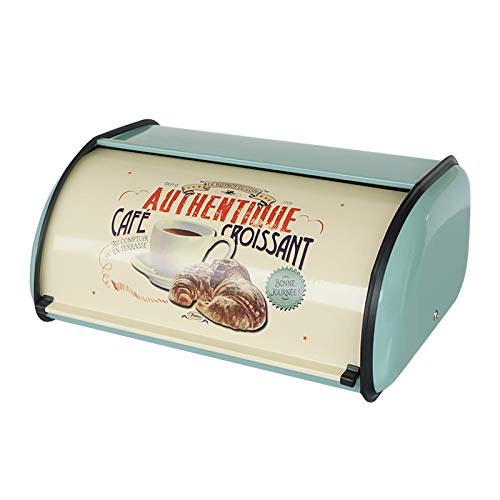
SOTECH Metal Bread Box Roll Top Vintage Breadbox for Kitchen Countertop Retro Bread Bin Holder Counter Farmhouse Bread Storage Container Blue
Included for 'Best Vintage Metal Bread Boxes for Retro Kitchen Storage' as a relevant option in this category; details come from the product listing.
View on Amazon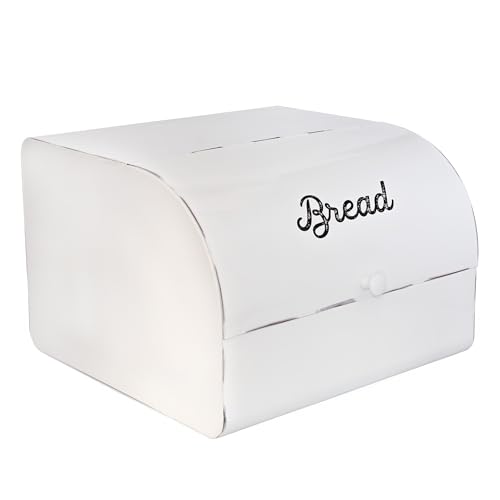
AuldHome Design Large White Bread Box; Farmhouse Enamelware Vintage Style Family Size Countertop Bread Bin
Included for 'Best Vintage Metal Bread Boxes for Retro Kitchen Storage' as a relevant option in this category; details come from the product listing.
View on Amazon
Creative Co-Op Farmhouse Enameled Metal Bread Box with Bread Text, White and Black Finish
Included for 'Best Vintage Metal Bread Boxes for Retro Kitchen Storage' because the listing specifies White and Black Finish, details this guide uses to compare options.
View on Amazon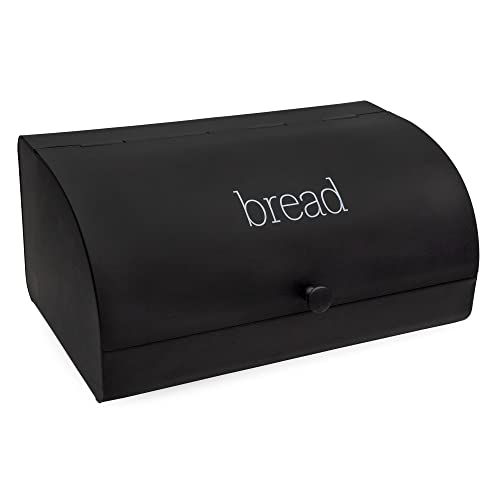
AuldHome Design Farmhouse Black Bread Box; Retro Vintage Style Enamel Countertop Bread Bin
Included for 'Best Vintage Metal Bread Boxes for Retro Kitchen Storage' as a relevant option in this category; details come from the product listing.
View on AmazonBest vintage metal bread boxes by situation
| Kitchen situation | Best choice | Why it fits | Typical market price |
|---|---|---|---|
| You want the most convincing retro look | Authentic enamelled or painted steel bread box | Original typography, patina, and period hardware; every piece is different | $35–$150+, depending on condition and rarity |
| You need dependable everyday storage | Wesco Grandy | Powder-coated steel body, hinged lid, approximately 10 litres of capacity | $80–$140 |
| You need room for several loaves | Large fall-front metal bread bin | Usually 11–16 litres, with a broad opening for sourdough or multiple packs | $45–$120 |
| You have limited depth | Compact roll-top or shallow enamel box | Often 18–22 cm deep, fitting more easily behind a worktop edge | $30–$90 |
| You prefer a polished, less distressed finish | Brabantia fall-front bread bin | Modern construction with a restrained retro profile and approximately 11.5 litres of internal volume | $55–$100 |
Authentic vintage versus vintage-style construction
An authentic vintage metal bread box is generally made from enamelled steel, painted sheet steel, or occasionally aluminium. Its appeal is the original finish: aged lettering, rounded corners, riveted handles, and the small imperfections that make it look like it belongs in a mid-century kitchen. The trade-off is uncertainty. Hinges may be loose, enamel may be chipped, and internal rust can be hidden beneath a removable tray or paper liner.
A vintage-style box is made for predictable use. Powder-coated steel resists surface corrosion better than untreated painted steel, while stainless steel avoids flaking paint but can look more contemporary. Reproduction boxes also tend to have smoother hinges, better alignment, and ventilation holes designed around modern bread storage rather than decoration.
For occasional display or a kitchen with several storage options, an authentic find can be worth the maintenance. For bread used every day, a modern steel box usually offers the better ownership experience.
Head-to-head comparison of useful options
| Option | Approx. outside size | Usable capacity | Metal and finish | Lid operation | Countertop footprint |
|---|---|---|---|---|---|
| Authentic small vintage enamel box | 30–36 × 18–22 × 18–23 cm | 5–8 litres | Enamelled or painted steel; condition varies | Lift-off, hinged, or sliding | 0.05–0.08 m² |
| Authentic large vintage bread bin | 40–48 × 22–30 × 18–25 cm | 9–15 litres | Painted steel, enamel, or aluminium | Hinged or fall-front | 0.09–0.14 m² |
| Wesco Grandy | 42 × 22 × 17 cm | About 10 litres | Powder-coated steel with metal handle | Top-hinged lid | 0.092 m² |
| Brabantia fall-front bread bin | About 46.3 × 25 × 17.3 cm | About 11.5 litres | Stainless steel or coated metal, depending on version | Front roll or fall-front door | 0.116 m² |
| Compact retro metal box | 32–36 × 18–21 × 18–22 cm | 6–9 litres | Powder-coated or enamelled steel | Roll-top or hinged | 0.058–0.076 m² |
Dimensions are approximate external measurements; curved lids, internal rails, and handles reduce the space actually available for bread. A nominal 10-litre box will not necessarily hold ten litres of loosely packed food.
What to inspect before buying an authentic vintage box
1. Check the metal condition
Surface scratches are mainly cosmetic, but active rust is a functional warning. Look inside the base, around screw heads, beneath the lid, and along folded seams. Light orange spotting can sometimes be cleaned and sealed; deep pitting, perforation, or rust that transfers to a cloth is a reason to reject the box for direct food storage.
Chipped enamel deserves particular attention. A small chip on an exterior corner is less concerning than a flaking interior surface, where fragments can detach during cleaning. Do not assume a decorative liner makes a damaged interior safe: crumbs and moisture can collect beneath it.
2. Test the lid several times
The lid should open without scraping, dropping suddenly, or requiring the box to be held in place. For a roll-top design, run the door through its full travel and listen for grinding. For a fall-front design, check that the door closes evenly on both sides. A warped door allows stale air and insects in while making the box awkward to use.
Small hinges are often the first hardware to wear. Replacement screws are usually manageable, but a missing curved door, broken roller track, or distorted hinge mount may cost more to repair than the box is worth.
3. Look for ventilation
Bread boxes should not be airtight containers. Small ventilation holes or a slightly vented lid help moderate humidity. Without ventilation, warm bread can create condensation, encouraging mould; with excessive ventilation, sliced bread may dry faster. Avoid storing bread in the box while it is still steaming hot. Let it cool first, then place it in the box once the crust is no longer releasing visible heat.
Capacity: size the box around your actual bread
A single standard sliced loaf generally needs around 4–6 litres of clear internal volume. A large artisan loaf can need 7–9 litres because its irregular shape wastes space. If you normally keep one sliced loaf and a few rolls, a 6–9-litre box is sufficient. Choose 10–12 litres for a sliced loaf plus a larger bakery loaf, or for households that do not shop daily.
Measure the bread rather than relying only on the box’s outside dimensions. For example, if your loaf measures 30 × 12 × 12 cm, its rectangular envelope is:
30 × 12 × 12 = 4,320 cubic centimetres, or 4.32 litres.
Because a loaf is not a rigid rectangular block and the box needs clearance for handling, allow roughly 25–40% extra space. That loaf therefore calls for about 5.4–6 litres of usable capacity. If you also store rolls, a 9–10-litre box is a more comfortable choice.
Countertop footprint and daily access
Depth is often more important than total volume. A box measuring 46 × 25 cm occupies approximately 0.115 square metres, before allowing clearance to open the lid. On a narrow worktop, a 42 × 22 cm Wesco Grandy-style box saves about 12% of the surface area compared with a 46 × 25 cm model.
Fall-front doors are convenient beneath wall cabinets because they open toward you rather than upward. Hinged lids need vertical clearance and may collide with a shelf. Roll-top doors are space-efficient at the front, but their tracks can collect crumbs and are more difficult to clean than a simple removable lid.
Cleaning and ownership realities
- Remove crumbs weekly with a dry brush or vacuum attachment before wiping the interior.
- Use a damp cloth and mild dish soap; avoid soaking hinges, wooden handles, or old seams.
- Dry the box completely before returning bread to it.
- Do not use abrasive powder on painted or enamelled surfaces, as it can dull the finish.
- Replace a paper or fabric liner when it becomes stained, damp, or odorous.
- Keep the box away from the kettle, dishwasher vent, and cooker, where warm moisture can accumulate.
The most common mistake is treating a bread box as a sealed pantry container. It is designed to buffer the environment, not to preserve bread indefinitely. Inspect stored bread regularly, especially in warm or humid weather, and discard it if you see mould rather than trying to remove only the affected area.
Final buying recommendation
Choose an authentic vintage metal bread box if its interior is sound, the lid operates smoothly, and the patina matters more to you than exact capacity. Choose a vintage-style powder-coated steel box if you want dependable daily storage, easier cleaning, and predictable dimensions. For most households, the best balance is a 9–12-litre model around 40–46 cm wide and no more than 22–25 cm deep, with a vented lid, corrosion-free interior, and a door that can be opened with one hand.
Write Your Review
No reviews yet. Be the first to share your experience!